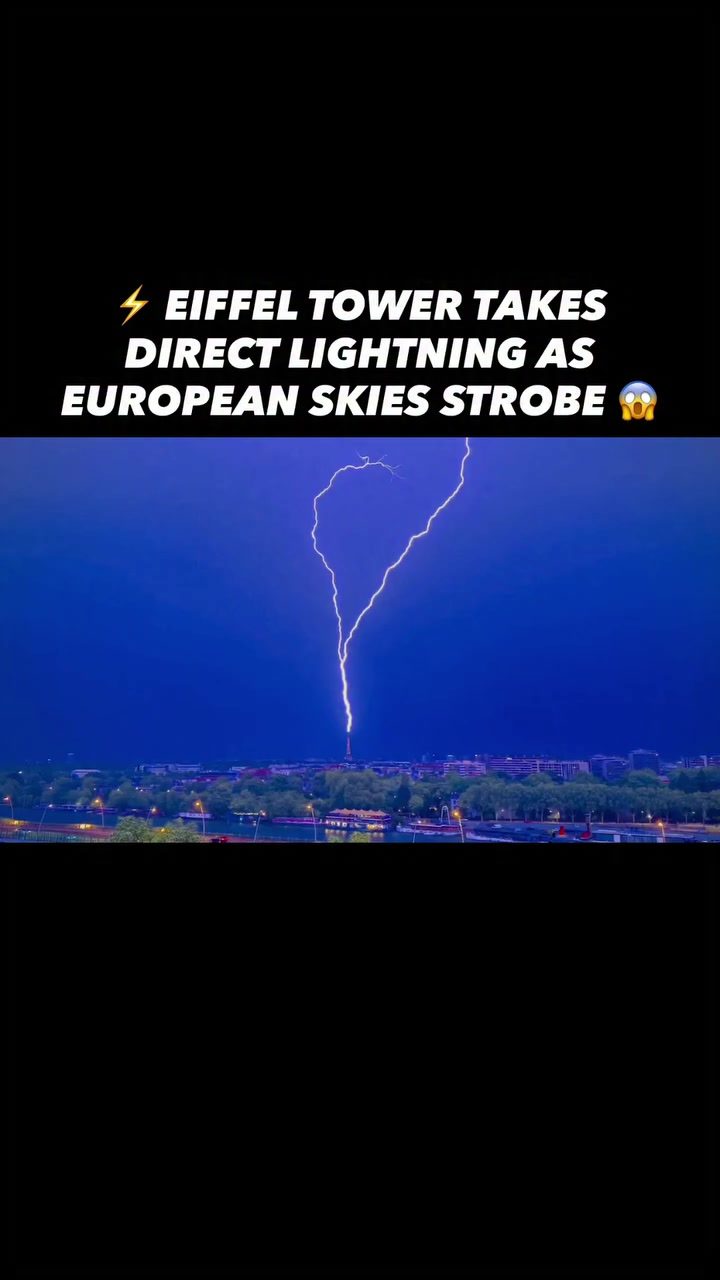
Lightning Strikes Eiffel Tower
Massive storms have swept across Western Europe, and the Eiffel Tower in Paris has become a dramatic focal point as it takes repeated direct lightning strikes. The intensity and frequency of these lightning strikes have captivated online audiences, with the Eiffel Tower's silhouette repeatedly illuminated against the dark, stormy sky.
Context: Why This Matters
The Eiffel Tower, an iconic landmark in Paris, is no stranger to lightning strikes. Designed to withstand such events, the tower's metallic structure acts as a natural lightning conductor, safely grounding the electrical energy. However, the recent surge in lightning activity has been unusually relententless, not just in Paris, but across multiple countries in Western Europe. This has sparked widespread interest and concern, with many witnessing near-constant flickering in the sky.
Understanding the Phenomenon
The Science Behind Lightning
Lightning is a powerful and sudden electrostatic discharge that occurs during a thunderstorm. It is caused by the buildup of electrical charges within the clouds, which then seek the path of least resistance to the ground. This path is often a tall, conductive structure, making the Eiffel Tower a frequent target.
The Role of Thunderstorms
Thunderstorms are common in Europe, but the recent storms have been particularly severe. These storms are characterized by their intense electrical activity, which results in frequent and powerful lightning strikes. The combination of high winds, heavy rainfall, and the electrical energy in the atmosphere creates a dramatic and somewhat overwhelming spectacle.
The Eiffel Tower’s Resilience
The Eiffel Tower was designed with lightning in mind. Constructed from wrought iron and reinforced with a complex electrical grounding system, the tower is built to handle the electrical energy from lightning strikes. When lightning hits, the electrical current travels through the tower and is safely dispersed into the ground. Despite the tower's durability, the sheer volume of strikes has drawn significant attention, highlighting the extreme conditions of the recent storm.
Practical Tips for Observing and Documenting Lightning
While it's important to stay safe during thunderstorms, there are ways to appreciate the spectacle from a distance:
Stay Safe
- Avoid tall structures, open fields, and isolated trees during thunderstorms.
- If you're indoors, stay away from windows and electrical appliances.
- Unplug electronic devices to protect them from power surges.
Capture the Moment
- If you're interested in photographing or filming lightning, use a tripod and a long exposure setting to capture the strikes.
- Stay at a safe distance and avoid areas prone to flooding.
- Be prepared for sudden changes in weather conditions.
Share Your Experience
- Use social media to share your footage and document the storm. Hashtags like #LightningStorm and #Thunderstorm can help others join in the conversation.
- Follow weather updates to stay informed about the storm’s path and intensity.
- Report any unusual activity to local weather authorities.
Important Takeaways
The recent lightning strikes on the Eiffel Tower serve as a reminder of the power of nature. While the Eiffel Tower is designed to withstand such events, the intensity and frequency of these strikes have been exceptional. This phenomenon highlights the importance of understanding and respecting the forces of nature, as well as the need for preparedness during severe weather conditions.
Conclusion
The dramatic footage of the Eiffel Tower being struck by lightning during the recent storms in Western Europe has captured the world's attention. This natural phenomenon not only showcases the tower's resilience but also serves as a reminder of the power and unpredictability of nature. Whether you're a weather enthusiast or simply fascinated by the spectacle, the recent lightning strikes offer a striking visual display of the forces at work in our atmosphere.
Questions readers ask
Why does the Eiffel Tower get struck by lightning so frequently?
The Eiffel Tower is a tall, metallic structure which makes it an ideal target for lightning. Its height and conductive materials attract lightning strikes, acting as a natural grounding point for electrical charges.
Is the Eiffel Tower equipped to handle lightning strikes?
Yes, the Eiffel Tower is designed to withstand lightning strikes. Its metallic structure allows it to safely conduct the electrical energy to the ground, protecting the monument and its surroundings.
Why have there been so many lightning strikes in Europe recently?
The recent surge in lightning activity can be attributed to the intense weather patterns in Western Europe. The storms sweeping across the region have produced frequent and direct lightning strikes, not just in Paris but across multiple countries.
Is it safe to visit the Eiffel Tower during a thunderstorm?
The Eiffel Tower is safe during storms, but visitors should be cautious. The structure is designed to handle lightning, but the surrounding areas can be dangerous due to high winds and potential flooding. It is always best to follow local weather advisories and safety guidelines.
What should I do if I see the Eiffel Tower being struck by lightning?
There is no immediate cause for concern. The Eiffel Tower is designed to withstand these events. However, if you are nearby, avoid open spaces and seek shelter indoors. Stay away from tall objects and bodies of water.
Are there any online videos of the Eiffel Tower being struck by lightning?
Yes, there are numerous videos available online. These videos show the tower being repeatedly struck by lightning during recent thunderstorms, providing a dramatic illustration of the tower's ability to withstand such events.
How common is it for the Eiffel Tower to be struck by lightning?
The tower is struck by lightning multiple times a year. The frequency varies depending on weather conditions, but the Eiffel Tower's structure ensures that these strikes do not cause significant damage to the monument.
Related deep dives
Similar reads based on topic and creator.




Recent articles
Fresh deep dives from the latest Reels we unpacked.




Comments
Be the first to comment.