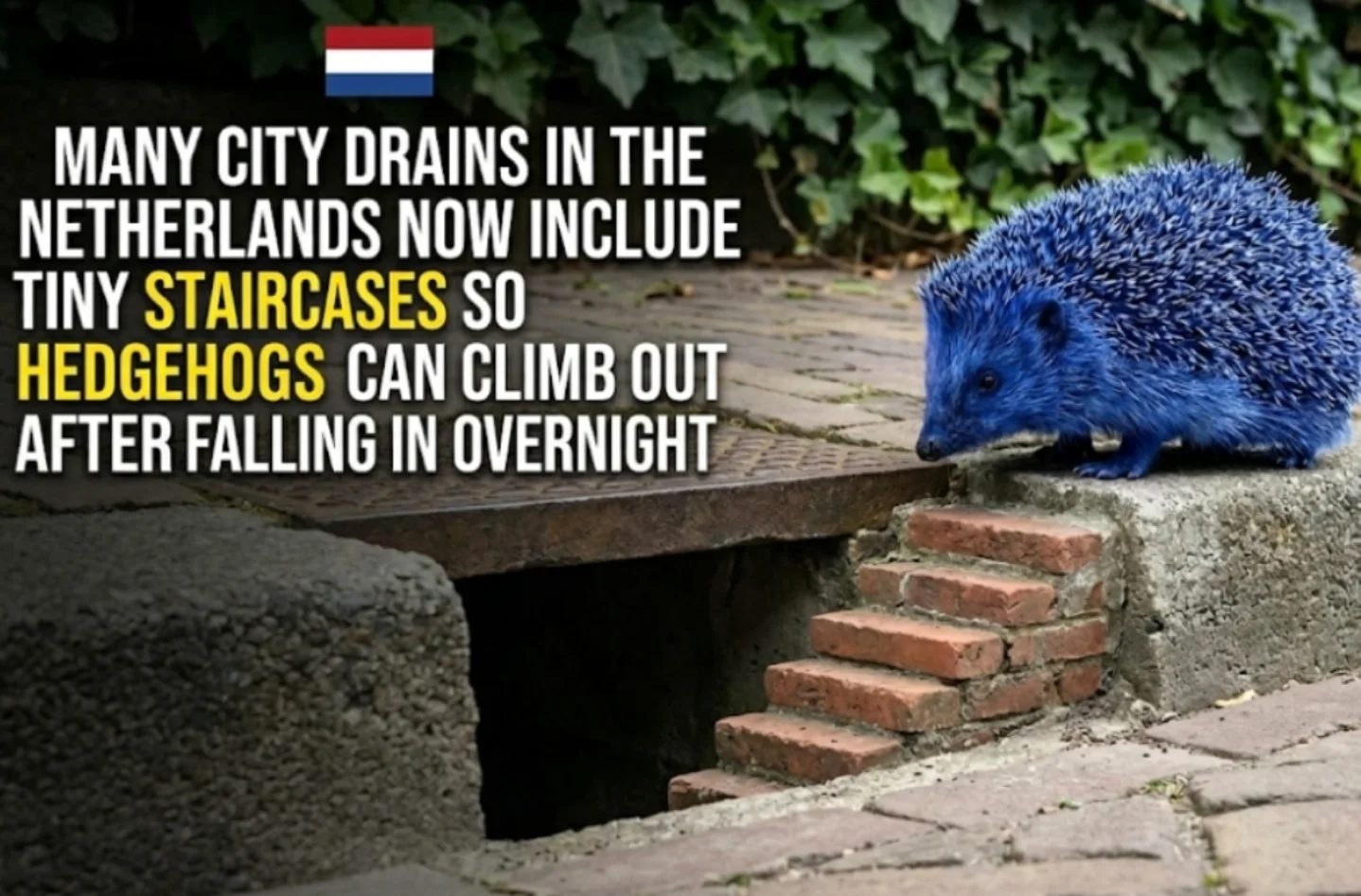
Hedgehog-Friendly Drains
In the Netherlands, a unique urban conservation effort is underway, focusing on adapting municipal infrastructure to safeguard local wildlife. One of the most innovative solutions involves integrating "tiny staircases" into city drains. These modifications serve a critical purpose: providing an escape route for hedgehogs that might accidentally fall into these drains while foraging overnight.
Why This Matters
The urban environment poses numerous challenges for wildlife, especially small mammals like hedgehogs. Drains, while essential for urban water management, can become deadly traps for these creatures. Hedgehogs, known for their nocturnal foraging habits, often wander into city drains in search of food or shelter. Without a way out, they can drown or become trapped indefinitely. The installation of tiny staircases addresses this issue directly, aligning with a broader commitment to nature-inspired engineering and biodiversity preservation within urban settings.
The Design and Purpose
The Tiny Staircases
The design of these tiny staircases is both simple and effective. Built into the sides of drains, these staircases are specifically sized to accommodate the small paws and climbing abilities of hedgehogs. The staircases provide a safe and easy exit for any hedgehog that might find itself in a drain, ensuring that it can escape unharmed.
How It Works
The process of integrating these staircases into city drains is straightforward. During routine maintenance or new construction, municipal workers install these staircases as part of the drain infrastructure. The staircases are made from durable materials that can withstand the elements and the rigors of urban life, ensuring that they remain functional and effective for an extended period.
Practical Tips for Urban Wildlife Conservation
While the Netherlands' initiative is a notable example, similar efforts can be implemented in other urban areas. Here are some practical tips for creating a more wildlife-friendly urban environment:
1. Assess Local Wildlife Needs
Before implementing any changes, assess the specific needs and behaviors of local wildlife. Understanding which animals are most at risk and what challenges they face in urban environments is crucial. For example, understanding that hedgehogs forage at night can inform the design of escape routes.
2. Collaborate with Local Authorities
Engage with local authorities and urban planners to ensure that wildlife-friendly designs are incorporated into municipal infrastructure. Collaboration can lead to more widespread and effective conservation efforts.
3. Integrate Nature-Friendly Designs
Incorporate nature-friendly designs into urban infrastructure. This could include installing escape routes, creating green spaces, and using wildlife-friendly materials. Every small change can make a significant difference in preserving local biodiversity.
4. Educate the Community
Community involvement is key to the success of any conservation effort. Educate residents about the importance of wildlife conservation and how they can contribute. Community programs and volunteer initiatives can play a vital role in maintaining these efforts.
Important Takeaways
The initiative in the Netherlands highlights the importance of integrating nature-friendly designs into urban infrastructure. These tiny staircases are a tangible example of how small changes can have a significant impact on wildlife conservation. By providing a safe escape route for hedgehogs, the Netherlands is not only safeguarding local wildlife but also promoting a broader commitment to biodiversity and sustainable urban development.
Conclusion
The integration of tiny staircases into city drains in the Netherlands serves as a model for urban wildlife conservation. This innovative approach demonstrates that municipal infrastructure can be adapted to protect local wildlife without compromising urban functionality. By understanding the needs of local wildlife and implementing practical, nature-friendly designs, we can create urban environments that support biodiversity and ensure the safety of native animal species.
Questions readers ask
Why are tiny staircases being installed in Dutch city drains?
The tiny staircases are installed to provide an escape route for hedgehogs that might fall into the drains while foraging at night. This initiative aims to reduce the number of hedgehogs that drown or become trapped in the drains.
How do hedgehogs typically end up in urban drains?
Hedgehogs, known for their nocturnal foraging habits, often wander into city drains while searching for food or shelter. The drains can be deadly traps for these creatures if they cannot find a way out.
Is this initiative part of a larger conservation effort?
Yes, this initiative is part of a broader effort in the Netherlands to integrate wildlife conservation with municipal infrastructure. The goal is to create urban environments that can coexist with nature.
What other challenges do hedgehogs face in urban environments?
Urban environments pose numerous challenges for hedgehogs, including habitat loss, road traffic, and the dangers of urban infrastructure like drains. These factors can make city life perilous for these small mammals.
How do the tiny staircases help hedgehogs?
The tiny staircases offer a safe and accessible way for hedgehogs to climb out of drains. This simple addition can significantly improve the survival rates of hedgehogs in urban areas by preventing drowning or trapping.
Are these modifications unique to the Netherlands?
While the specific use of tiny staircases in drains is notable, the concept of integrating wildlife conservation with municipal infrastructure is becoming more widespread. Other cities around the world are exploring similar initiatives to create more wildlife-friendly urban spaces.
What role does municipal infrastructure play in wildlife conservation?
Municipal infrastructure can be designed to support and protect local wildlife. By incorporating features like tiny staircases in drains, cities can help mitigate the environmental impacts of urban development and promote the well-being of local species.
Related deep dives
Similar reads based on topic and creator.
Recent articles
Fresh deep dives from the latest Reels we unpacked.




Comments
Be the first to comment.