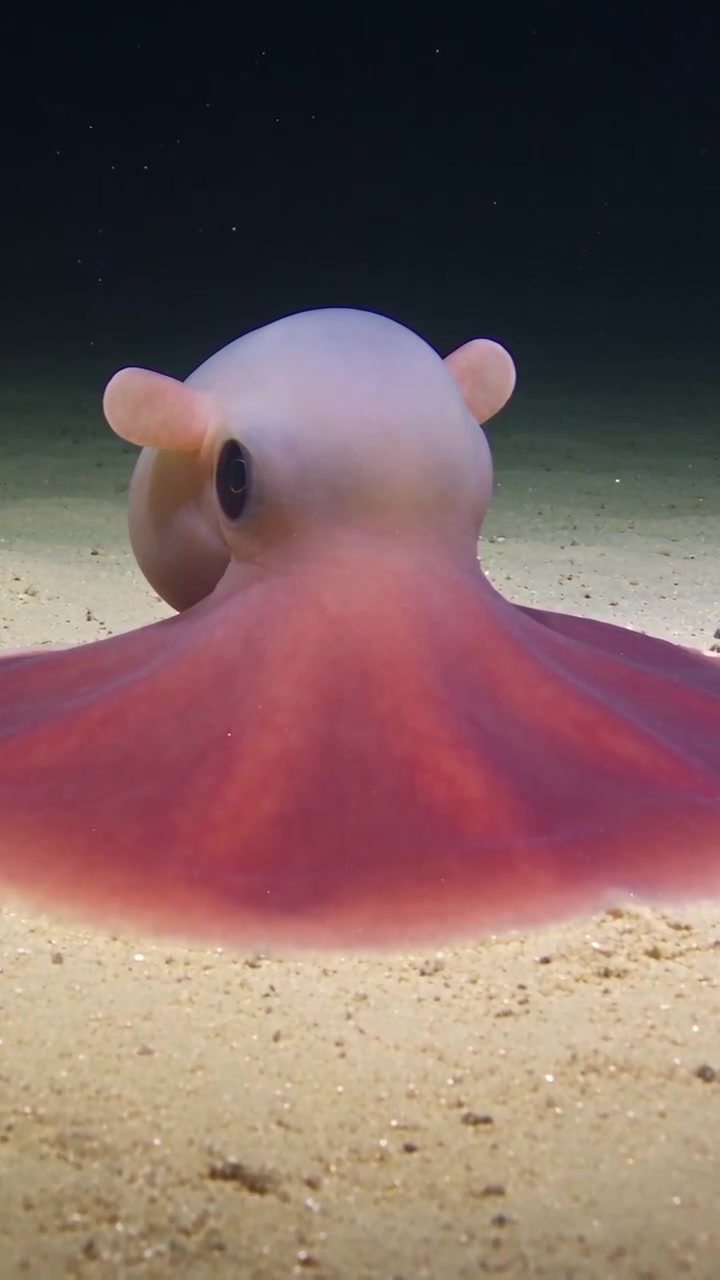
What is a Dumbo Octopus?
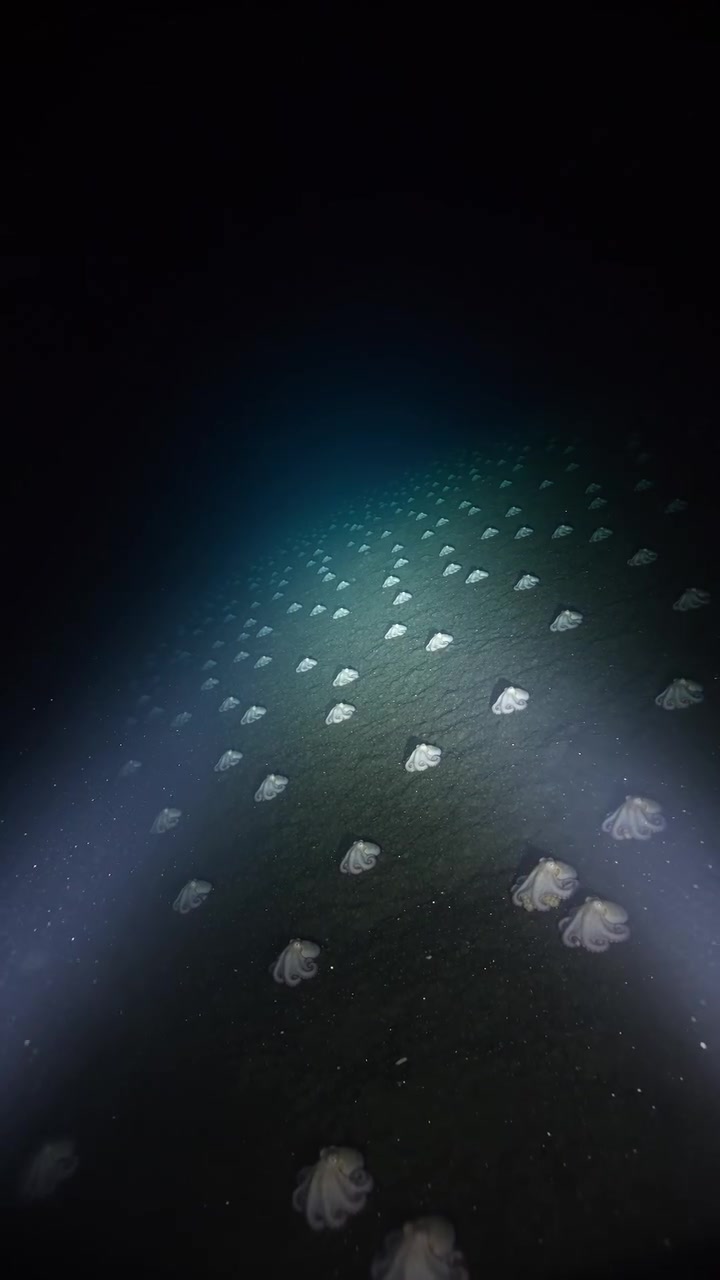
A dumbo octopus is a rare marine creature belonging to the deep-sea family of cephalopods, distinguished by its notable ear-like fins on each side of its head. Its "dumbo" nickname comes from the resemblance of these fins to the large ears of Disney's famous flying elephant. These octopuses inhabit ocean floors at extraordinary depths, particularly in the Java Trench, where this footage was recorded at nearly seven kilometers down. Composed of soft, delicate tissues that have no air pockets, the dumbo octopus manages the high water pressure by keeping its skin and muscles firmly in place. This delicate physique is packed with remarkable movements and consistencies. Dumbo octopuses move by flapping their fins. This flapping movement allows them to effortlessly glide through the water. Cameras have caught it hopping across the deep-sea floor — along with other remarkable movements that further the use and importance of these fins when navigating the deep. The dumbo octopus is an anomaly among cephalopods, thanks to its appearance and behavior. It is a unique biological feature that it has eight arms connected by a web of skin. This layout resembles an umbrella; it is one of these octopus's most unique adaptive features. With this design, the dumbo octopus has mastered the art of munching up tiny crustaceans with ease.
The Deep-Sea Environment and the Dumbo Octopus
In the world of marine biology, the deep-sea is a zone of mystery, occupying over 90% of the ocean's depth — roughly 60% of the entire planet. Here, conditions are extreme: near-freezing temperatures, darkness, and immense water pressure. These conditions demand that the flora and fauna in these depths must adapt to live in this harsh environment. Yet, it is precisely this demanding environment that can make it so fascinating to explore and observe. While the deep-sea might seem devoid of life, diving deeper might show that it is surprisingly teeming with unique forms of life: bioluminescent fish, ghostly shrimp, and of course, the dumbo octopus. Considered deep-sea creatures, these octopuses seem to inhabit trenches around the globe. This deep habitat —at least for the regions where people have observed— is defined primarily by its depth: it supports the Dumbo octopus. This ocean environment is a true place of extremes, dominated by pressure as high as 1000 times sea-level pressure, and mild temperatures that range from 30-39 degrees. While other octopuses have been found in the deep-sea, the dumbo octopus is the deepest diver. We've only been able to observe it due to specialized camera equipment.
### The Dumbo Octopus' Body and Movement
The dumbo octopus has unique physical traits that make it distinctive: these include a soft, boneless body and its distinctive ear-like fins. Compared to other cephalopods, these octopuses are relatively delicate and as a result have distinct movements — their fins help facilitate the propulsion and movement via "hopping" The octopus' webbed arms let it navigate and manipulate its food more easily. Features such as soft tissues and delicate skin make this creature's body structure quite unique. It has eight arms connected by a web of skin, which gives it the umbrella design we associate with this octopus. This structure allows the dumbo octopus to feed on crustaceans and other small sea creatures that it comes across. Its fins are used for stealth navigation of the seafloor in addition to its primary movement — gliding. It goes about its swimming habits by flapping its fins. This allows the octopus to glide slowly across the ocean floor. A closer look at its body and movement helps paint a clearer picture of how this creature has mastered survival in a deep-sea environment. Flapping its fins, the dumbo octopus glides gracefully across the soft mud of the ocean floor, and these distinctive fins can also flip up to help with the octopus's direction. The dumbo octopus is not just a unique sight to behold. With flapping fins and a soft boneless body, it has found a way to thrive in the most extreme conditions. Flapping fins, and manipulating crustaceans, these abilities are the distinguishing factors of its nature.
### The Dumbo Octopus and its Forage
Surviving in the deep sea requires adaptations to the harsh environment. Dumbo octopuses have developed unique ways to capture prey. It only takes a moment for this deep-sea octopus to effortlessly grab crustaceans. This is a testament to the agility of the octopus and the speed with which it can move and manoeuvre its soft body. The Dumbo octopus is generally solitary, but its feeding habits are more like the larvae of most octopuses. Dumbo octopuses don’t feed on high-density food, but rather on small organisms from the seafloor. The octopus relies primarily on crustaceans as its food source. There are no other known deep-sea octopuses that are similar to it in their diet. Its ability to live in the deep sea can also be credited to its ability to find nutrients in the environment and feed accordingly.
### What Equipment Is Being Used To Capture This Footage
Filming the Dumbo octopus at depths of up to approximately nearly 7 kilometers required specialized equipment and had to be done with a camera system operated by trained marine explorers. The video was captured underwater by various elements. The camera and lighting system used for filming this octopus showcased the microbial life of the Java Trench. Specialized camera systems had to be used at such depths, as they were the only ones capable of capturing the footage in the low visibility and darkness. The camera was capable of filming despite the low visibility and extreme pressure thanks to its robust design. Additionally, a lighting system is crucial to illuminate the dark sea environment. The camera system for the deep sea is an important tool for exploring and capturing footage of creatures like the Dumbo octopus.
### Hallmarks of a High-Pressure Environment: Bringing The Live to the Light
The deep sea is one of the most hostile environments on Earth, with water that exerts immense pressure — equivalent to a small car pressing down on each fingernail, creating a force of up to 1000 times sea-level pressure. These conditions have led to the evolution of unique adaptations in deep-sea creatures. Furthermore, the deep ocean is characterized by near-freezing temperatures, which average 30-39 degrees Fahrenheit. And it is primarily dark, resulting in low visibility for the animals that live there. These unfavorable conditions are likely why there are few documented species living in this part of the ocean. This makes the dumbo octopus's deep-sea survival accomplishments an impressive feat.
Noticing Nature in the Depths
Observing a Dumbo octopus in its natural habitat offers a rare glimpse into the mysterious world of deep-sea life. The delicate form and movement of these octopuses may remind viewers of the intricate balance of life in some of the most remote and extreme places on the planet. One can only wonder at the day-to-day lives of these octopuses, especially considering that footage of such a rare sighting is so seldom available. In the end, there is a lot to learn about the Dumbo octopus, and a long way to go before we can fully understand the many wonders of the deep-sea. Just as the Dumbo octopus seemed to glide across the muddy ocean floor — it appeared as majestic as it was delicate. But one thing is certain — those who can dive among the Dumbo octopus are surely lucky.
Questions readers ask
How do dumbo octopuses manage the extreme pressure at such great depths?
Dumbo octopuses have a soft, boneless body with no air pockets, which allows them to withstand the immense pressure of the deep sea. Their skin and muscles are tightly held together, preventing any air pockets from forming, which could collapse under the high pressure.
How do dumbo octopuses move around in the deep sea?
Dumbo octopuses primarily move by flapping their distinctive ear-like fins, which allow them to glide effortlessly through the water. They can also hop across the seafloor, demonstrating the versatility and effectiveness of these fins in navigating their harsh environment.
What do dumbo octopuses eat, and how do they catch their food?
Dumbo octopuses feed on tiny crustaceans. Their unique body structure, with eight webbed arms, helps them to efficiently catch and consume their prey. This design allows them to maneuver and manipulate their food with ease, making them well-adapted to their deep-sea habitat.
Are dumbo octopuses the only cephalopods found at such extreme depths?
While other octopuses have been found in the deep sea, the dumbo octopus is notable for being the deepest diver among them. Its ability to thrive in conditions where the pressure is over 1,000 times that at sea level makes it a remarkable example of deep-sea adaptation.
How do scientists study dumbo octopuses given their extreme habitat?
Scientists rely on specialized camera equipment to observe and study dumbo octopuses in their natural habitat. These cameras are designed to withstand the extreme conditions of the deep sea, allowing researchers to capture footage and gather data on these elusive creatures.
What makes the dumbo octopus unique compared to other octopuses?
The dumbo octopus stands out due to its ear-like fins and the distinctive way it moves, using these fins to glide and hop. Additionally, its webbed arms, which resemble an umbrella, are a unique feature that aids in both movement and feeding, setting it apart from other cephalopods.
Related deep dives
Similar reads based on topic and creator.

Recent articles
Fresh deep dives from the latest Reels we unpacked.



Comments
Be the first to comment.