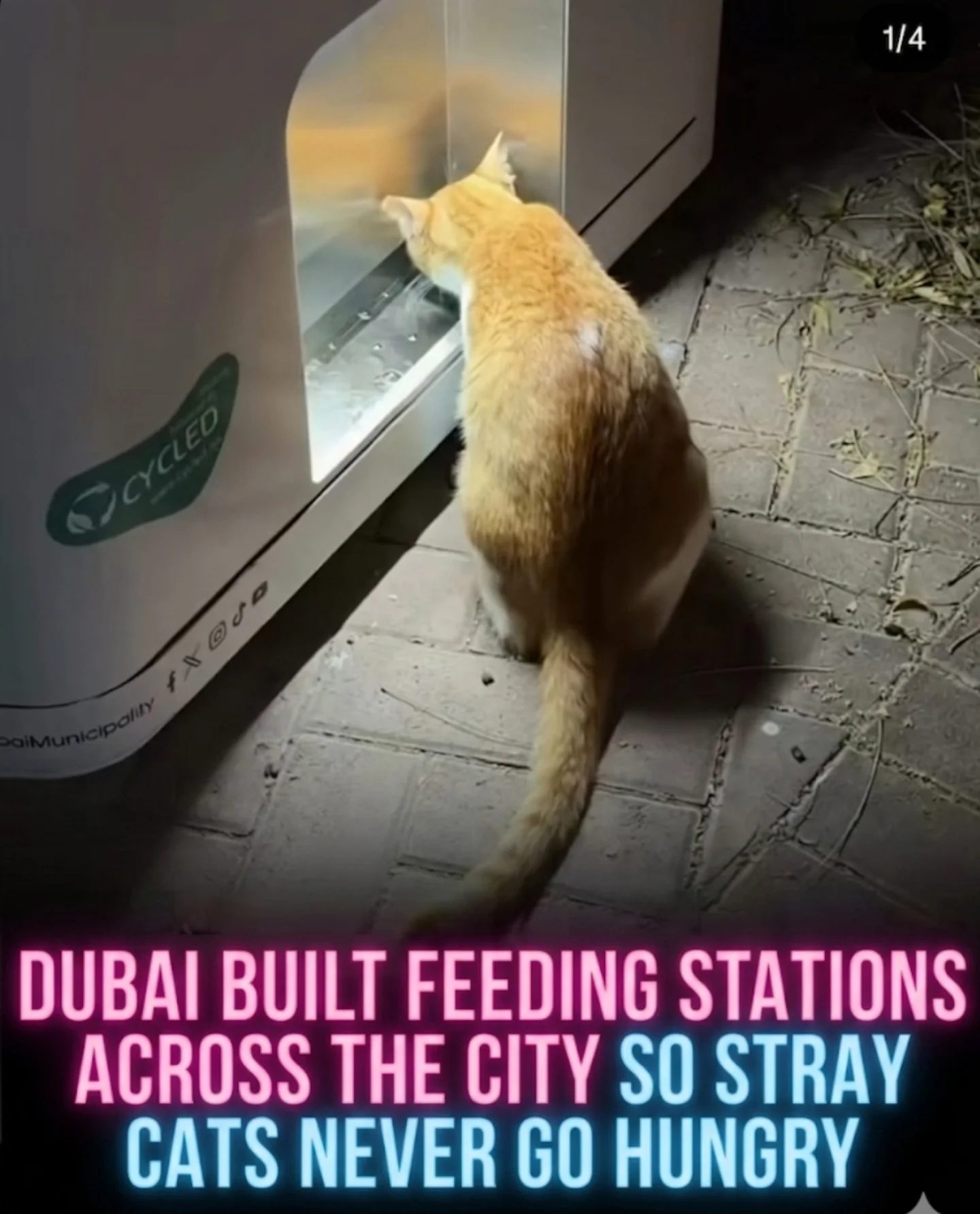
Automated Feeding Stations: Dubai's Innovative Approach to Stray Cat Welfare
Dubai's urban landscape is not only known for its architectural marvels but also for its initiatives to manage the local feline population. Feeding stations have been installed across the city to ensure that stray cats have access to consistent food. These feeding stations, part of a broader animal welfare initiative, are strategically integrated into the municipal infrastructure to enhance public health and animal well-being.
Context
These feeding stations reflect a compassionate strategy for animal management in an urban setting, where the human and animal worlds intersect. The city's initiative highlights Dubai's commitment to fostering a humane environment for all its inhabitants, including those who often live on the margins of society. By addressing the immediate needs of stray cats, Dubai is not only ensuring animal welfare but also influencing public health. This modern approach demonstrates the city's dedication to leveraging technology to care for its community animals, thus promoting a more harmonious coexistence within its urban environment.
Main discussion
A Strategic Initiative
Automated feeding stations are a key part of Dubai's urban animal welfare strategy. These stations are designed to provide consistent access to food, ensuring that stray cats have regular meals. This initiative is particularly significant in a bustling city like Dubai, where stray cats often face challenges in finding enough food.
The feeding stations are strategically placed across the city, making it easy for stray cats to locate them. The integration of these automated stations into the municipal infrastructure is a notable feature of this initiative. This integration not only ensures the stations are well-maintained but also helps in monitoring and managing the animal population.
Technology and Animal Welfare
The use of technology in this initiative is a significant aspect. Automated feeding stations reduce the need for manual intervention, ensuring that food is available at consistent times. This technological integration helps in maintaining a cleaner and more organized environment around the feeding stations, which is essential for public health.
The feeding stations are not just about providing food; they also serve as a monitoring and management tool. They help in keeping track of the number of stray cats in a particular area, which can be crucial for managing the local feline population and promoting public health.
Community Impact
The initiative also involves the local community. The feeding stations serve as a reminder that animal welfare is a collective responsibility. They encourage public engagement and foster a sense of community among residents who may be taking care of stray animals.
The automated nature of the feeding stations ensures that they are always stocked with food, which is particularly important during times when the human population might be less active or during emergencies. This ensures that the stray cats do not go hungry, thus promoting a healthier and more humane environment.
Practical tips
For those looking to adopt similar measures in their communities, here are some practical tips:
Designing Effective Feeding Stations
Ensure that the feeding stations are designed to be weather-resistant and secure from pests, which can contaminate the food. The stations should be placed in areas that are easily accessible to stray cats but also safe from human interference or accidents.
Community Engagement
Engage the local community by involving them in the installation and maintenance of the feeding stations. This can foster a sense of responsibility and encourage more people to take an active role in animal welfare.
Monitoring and Maintenance
Regularly monitor the feeding stations to ensure they are functioning correctly. Checking the supplies and the cleanliness of the stations are vital to prevent any health risks to the cats and the community.
Important takeaways
The Dubai Municipality's initiative of installing feeding stations across the city for stray cats is a progressive step towards managing the animal population in an urban setting. This initiative not only ensures the welfare of stray cats but also promotes a healthier and more humane environment for all inhabitants. The use of technology in this initiative is a significant aspect, making the process more efficient and effective. Lastly, the involvement of the local community in this initiative is crucial, as it fosters a sense of collective responsibility towards animal welfare.
Conclusion
Dubai's initiative to install feeding stations for stray cats is a commendable effort in promoting animal welfare and public health. The strategic integration of these automated stations into the municipal infrastructure, combined with the use of technology, ensures a more efficient and effective approach to managing the local feline population. The initiative also serves as a reminder that animal welfare is a collective responsibility, and community engagement is crucial in fostering a more humane and harmonious urban environment.
Questions readers ask
How do Dubai's automated feeding stations benefit stray cats?
The automated feeding stations in Dubai provide a consistent food supply for stray cats, helping to manage their hunger and ensure that they are well-fed. This consistency promotes better health and welfare for the city's stray cat population.
What is the role of the municipality in maintaining these feeding stations?
The municipality in Dubai plays a significant role in integrating the feeding stations into the urban infrastructure. They ensure that the stations are strategically placed, well-maintained, and consistently stocked with food, contributing to the overall public health and animal welfare initiatives.
How do the feeding stations impact public health in Dubai?
By providing a consistent food source, the feeding stations help reduce the number of stray cats wandering around in search of food, which can minimize health risks and nuisances. This consistent feeding also helps in controlling the stray cat population by reducing the spread of diseases and maintaining cleaner streets.
Where are the automated feeding stations located in Dubai?
The automated feeding stations are strategically placed across Dubai to ensure that stray cats have easy access to food. These locations are chosen to optimize the welfare of the cats and to integrate seamlessly with the urban environment, promoting both animal and public well-being.
What is the broader goal of Dubai's stray cat initiative?
Dubai's broader goal with the stray cat initiative is to foster a humane environment where both humans and animals can coexist peacefully. The initiative aims to enhance the welfare of stray cats while promoting public health and maintaining a clean, orderly urban landscape.
How are the automated feeding stations funded and operated?
The automated feeding stations in Dubai are funded and operated as part of the city's public welfare initiatives. The municipality manages these stations, ensuring they are well-maintained and stocked with food, reflecting the city's ongoing commitment to animal care and public health.
What measures are taken to ensure the feeding stations remain clean and functional?
The municipality conducts regular maintenance checks on the feeding stations to ensure they remain clean and functional. This includes restocking food, cleaning the stations, and addressing any technical issues to maintain their efficiency and effectiveness in serving the stray cat population.
Related deep dives
Similar reads based on topic and creator.
Recent articles
Fresh deep dives from the latest Reels we unpacked.




Comments
Be the first to comment.