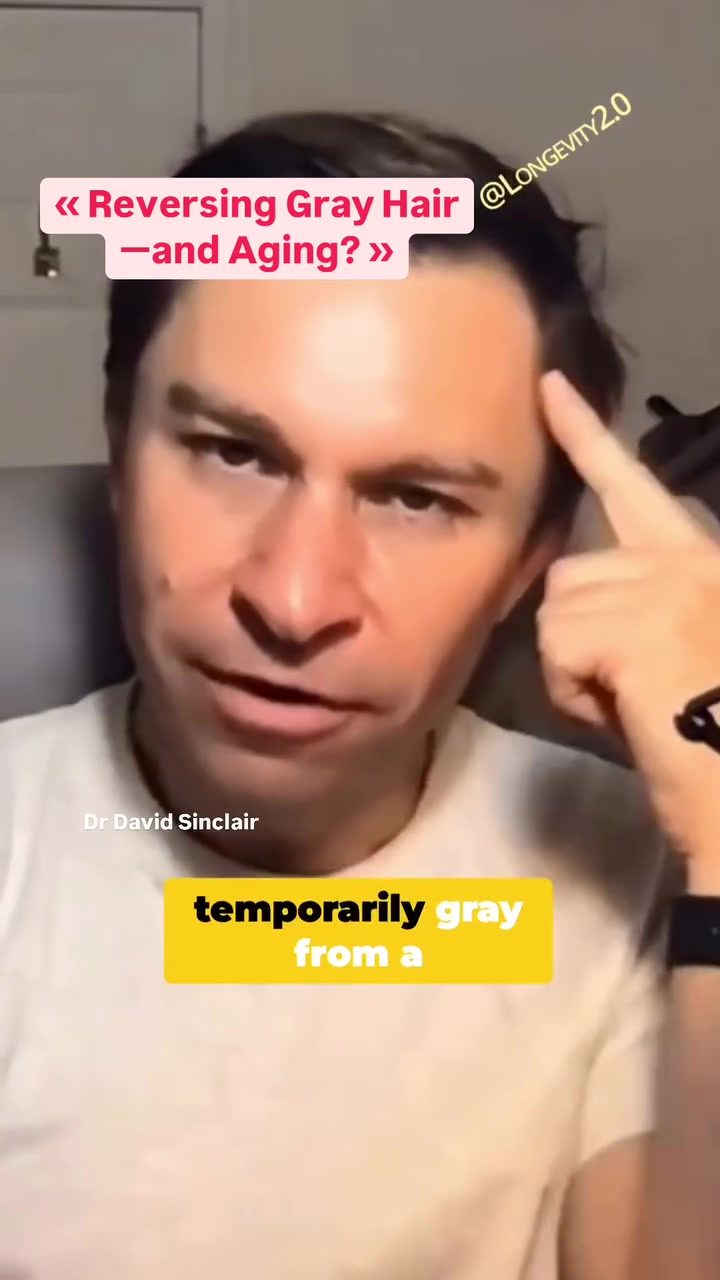
Reversing Gray Hair
Gray hair is often seen as an inevitable part of aging, but what if there were ways to reverse it? Recent research has uncovered fascinating insights into how stress can temporarily turn hair gray and how relaxation can restore its original color. This phenomenon opens up intriguing possibilities about the broader implications for aging and potential reversals.
Context / Why this matters
Understanding the mechanisms behind hair graying and its potential reversal can provide valuable insights into the aging process itself. By examining the molecular changes in hair follicles, scientists are uncovering clues that could lead to breakthroughs in anti-aging treatments. This research not only challenges our understanding of hair color but also offers hope for future developments in longevity science.
Main discussion
The Impact of Stress on Hair Color
Stress has long been known to affect various aspects of health, including hair. Intense stress can cause hair to start growing gray from the roots, resulting in a distinctive pattern where the roots are gray while the tips remain their original color. This phenomenon is reversible: once the stress subsides, the hair can regrow in its original color. Researchers have even documented cases where individuals' hair returned to brown or black after periods of relaxation, such as a vacation.
Molecular Insights at the Hair's Core
To understand the underlying mechanisms, researchers have analyzed gray and brown hairs at the molecular level. By examining the molecular changes in hair follicles, scientists have identified specific alterations associated with aging and its potential reversal. These findings suggest that the process of graying is not a one-way street but rather a dynamic process influenced by various factors, including stress and relaxation.
The Potential for Aging Reversal
The discovery that gray hair can revert to its original color raises exciting possibilities. If scientists can understand the molecular mechanisms behind this reversal, it could pave the way for new treatments aimed at reversing other aspects of aging in the body. While the primary focus has been on hair, the underlying principles could apply to broader health and longevity goals.
Practical tips
While the research on reversing gray hair is still in its early stages, there are practical steps you can take to promote healthy hair and potentially mitigate the effects of stress:
-
Manage Stress Levels: Implement stress-reduction techniques such as meditation, yoga, or deep breathing exercises. Lowering stress levels can help maintain overall health, including hair color.
-
Maintain a Balanced Diet: A diet rich in vitamins and minerals supports hair health. Foods high in antioxidants, such as berries and leafy greens, can help combat oxidative stress, which is linked to graying.
-
Avoid Harsh Chemical Treatments: Limit the use of chemical treatments like dyes and bleaches, which can damage hair and exacerbate graying.
-
Regular Exercise: Physical activity can help manage stress and improve overall health, which in turn supports hair health.
-
Consult a Dermatologist: If you notice significant changes in your hair color or texture, consult a healthcare professional. They can provide personalized advice and rule out any underlying medical conditions.
Important takeaways
- Stress can temporarily turn hair gray, and relaxation can restore its natural color.
- Molecular-level analysis of hair follicles has uncovered clues about aging and its potential reversal.
- Understanding the mechanisms behind graying hair could lead to breakthroughs in anti-aging treatments.
- Managing stress, maintaining a balanced diet, and avoiding harsh chemical treatments can support hair health.
Conclusion
The discovery that gray hair can revert to its original color offers a glimpse into the complex interplay between stress, aging, and hair health. By continuing to explore these molecular mechanisms, scientists may unlock new possibilities for reversing not just gray hair but other aspects of aging as well. This research underscores the potential for significant advancements in longevity science, offering hope for a future where aging can be managed more effectively.
Questions readers ask
How does stress affect the graying of hair?
Stress can trigger the premature graying of hair by influencing the production of hydrogen peroxide in hair follicles. This disrupts the natural balance of pigments, causing hair to lose its color and appear gray.
Can gray hair be reversed to its original color?
Recent studies suggest that gray hair can be temporarily reversed to its original color by reducing stress and promoting relaxation. This reversal is possible because the underlying mechanisms are often temporary and can be influenced by lifestyle changes.
What is the role of hydrogen peroxide in graying hair?
Hydrogen peroxide, a chemical compound, plays a significant role in the graying process. It accumulates in the hair follicles and disrupts the production of melanin, the pigment that gives hair its color.
How does Dr. David Sinclair's research contribute to understanding aging and hair graying?
Dr. Sinclair's research focuses on the molecular mechanisms behind hair graying, which are closely linked to the aging process. By understanding these mechanisms, he aims to develop innovative treatments that could potentially reverse aging and restore youthful characteristics, including hair color.
What are the implications of reversing gray hair for overall aging?
Reversing gray hair could have broader implications for aging, as it suggests that some aspects of aging, including cellular changes, may be reversible. This opens new avenues for research in longevity and anti-aging treatments, potentially leading to interventions that slow or reverse other signs of aging.
Can relaxation techniques help in reversing gray hair?
Studies have indicated that relaxation techniques, such as mindfulness and stress reduction, can help in temporarily reversing gray hair. These methods work by reducing the stress response, which in turn decreases the production of hydrogen peroxide in hair follicles, allowing the hair to potentially regain its original color.
Is it possible to reverse the graying of other body hair?
The research on gray hair reversal primarily focuses on scalp hair, but the principles may apply to other body hair as well. Both are influenced by similar biological processes, so treatments that work for scalp hair could potentially be adapted for other body hair.
Recent articles
Fresh deep dives from the latest Reels we unpacked.




Comments
Be the first to comment.