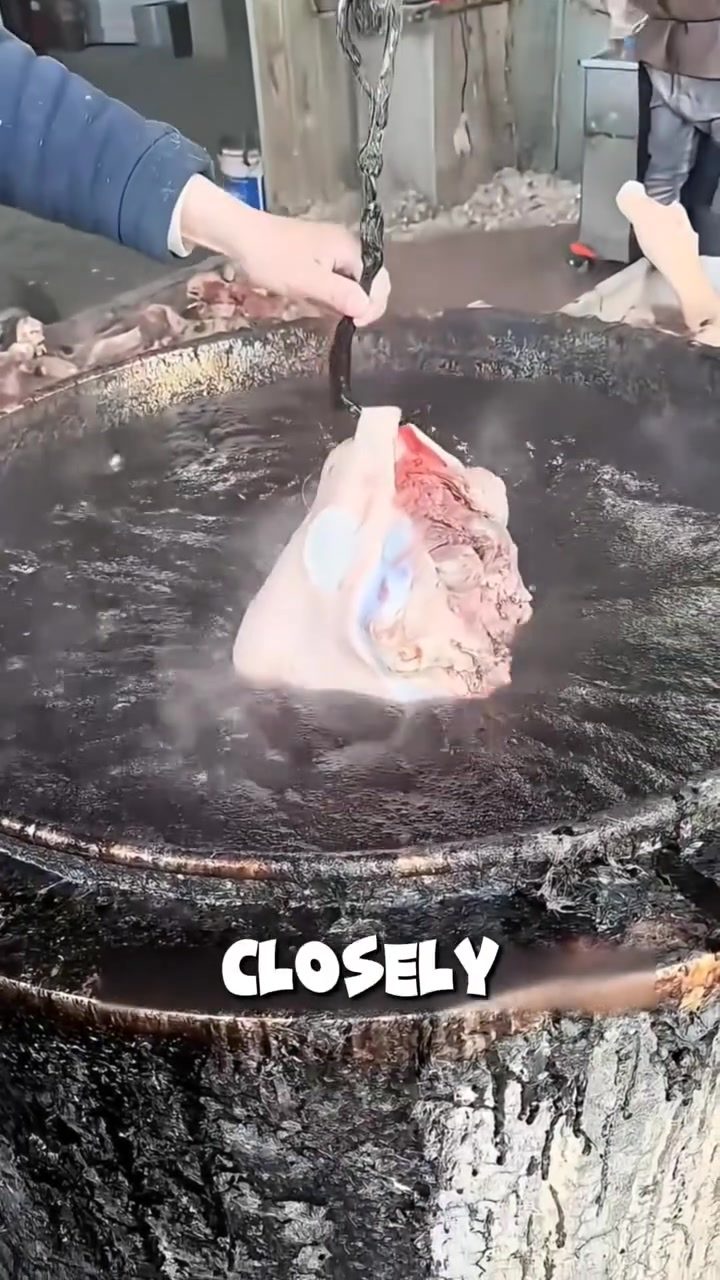
The Process of De-Hairing Cows in Food Processing: A Detailed Explanation
The process of de-hairing cow heads in food processing involves a technique that may look unconventional at first glance. This process, often referred to as the "asphalt de-hairing" method, is actually a crucial step in ensuring the cleanliness and safety of meat products.
Why This Matters
Understanding the de-hairing process is important for several reasons. Firstly, it ensures the removal of hair, which is necessary for maintaining hygiene standards. Secondly, the process involves the use of specialized materials that are food-grade and safe for consumption. Lastly, this method is widely used in slaughterhouses, making it a relevant topic for anyone interested in the food processing industry.
What is the De-Hairing Process?
The de-hairing process involves coating the cow's head with a black, sticky substance. This substance is then cooled in water, and once hardened, it is peeled away, removing the hair and leaving the surface clean. The de-hairing process is a critical step in food processing, as it ensures that the meat products are free from contaminants and safe for consumption.
Understanding the Material
The black material used in this process is often mistaken for asphalt, but it is actually a food-grade, rosin-based de-hairing agent. This material is legally used in slaughterhouses and is designed to adhere to the hair and other residues on the cow's head. Initially, the material is light yellow, but it gradually turns black due to repeated heating and contact with hair, blood, and other residues.
The Process in Detail
The de-hairing process begins with coating the cow's head in the rosin-based material. This material is then allowed to cool in water, which hardens it. Once hardened, the material is peeled away, taking with it the hair and other residues. This leaves the cow's head clean and ready for further processing. Responsible operators regularly replace the material with fresh batches to ensure food safety.
The Importance of Proper De-Hairing
Proper de-hairing is essential for maintaining hygiene and safety standards in the food processing industry. It ensures that the meat products are free from contaminants and safe for consumption. The use of food-grade, rosin-based de-hairing agents is a legal and effective method for achieving this.
Ensuring Food Safety
To ensure food safety, responsible operators regularly replace the de-hairing material with fresh batches. This practice helps to prevent the buildup of contaminants and ensures that the meat products are safe for consumption. The regular replacement of the material is a crucial step in maintaining hygiene and safety standards.
Practical Tips
For those involved in food processing, here are some practical tips for effective de-hairing:
- Use Food-Grade Materials: Always use food-grade, rosin-based de-hairing agents to ensure the safety of the meat products.
- Regular Replacement: Regularly replace the de-hairing material with fresh batches to prevent the buildup of contaminants.
- Proper Cooling: Allow the material to cool properly in water to ensure that it hardens and can be easily peeled away.
- Cleanliness: Maintain cleanliness throughout the de-hairing process to minimize the risk of contamination.
Important Takeaways
The de-hairing process is a critical step in food processing that ensures the cleanliness and safety of meat products. The use of food-grade, rosin-based de-hairing agents is a legal and effective method for achieving this. Responsible operators should regularly replace the material with fresh batches to maintain hygiene and safety standards.
Conclusion
The process of de-hairing cow heads in food processing is a crucial step in ensuring the cleanliness and safety of meat products. Understanding this process is important for anyone involved in the food processing industry. By using food-grade, rosin-based de-hairing agents and regularly replacing the material, operators can maintain high hygiene and safety standards, ensuring that the meat products are safe for consumption.
Questions readers ask
What is the black goo used in the cow de-hairing process?
The black goo used in the cow de-hairing process is a rosin-based substance, not asphalt. This material is food-grade and specifically designed to adhere to hair and residues on cow carcasses, ensuring thorough removal and maintaining hygiene standards.
Is the black substance used in cow de-hairing safe for consumption?
Yes, the black substance used in cow de-hairing is a food-grade material. It is designed to be safe for use in food processing and does not pose any risks to consumers when used correctly.
Why is the cow de-hairing process important in slaughterhouses?
The cow de-hairing process is crucial for removing hair and residues from cow carcasses, which helps maintain hygiene and cleanliness in slaughterhouses. This process ensures that the meat products are safe and free from contaminants.
Can I find videos explaining the cow de-hairing process?
Yes, there are videos available that detail the cow de-hairing process. These videos can provide a visual explanation of how the rosin-based substance is applied and how it effectively removes hair from cow carcasses.
What are the alternatives to using asphalt in the cow hair removal operation?
A common alternative to asphalt for the cow hair removal operation is a rosin-based substance. This food-grade material is safer and more effective for adhering to hair and residues, making it a preferred choice in modern slaughterhouses.
What role does the rosin-based substance play in the cow head de-hairing method?
The rosin-based substance plays a key role in the cow head de-hairing method by adhering to hair and residues, allowing for efficient removal. This process is vital for ensuring the cleanliness and safety of meat products in slaughterhouses.
How does the de-hairing process with rosin ensure slaughterhouse cleanliness?
The de-hairing process with rosin ensures slaughterhouse cleanliness by effectively removing hair and residues from cow carcasses. The rosin based substance adheres to these materials, making them easy to remove and maintaining a hygienic environment.
Recent articles
Fresh deep dives from the latest Reels we unpacked.




Comments
Be the first to comment.