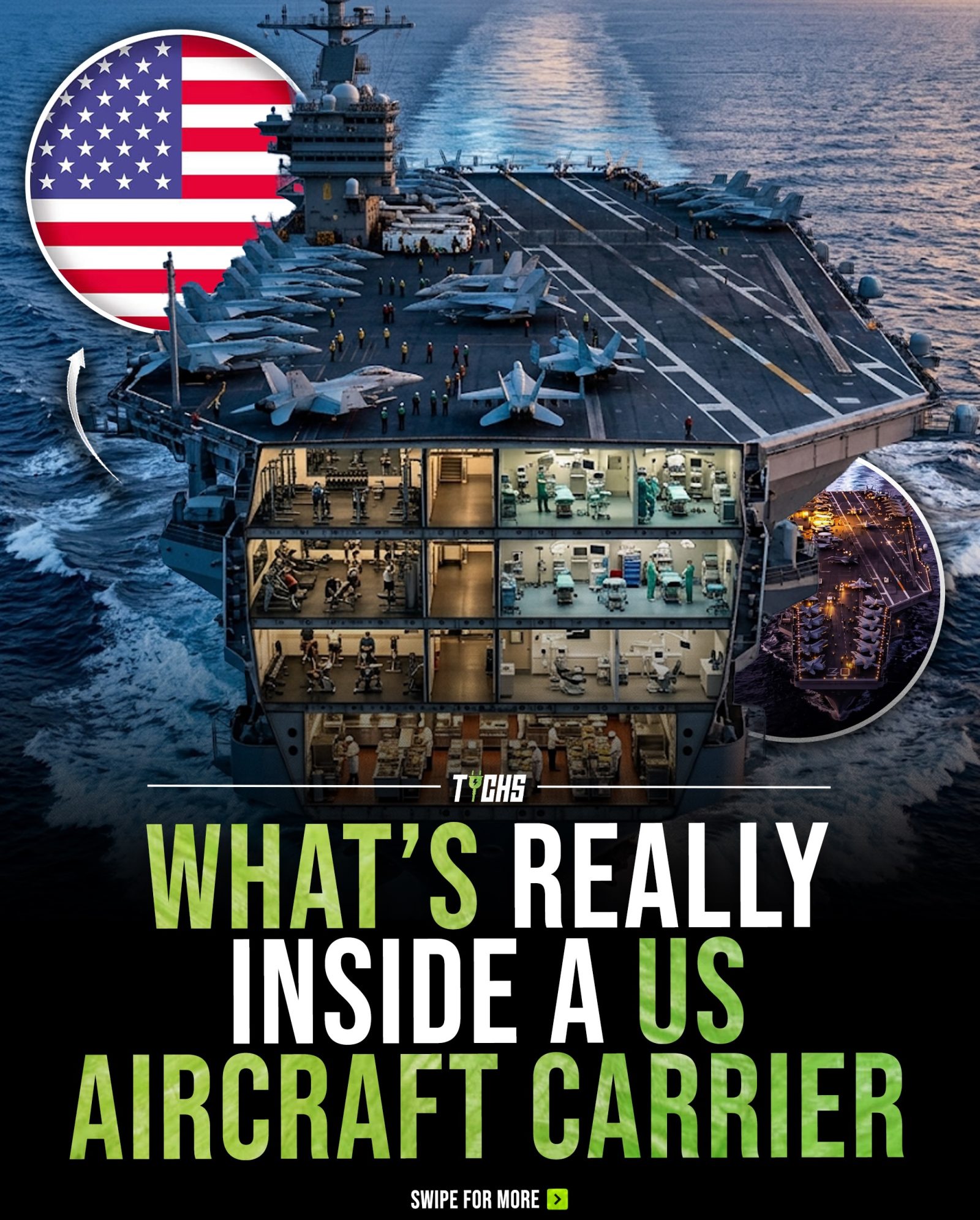
Inside a US Aircraft Carrier
A US aircraft carrier is more than just a warship; it functions as a massive floating city, complete with its own power systems, hospitals, water supply, security, and daily services for thousands of sailors. These vessels, such as the Nimitz-class aircraft carriers, operate using nuclear reactors that can run for decades without the need for refueling. This self-sustaining capability allows them to support long deployments at sea, making them essential for global military operations.
Why This Matters
Understanding the intricate workings of a US aircraft carrier provides insight into the logistical and operational complexities of modern naval warfare. These carriers are not merely platforms for launching aircraft; they are self-contained military cities designed to operate independently for extended periods. This capability is crucial for maintaining global military presence and readiness.
Operational Spaces and Facilities
Power and Propulsion
Nimitz-class aircraft carriers are powered by two nuclear reactors, which generate an enormous amount of electricity. This power is used to run everything from the massive radar systems to the elevators and air conditioning units. The nuclear propulsion system allows these carriers to stay at sea for extended periods without refueling, making them ideal for long-term deployments.
Medical Facilities
Aircraft carriers are equipped with comprehensive medical facilities, including hospitals, ICUs, and dental clinics. These facilities are crucial for maintaining the health and wellness of the crew, who often spend months at sea. The medical teams onboard are trained to handle a wide range of medical emergencies, from minor injuries to complex surgeries.
Religious and Recreational Spaces
Religion and mental health are prioritized on these vessels. These vessels include chapels for multiple religions, ensuring that sailors of all faiths have a place to practice their beliefs. In addition, some carriers have carried sacred artifacts, such as Torah scrolls that survived the Holocaust, emphasizing the importance of cultural and religious preservation.
Security and Detention
Every aircraft carrier is equipped with a brig, or military jail, to handle disciplinary matters. These facilities ensure that the ship's security and order are maintained, allowing for smooth operations even during extended deployments. Brigs are a critical component of the ship's security infrastructure, ensuring that any disruption is swiftly and effectively managed.
Daily Services
To maintain morale and functionality for the thousands of sailors onboard, aircraft carriers offer a range of daily services. These include barber shops, post offices, and even recreational facilities. These services help create a sense of normalcy and comfort, making long deployments more bearable for the crew.
Practical Tips for Understanding Aircraft Carriers
If you're interested in learning more about aircraft carriers, here are some practical tips to guide your exploration:
- Research the History: Understanding the historical context of aircraft carriers, from their inception to their current designs, can provide deeper insights into their significance and evolution.
- Visit a Naval Museum: Many naval museums offer detailed exhibits on aircraft carriers, showcasing their history, technology, and operational capabilities.
- Engage with Veterans: Talking to veterans who have served on aircraft carriers can offer firsthand accounts and personal experiences, providing a more human perspective on life at sea.
Important Takeaways
- Self-Sustaining Capabilities: Aircraft carriers are designed to operate independently for extended periods, making them essential for global military operations.
- Comprehensive Facilities: These vessels are equipped with a range of facilities, from medical care to religious spaces, ensuring the well-being of the crew.
- Security and Order: Brigs and other security measures are in place to maintain order and discipline, crucial for smooth operations.
- Technological Marvels: Nuclear propulsion and advanced medical facilities make these vessels technological marvels of the modern world.
Conclusion
A US aircraft carrier is much more than a warship; it is a self-contained military city capable of operating anywhere in the world. From power systems to medical facilities and recreational spaces, these vessels are designed to sustain thousands of sailors for extended periods. Understanding the operational complexities and facilities of these carriers provides a deeper appreciation for their role in modern naval warfare and global military presence.
Questions readers ask
How does a US aircraft carrier generate power for its extensive operations?
US aircraft carriers, particularly those like the Nimitz class, utilize nuclear reactors for power generation. These reactors can operate for extended periods without the need for refueling, providing a reliable and continuous power source for the entire ship, including its medical facilities, daily services, and security systems.
What kind of medical facilities can be found on a US aircraft carrier?
Aircraft carriers are equipped with extensive medical facilities that can handle a wide range of medical needs, from routine check-ups to emergency surgeries. These facilities are staffed with trained medical personnel and include advanced medical equipment to support the health and well-being of the thousands of sailors on board.
How do US aircraft carriers maintain a self-sustaining environment for extended deployments?
These carriers are designed to be self-sustaining, with their own power generation, water supply, and extensive logistical systems. They can operate independently for long periods, allowing them to maintain a strong global military presence and readiness without frequent returns to port.
What daily services are available to sailors on a US aircraft carrier?
Sailors on board have access to a variety of daily services, including dining facilities, laundry services, and recreational areas. These services help maintain morale and ensure that sailors have the necessary support to perform their duties effectively during their extended deployments.
How does the structure of a US aircraft carrier support its operational complexities?
The intricate design of an aircraft carrier includes a complex network of systems and infrastructure. This includes extensive logistical systems for managing supplies, advanced communication systems, and security measures to protect the vessel and its crew. The layout itself is optimized for operational efficiency, allowing for the smooth execution of naval operations.
What role do US aircraft carriers play in global military operations?
US aircraft carriers are crucial for maintaining global military presence and readiness. Their ability to support long deployments and operate independently makes them indispensable for various military operations, from humanitarian missions to combat operations, ensuring a rapid response to global security challenges.
How do nuclear-powered warships enhance the capabilities of a US aircraft carrier?
Nuclear power allows these warships to operate for decades without refueling, providing a consistent and reliable power source. This enhances their operational capabilities by ensuring that all systems, including medical and communications, can function continuously, even during extended deployments far from home ports.
Related deep dives
Similar reads based on topic and creator.




Recent articles
Fresh deep dives from the latest Reels we unpacked.




Comments
Be the first to comment.