AI Creative Workflow
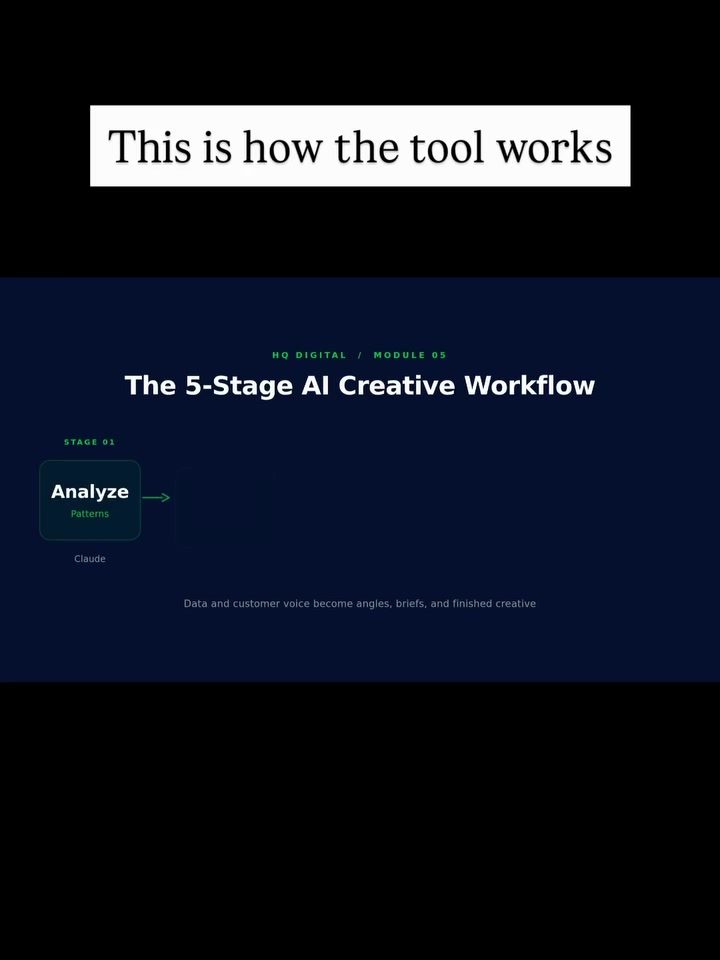
The AI creative workflow, particularly the 5-stage system developed by HQ DIGITAL, is a sophisticated approach that transforms raw data and customer feedback into compelling creative outputs. This process is designed to streamline the journey from initial data analysis to the final production of creative content, leveraging advanced AI tools to enhance efficiency and effectiveness.
Why This Matters
In the rapidly evolving landscape of digital marketing, the ability to convert raw data and customer insights into actionable creative strategies is more important than ever. Tools like Claude, NotebookLM, and Veo + MJ are increasingly being incorporated into the creative workflow to automate and optimize the process. When evaluating AI marketing solutions, it's clear that the real value lies in the systems that integrate these tools, rather than the tools themselves.
Main Discussion
The 5-Stage Process
The AI Creative Workflow is divided into five distinct stages: Analyze, Listen, Ideate, Brief, and Produce. Each stage plays a crucial role in converting data and customer feedback into creative outputs.
1. Analyze
The first stage, Analyze, focuses on identifying patterns and trends within the data. Tools like Claude are used to analyze large datasets to uncover insights that can be translated into creative angles and briefs. This stage is foundational, setting the direction for the entire creative process.
2. Listen
The Listen stage involves capturing and interpreting voice data to understand customer needs and preferences. NotebookLM is the primary tool used in this stage, helping to convert spoken feedback into actionable data that can inform the creative direction.
3. Ideate
In the Ideate stage, the focus is on generating a variety of creative angles. Tools such as Claude help generate over 30 different creative angles, providing a rich pool of ideas to draw from. This stage is about quantity and diversity, ensuring a wide range of options for the next stages.
4. Brief
The Brief stage involves creating detailed ad briefs based on the insights and ideas generated in the previous stages. Tools like Claude are used to refine and articulate these briefs, ensuring they are clear, actionable, and aligned with the overall creative strategy.
5. Produce
The final stage, Produce, is where the creative concepts are brought to life. Veo + MJ is used to create final ads that are polished and ready for deployment. This stage ensures that the creative vision is executed flawlessly, resulting in high-quality content that resonates with the audience.
Practical Tips
When implementing an AI creative workflow, there are several key considerations to keep in mind:
-
Data Quality: Ensure that the data being analyzed is accurate and comprehensive. High-quality data will lead to more insightful patterns and better creative ideas.
-
Tool Integration: Integrate the tools seamlessly to ensure a smooth transition between stages. Tools like Claude, NotebookLM, and Veo + MJ should work together harmoniously to optimize the workflow.
-
Customer Insights: Continuously listen to customer feedback to refine and adapt the creative strategy. This ensures that the creative outputs remain relevant and aligned with customer needs.
-
Iterative Process: Treat the creative workflow as an iterative process. Regularly revisit and refine each stage to improve the overall efficiency and effectiveness.
-
Vendor Evaluation: Be cautious of vendor solutions that simply wrap GPT models. Often, these tools add little value beyond what the underlying model already offers. Look for systems that offer a comprehensive, integrated approach.
Important Takeaways
AI creative workflows, particularly those developed by HQ DIGITAL, offer a structured and efficient way to transform data and customer feedback into creative outputs. The 5-stage process—Analyze, Listen, Ideate, Brief, and Produce—provides a clear roadmap for this transformation. By leveraging advanced AI tools like Claude, NotebookLM, and Veo + MJ, businesses can streamline their creative processes and produce high-quality, relevant content.
Conclusion
Developing an effective AI creative workflow involves more than just using the right tools. It requires a deep understanding of data, customer insights, and the creative process. By integrating tools like Claude, NotebookLM, and Veo + MJ, HQ DIGITAL has demonstrated a robust 5-stage workflow that turns raw data into finished creative. This process not only enhances efficiency but also ensures that the final output is aligned with customer needs and market trends. As businesses continue to explore AI-driven solutions, focusing on systems rather than individual tools will be crucial for success.
Questions readers ask
What are the five stages of HQ DIGITAL's AI Creative Workflow?
HQ DIGITAL's 5-Stage AI Creative Workflow includes data analysis, customer feedback integration, AI-driven ideation, content creation, and performance evaluation. Each stage builds on the previous one to ensure a seamless transition from data to compelling content.
How does HQ DIGITAL utilize AI tools in their creative workflow?
HQ DIGITAL employs advanced AI tools like Claude, NotebookLM, and Veo + MJ to automate and optimize various stages of the creative process. These tools help in analyzing data, generating ideas, and producing high-quality content efficiently.
Why is integrating customer feedback crucial in AI-driven marketing strategies?
Integrating customer feedback is essential as it provides real-world insights that guide the creation of relevant and impactful content. This voice of the customer helps in tailoring marketing strategies to better meet audience needs and expectations.
How does the AI creative workflow enhance content production efficiency?
By leveraging AI, the workflow automates repetitive tasks, accelerates the ideation process, and ensures that content is data-driven and strategically aligned. This results in faster production times and higher quality outputs.
What role does data analysis play in the AI creative process?
Data analysis is the foundation of the AI creative process. It involves examining raw data to uncover trends, patterns, and customer preferences. This analysis informs every subsequent stage, ensuring that the creative strategies are well-informed and targeted.
How do AI tools contribute to the optimization of the creative workflow?
AI tools optimize the creative workflow by providing sophisticated algorithms for content generation, personalization, and performance tracking. They ensure that the process is not only efficient but also aligned with the latest marketing trends and customer behaviors.
What benefits does a systematic AI creative workflow bring to digital marketing?
A systematic AI creative workflow brings several benefits, including improved efficiency, higher quality content, and better alignment with customer needs. It ensures that marketing efforts are data-driven, relevant, and impactful, ultimately leading to better outcomes.
Recent articles
Fresh deep dives from the latest Reels we unpacked.




Comments
Be the first to comment.