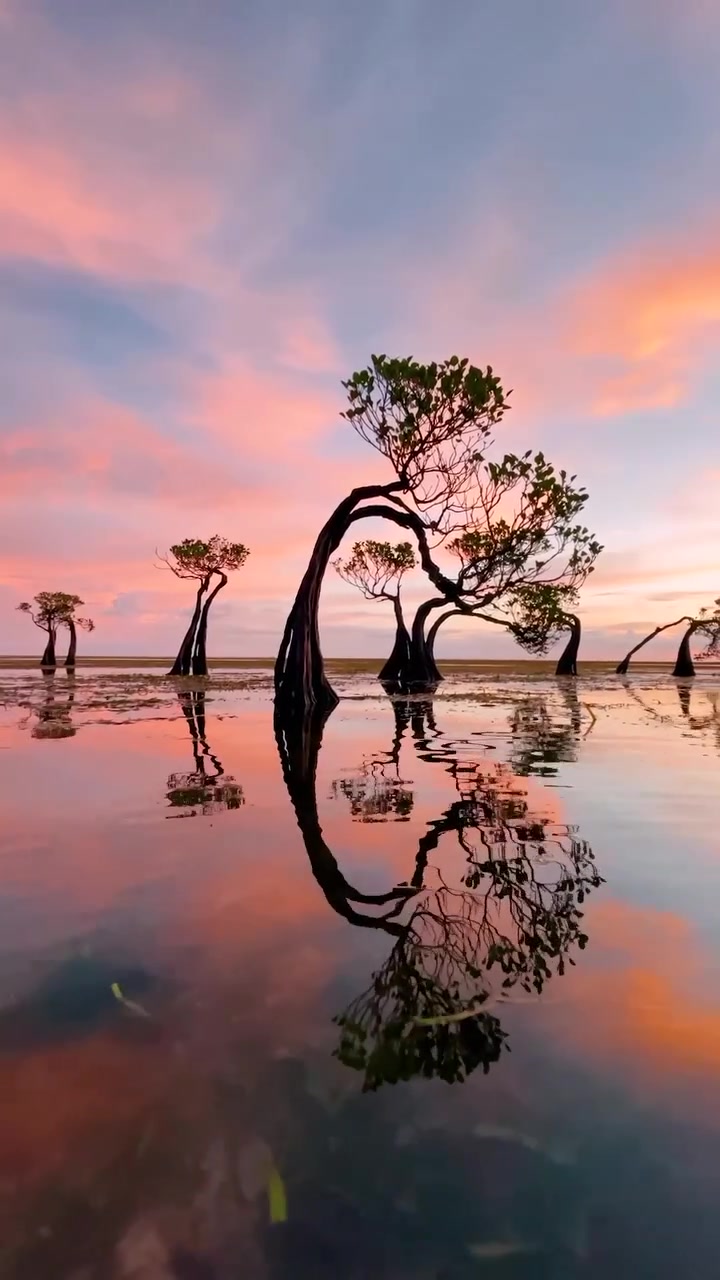
The Rains Evoke a Living Landscape
In the shallow waters of East Nusa Tenggara, Indonesia, nature has cultivated a spectacle of "dancing trees", whose intricate root systems create an illusion of dance as they stand exposed. The vibrant colors of a sunset paint a breathtaking backdrop, enhancing the natural beauty of the scene.
The Scene of Dancing Trees
Native to the lush ecosystems of East Nusa Tenggara, Indonesia, "dancing trees" exhibit a unique adaptation to their environment. These trees, known locally as Safari Mangrove Trees, grow out of shallow waters and are characterized by their distinctively curved trunks. Appearing to "dance" in the water due to their root systems growing above the water's surface, these trees capture the essence of nature's artistry. The shallow waters, vast mangrove forests, and coastal areas of East Nusa Tenggara create an ideal habitat for these trees, enabling them to thrive.
A Geographical Wonders
The presence of dancing trees in East Nusa Tenggara is a testament to Indonesia's diverse and unique ecosystems, which extend beyond the volcanic landscapes and terraced rice fields of Bali. The mangrove forests of Nusa Tenggara host these distinctive trees. This region's rich biodiversity and preserved ecosystems is a destination for nature enthusiasts and photographers alike.
The Mechanism of Their Growth
Root systems grow above the water’s surface — a distinctive trait of these trees. The way these roots adapt to the shallow waters creates a picture-perfect scene. Growing in coastal areas where mangrove forests dominate. The uniqueness of the trees beckons a deeper understanding of their ecological function. They serve as a barrier against erosion, providing shelter and sustenance for local marine life. The trees stabilize the soil, ensure the health of the ecosystems. Making them an ecological marvel.
The Visual Performance of the Trees
Sunset. The sky is filled with pink and orange hues, beautifully reflected in the water, creating a symmetrical and picturesque scene. Multiple trees are visible, each with a distinctive curved trunk and lush green foliage. The trees' symmetry, as they lean in various directions, creates a visually stunning scene.
The Lush Green Folage
The trees’ foliage is as much a part of their charm as their curved trunks. The lush green leaves provide a stark contrast to the vibrant colors of the sunset, adding depth and dimension to the landscape. The trees' ability to thrive in such unique conditions speaks to the resilience of nature.
Protection and Preservation
Observing these trees underscores the importance of conserving unique ecosystems. The mangrove forests of East Nusa Tenggara, where these trees thrive, are crucial for maintaining biodiversity and protecting coastal areas. Preservation efforts ensure that future generations can witness the beauty of these dancing trees. Efforts include ecological tourism, which balances the need to showcase natural wonders with the imperative to protect them.
The Art of Envisioning the Dancing Trees
For those captivated by the dancing trees and eager to witness this natural phenomenon, there are several steps to ensure a fulfilling experience. Knowing the best time to visit, understanding the local ecosystem and respecting it, and capturing the beauty through photography.
- Best Time to Visit: The most vibrant spectacles occur during sunset, when the sky is filled with pink and orange hues and the trees create a picturesque, symmetrical scene.
- Understanding the Ecosystem: Visitors can explore the vast mangrove forests and coastal areas to fully appreciate the unique habitat of the dancing trees.
- Respecting the Environment: Follow principles of responsible travel, and always support local conservation efforts.
- Capturing the Moment: Bring a good camera, in case you want to document the magic. Avoid using flash and use a tripod to keep your photos stable and clear.
- Local Guidance: Consider hiring a local guide who can provide insights into the local ecosystem and its preservation.
The Serene Dance of Nature
The visual symmetry and vibrant colors of the sunset create an enchanting atmosphere. The dancing trees stand as a testament to nature's boundless creativity, offering a serene retreat for those seeking to immerse themselves in its untouched beauty.
Questions readers ask
Where exactly in East Nusa Tenggara can I find these 'dancing trees'?
The 'dancing trees' are found in the mangrove forests of East Nusa Tenggara, Indonesia. While the article doesn't specify a particular location, it mentions that they thrive in the shallow waters and coastal areas of the region. You might want to look for areas known for their mangrove forests, as that's where these trees are likely to be found.
What makes the root systems of these trees unique?
The root systems of these trees, known locally as Safari Mangrove Trees, are unique because they grow above the water's surface. This adaptation allows them to create the illusion of dancing trees. It also helps them to stabilize the soil and protect against erosion, making them an important part of the local ecosystem.
Are there any other places in the world where I can see a similar phenomenon?
While the article doesn't mention any other locations, the phenomenon of trees with exposed root systems is not unique to East Nusa Tenggara. However, the specific conditions and the visual spectacle created by the sunset and the shallow waters make this particular location special. Other mangrove forests around the world might have similar tree adaptations, but the overall experience might differ.
How do these trees contribute to the local ecosystem?
These trees serve multiple ecological functions. Their root systems help to stabilize the soil and protect against erosion. They also provide shelter and sustenance for local marine life, contributing to the overall health and biodiversity of the ecosystem. Additionally, they act as a barrier, protecting coastal areas from environmental impacts.
What efforts are being made to protect and preserve these unique ecosystems?
The article mentions that preservation efforts are underway to protect the mangrove forests where these trees thrive. These efforts include promoting ecological tourism, which aims to showcase the natural wonders while ensuring their protection. This approach helps to balance the need for tourism with the imperative to conserve the environment.
How do the trees' foliage and the sunset create such a stunning visual scene?
The lush green foliage of the trees provides a stark contrast to the vibrant colors of the sunset, which are beautifully reflected in the shallow waters. This contrast, along with the trees' distinctive curved trunks and their symmetrical arrangement, creates a visually stunning scene that captivates viewers.
What is the best way to experience the dancing trees at sunset?
To fully experience the dancing trees at sunset, you would want to visit the mangrove forests during the late afternoon. The article highlights the beauty of the scene as the sun sets, with the sky filled with pink and orange hues reflected in the water. Make sure to plan your visit accordingly and perhaps bring a camera to capture the stunning visuals.
Related deep dives
Similar reads based on topic and creator.



Recent articles
Fresh deep dives from the latest Reels we unpacked.


Comments
Be the first to comment.