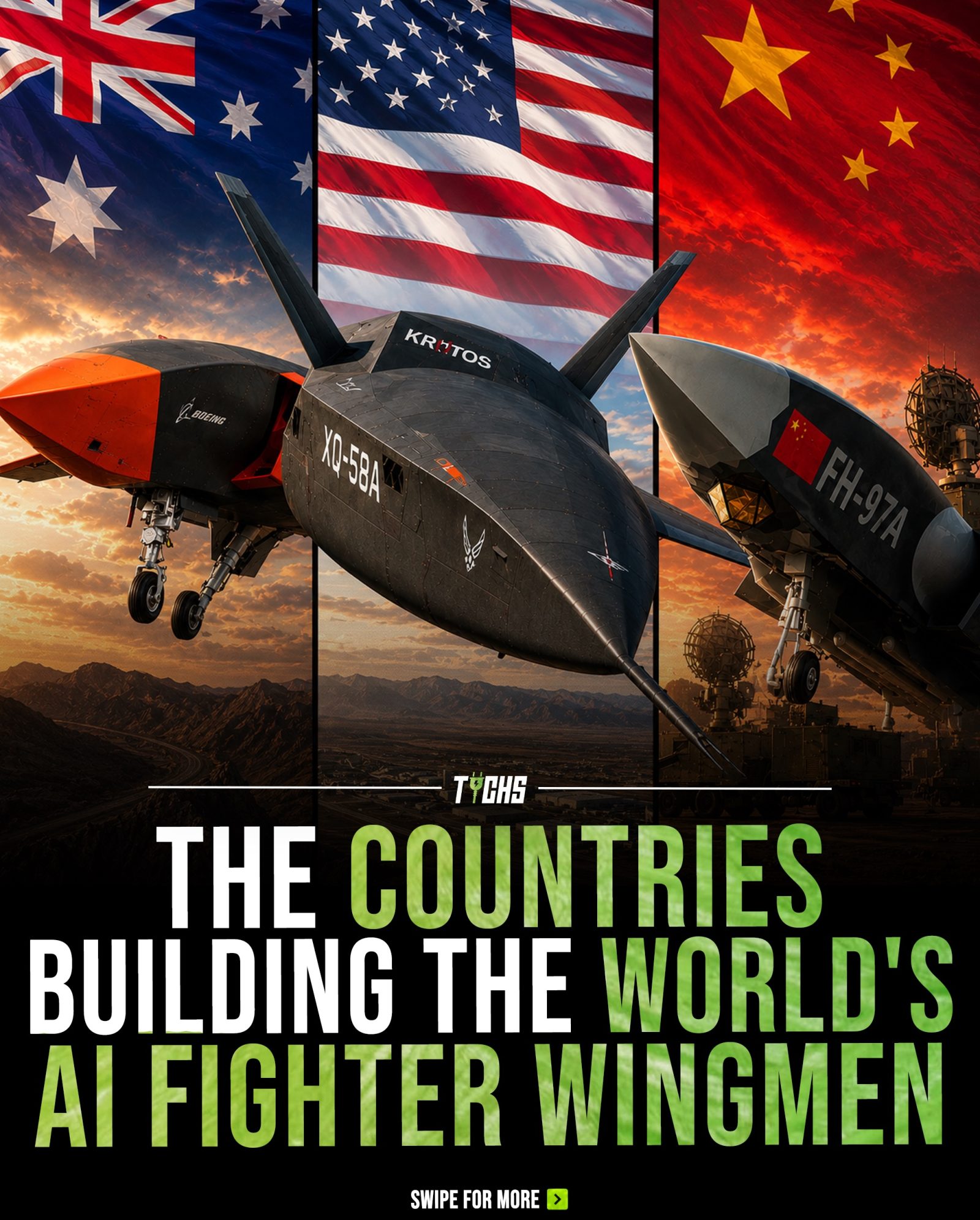
AI Fighter Wingmen: The Future of Air Warfare
AI-powered fighter wingmen are rapidly becoming a pivotal aspect of air combat across the globe. These autonomous aircraft are designed to fly alongside crewed fighters, enhancing their capabilities through reconnaissance, electronic warfare, and combat support missions. Countries around the world are actively investing in this technology, recognizing its potential to significantly impact modern warfare.
Why This Matters
The development of AI fighter wingmen is driven by the need to reduce pilot risk, extend mission capabilities, and improve battlefield awareness. These wingmen can operate in high-risk environments, allowing human pilots to focus on critical missions while the autonomous systems handle support roles. This not only increases the effectiveness of air operations but also ensures the safety of crewed aircraft.
Key Programs and Technologies
Several countries are at the forefront of developing AI fighter wingmen, each with unique programs and technologies.
The United States
The United States is a leader in this field, with notable programs like the XQ-58A Valkyrie and the MQ-28 Ghost Bat. The XQ-58A Valkyrie, developed by Kratos, is designed for a variety of missions, including reconnaissance and electronic warfare. Similarly, the MQ-28 Ghost Bat, developed by Boeing, is an autonomous aircraft designed to work alongside manned fighters. These aircraft are built to enhance the capabilities of existing air forces by providing additional support and reducing the risk to human pilots.
China
China's FH-97A is another key player in the AI wingman arena. Designed to support stealth fighters, the FH-97A is capable of combat, reconnaissance, and electronic warfare missions. This aircraft is part of China's broader strategy to modernize its military capabilities, leveraging AI to enhance its air combat prowess. The FH-97A's ability to work alongside stealth fighters makes it a formidable addition to China's arsenal, providing enhanced situational awareness and support in high-risk missions.
South Korea
South Korea is developing the KF-21 Loyal Wingman, an AI-powered drone designed to operate alongside the KF-21 fighter aircraft. This autonomous system aims to strengthen the country's future air combat capabilities by providing critical support in reconnaissance, electronic warfare, and combat missions. The KF-21 Loyal Wingman is part of South Korea's efforts to build a more advanced and independent defense system, reducing reliance on foreign technology.
Russia
Russia's S-70 Okhotnik-B is another notable AI wingman in development. Designed to support Russia's existing fighter aircraft, the S-70 Okhotnik-B is a stealthy, autonomous drone capable of various combat and reconnaissance missions. This aircraft is part of Russia's broader strategy to enhance its military capabilities through advanced technology, leveraging AI to improve air combat effectiveness.
Türkiye
Türkiye's Bayraktar Kızılelma is an AI wingman designed to operate alongside crewed fighters, providing support in reconnaissance, electronic warfare, and combat missions. This development showcases Türkiye's commitment to modernizing its military capabilities and reducing reliance on foreign technology. The Bayraktar Kızılelma is a testament to Türkiye's growing expertise in drone technology, offering a unique and valuable addition to its air force.
United Kingdom
The UK's Future Combat Air System (FCAS) Collaborative Aircraft is another example of AI wingmen in development. This autonomous system is designed to work alongside crewed fighters, providing critical support in various missions. The FCAS Collaborative Aircraft is part of the UK's broader strategy to enhance its military capabilities, leveraging AI to improve air combat effectiveness and reduce pilot risk.
Practical Tips for Understanding AI Fighter Wingmen
Understanding the role and capabilities of AI fighter wingmen can provide valuable insights into the future of air warfare. Here are some practical tips to keep in mind:
- Recognize the Role: AI fighter wingmen are designed to support crewed fighters, not replace them. Their primary role is to enhance the capabilities of human pilots by providing additional support in reconnaissance, electronic warfare, and combat missions.
- Understand the Technology: Familiarize yourself with the technology behind AI fighter wingmen. This includes understanding the AI systems that enable autonomous flight, the sensors and weapons systems that allow these aircraft to perform their missions, and the communication systems that enable them to work alongside crewed fighters.
- Stay Updated: The field of AI fighter wingmen is rapidly evolving, with new technologies and developments emerging regularly. Stay updated on the latest advancements to understand how these aircraft are shaping the future of air warfare.
Important Takeaways
- Reduced Pilot Risk: AI fighter wingmen can operate in high-risk environments, reducing the need for human pilots to engage in dangerous missions.
- Enhanced Capabilities: These wingmen can perform a variety of missions, including reconnaissance, electronic warfare, and combat support, enhancing the overall capabilities of air forces.
- Future of Warfare: As AI continues to advance, loyal wingmen could become one of the most important force multipliers in future air combat, significantly impacting the way wars are fought.
Conclusion
AI fighter wingmen are set to revolutionize air warfare, providing critical support to crewed fighters and enhancing their capabilities. With countries around the world investing in this technology, it is clear that AI-powered wingmen will play a crucial role in shaping the future of combat. By understanding the key programs, technologies, and capabilities of these autonomous systems, we can better appreciate their impact on modern warfare and the future of air combat.
Questions readers ask
What are AI fighter wingmen and how do they assist in air combat?
AI fighter wingmen are autonomous aircraft designed to fly alongside crewed fighters, enhancing their capabilities through various missions, such as reconnaissance, electronic warfare, and combat support. They provide real-time data, handle high-risk tasks, and improve overall battlefield awareness, allowing human pilots to focus on critical decision-making.
Which countries are at the forefront of developing AI fighter wingmen?
The United States and China are leading the development of AI fighter wingmen. Both nations are investing heavily in this technology to gain a strategic advantage in modern warfare. Other countries, like South Korea, are also showing significant interest and progress in this domain.
How do AI fighter wingmen reduce pilot risk during missions?
AI fighter wingmen can operate in high-risk environments, such as areas with heavy enemy fire or dangerous terrain, allowing human pilots to avoid these hazards. By handling support roles and reconnaissance, these autonomous aircraft enable pilots to focus on critical missions and return safely.
What specific roles do AI fighter wingmen play in modern warfare?
AI fighter wingmen conduct reconnaissance missions to gather real-time intelligence, engage in electronic warfare to disrupt enemy communications, and provide combat support by handling tasks such as suppressing enemy defenses and protecting friendly forces, ultimately enhancing overall mission effectiveness.
How do AI fighter wingmen improve battlefield awareness for crewed fighters?
AI fighter wingmen offer real-time data and intelligence, providing a comprehensive view of the battlefield. This information enables crewed fighters to make informed decisions, respond to threats more effectively, and coordinate their actions with greater precision, enhancing the overall situational awareness.
Can AI fighter wingmen operate independently, or do they require constant human supervision?
AI fighter wingmen are designed to operate autonomously, performing tasks and making decisions with minimal human intervention. However, they are equipped with fail-safe mechanisms and can be monitored by ground control stations to ensure they adhere to mission parameters and respond to unexpected situations.
What are the potential future advancements for AI fighter wingmen in air combat?
Future advancements may include improved AI algorithms for better decision-making, enhanced stealth capabilities for covert operations, and integration with swarm technologies for coordinated group tactics. Additionally, advancements in communication systems will enable more seamless coordination between wingmen and crewed fighters, ultimately enhancing mission effectiveness and adaptability.
Recent articles
Fresh deep dives from the latest Reels we unpacked.




Comments
Be the first to comment.