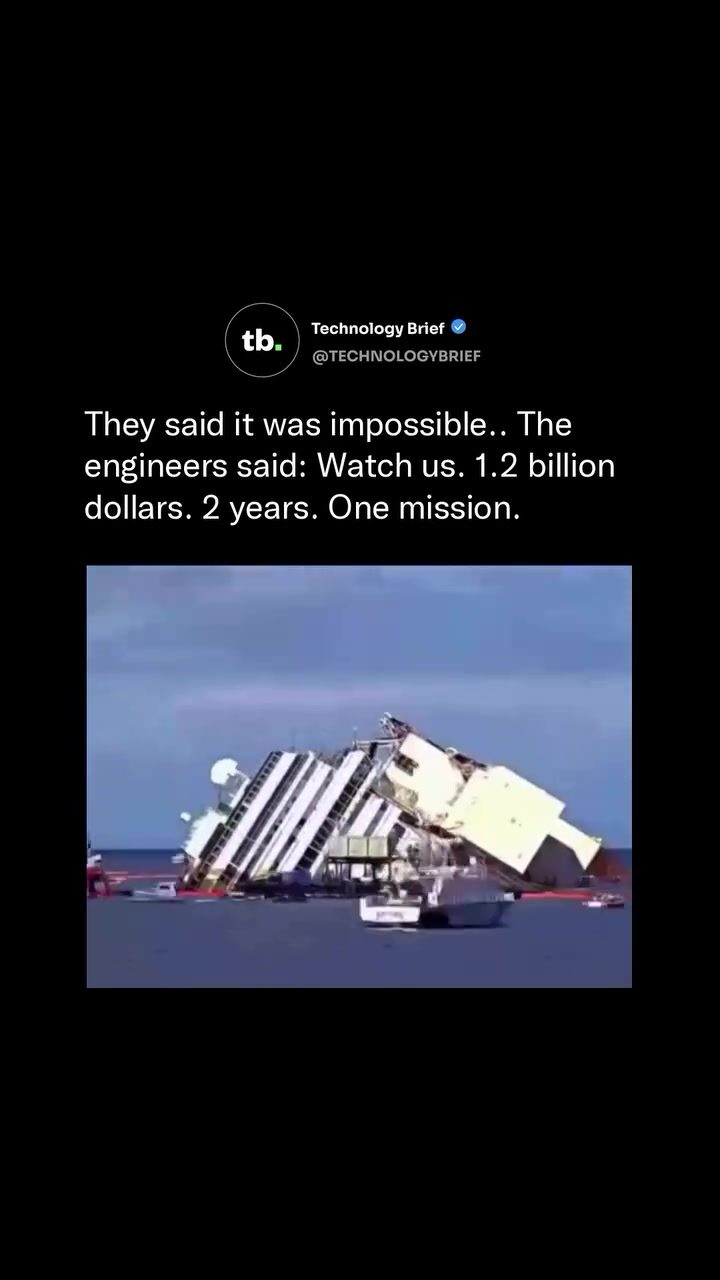
Ship Salvage: The Incredible Story of the Costa Concordia
The Costa Concordia cruise ship disaster on January 13, 2012, marked one of the most intricate and expensive maritime wreck removals in history. The ship ran aground off Giglio Island, Italy, resulting in 32 fatalities and leaving the 114,500-ton vessel tilted on its side in shallow water. This catastrophic event sparked an unprecedented engineering challenge that would span over five years and cost billions.
Context / Why this matters
The salvage operation of the Costa Concordia was anything but straightforward. Engineers faced a problem of monumental scale, one that had never been solved before. The complexities involved in righting, refloating, and eventually towing the massive vessel to Genoa for scrapping made this an engineering feat for the history books. This operation is not just about the monumental engineering challenge; it represents a turning point in maritime safety and disaster management.
The Parbuckling Process
One of the key recovery methods employed in the salvage was parbuckling. This process involves welding massive steel flotation tanks, known as sponsons, to the ship's hull. A network of cables and hydraulic strand jacks was then used to slowly rotate the entire vessel upright. This meticulous process took 19 hours on September 16–17, 2013, and required an immense amount of precision and coordination.
Building an Artificial Seafloor
To support the righted ship, engineers constructed an artificial seafloor using 30,000 tons of cement. This artificial foundation provided a stable base for the vessel, ensuring it would not sink or shift during the subsequent stages of the salvage operation. This innovative solution showcased the advanced engineering tactics used to overcome the challenges posed by the disaster.
Cost and Duration
The entire salvage, refloating, towing, and scrapping process took until 2017 and cost an estimated $2 billion. This astronomical figure is roughly three times the original cost of building the ship, underscoring the immense scale and complexity of the operation. The project was described as 'impossible' by many, but engineers rose to the occasion, demonstrating the power of human ingenuity and determination.
The Engineering Marvel
The salvage of the Costa Concordia involved numerous engineering milestones. The sheer size and weight of the vessel, combined with its precarious position, made the operation a logistical nightmare. Engineers had to devise innovative solutions to tackle each challenge, from stabilizing the ship to constructing an artificial seafloor. The completion of the project two years later was a testament to the engineers' relentless pursuit of a seemingly impossible goal.
Practical Tips
For those interested in the practical aspects of maritime salvage, the Costa Concordia case offers several key takeaways. The successful execution of the parbuckling process and the construction of an artificial seafloor are examples of engineering excellence. Engineers used meticulous planning, cutting-edge technology, and innovative solutions to overcome seemingly insurmountable challenges.
Preparation and Planning
One of the most crucial aspects of the Costa Concordia salvage was the extensive planning and preparation. Engineers spent months analyzing data, conducting simulations, and developing detailed plans. This meticulous approach ensured that every phase of the operation was executed with precision, minimizing risks and maximizing efficiency.
Innovative Solutions
The Costa Concordia salvage operation highlighted the importance of innovation in engineering. Engineers had to come up with novel solutions to address the unique challenges posed by the disaster. From the use of sponsons to the construction of an artificial seafloor, these innovative approaches showcased the power of creativity and resourcefulness in overcoming obstacles.
Important Takeaways
The Costa Concordia disaster and its subsequent salvage operation serve as a reminder of the complexities and challenges involved in maritime disasters. The salvage process showcased the importance of planning, precision, and innovation in engineering. The successful completion of the operation underscores the power of human ingenuity and determination in the face of adversity.
Engineering Excellence
The Costa Concordia salvage operation was a testament to engineering excellence. Engineers demonstrated their ability to tackle complex challenges with precision and innovation. The successful execution of the parbuckling process and the construction of an artificial seafloor are examples of engineering mastery.
Maritime Safety
The disaster also highlighted the importance of maritime safety. The Costa Concordia incident served as a wake-up call for the industry, prompting a reevaluation of safety protocols and disaster management strategies. The lessons learned from this tragedy have contributed to the development of more robust and efficient maritime safety measures.
Conclusion
The salvage of the Costa Concordia was a monumental engineering feat that showcased the power of human ingenuity and determination. The operation required meticulous planning, cutting-edge technology, and innovative solutions to overcome the challenges posed by the disaster. The successful completion of the project two years later was a testament to the engineers' relentless pursuit of a seemingly impossible goal. For engineers and maritime enthusiasts alike, the Costa Concordia salvage operation serves as a reminder of the complexities and challenges involved in maritime disasters and the importance of innovation and precision in engineering.
Recent articles
Fresh deep dives from the latest Reels we unpacked.




Comments
Be the first to comment.