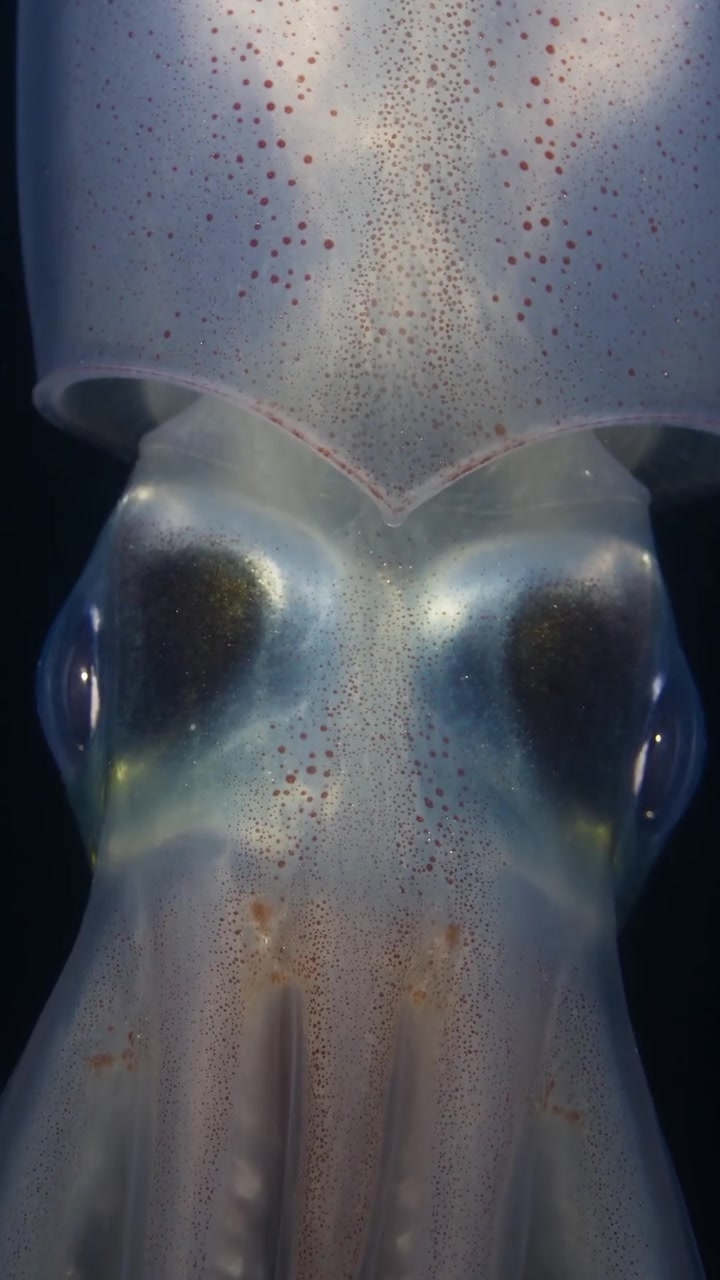
The colossal squid is a creature of formidable proportions. The heaviest known invertebrate and only animal without a backbone to weigh up to 500 kilograms. But that's not what surprises scientists. It is how little that we know about them. Until 2025, there were no confirmed images of a live colossal squid, baby or adult. So a 30-centimeter baby drifting into a robot’s light in the Southern Ocean for the first time was monumental. This discovery highlights the many secrets that the ocean keeps.
The Heaviest Invertebrate
Colossal squids live in the coldest and most inaccessible depths of the ocean. The colossal squid's size is impressive, reaching 12 meters in length. They are related to the giant squid but are even heavier and have the largest beak of any cephalopod. Drifting 600 meters below the surface, the juvenile colossal squid is a tiny and translucent creature, with large eyes and long, web-like tentacles. The squid's hefty size results from a specific adaptation to the extreme pressures and frigid temperatures of the deep sea. Like other cephalopods, they have a mass of nerves instead of a brain. The translucent squid's distinctive feature is not its large size, but its stealth. The animal is difficult to spot, camouflaging itself against the dark waters with its translucent and soft body.
The Dark Ocean Opportunities
The southern ocean. Diving into the deep ocean requires special equipment, and expeditions are treacherous. But that darkness can help. The colossal squid avoids light. As a result, the colossal squid was elusive to researchers who used traditional snorkeling and diving methods. Humans are not destined to remain at the ocean surface. We need to learn to explore the deep sea with robots and other technologies. Expanded research in marine ecosystems could lead to significant discoveries, including unknown species and vital insights into the ocean’s role in maintaining life on Earth. Opportunities are not limited to finding novel species. Life below the ocean's surface could reveal essential information about complex marine ecosystems that will inform and support the conservation of these habitats. Deep-sea exploration is also crucial for advancing technological and scientific research. The extreme conditions of the deep ocean, including high pressure, low temperature, and complete darkness, create unique challenges for scientists and engineers. These challenges drive innovation in robotics, material science, and biomedical engineering. Over half a decade was spent to use a robotic light to capture this baby squid. The challenges for bioluminescent technology can drive advancements in medicine.
Secrets in the Squid's Growth
The dominance of the colossal squid is due to its ability to grow rapidly into adulthood to become the heaviest invertebrate. This growth is facilitated by the squid's gradual adaptation to the temperature and pressure of the deep ocean, seeking food sources that are nutritious, and specialized reproduction to sustain the population. At 30 centimeters, the young squid has significant growth potential. The typical lifespan of these invertebrates is unknown, as researchers have yet to locate a mature specimen.
The Jellyfish Immortal
Biological immortality, or biologial infinity, refers to the ability of an organism to remain forever young. This phenomenon is often studied in animals that can regenerate tissues and organs or even regrow an entirely new body from a small piece of their original body. One species that is capable of biological immortality is the jellyfish. The immortal jellyfish, Turritopsis dohrnii, is one of the few organisms to achieve such a feat. This jellyfish can revert its cells to a juvenile state, allowing it to escape death. The jellyfish's ability to reverse its cellular state and transform back into a polyp is a unique characteristic. The immortal jellyfish can repeatedly revert to its polyp stage, theoretically allowing it to live for an indefinite period. This jellyfish is an outlier. The majority of jellyfish are stationary and have a finite lifespan. Due to its infinite growth potential and longevity, the immortal jellyfish represents a potent symbol of eternal youth. These creatures are also important for marine ecosystems. Mutable species like the immortal jellyfish can survive and thrive in environments with limited resources. The ability of the jellyfish to reverse its cellular state and transform back into a polyp is a unique characteristic that makes it a valuable subject for further study.
Lake of the Sea
Underwater lakes. There are underwater lakes, and while you might think that the term 'lake' refers to lakes on land, they are actually bodies of water that are surrounded by land or other geological formations and are not connected to any other body of water. When the term is used to describe a body of water that is surrounded by land, it is generally referring to a lake that is located on or near the seafloor. Underwater lakes can also be found in rivers, other lakes, or even in caves. Sometimes, these lakes are connected to the ocean, and sometimes they are not. While a lake can be a body of freshwater or saltwater, the latter is more common in the ocean, as it is already abundant in saltwater.
Lake Atacama Under the Sea
The Gulf of Mexico houses an underwater lake at a depth of 1,000 meters. It is a rare and little-known phenomenon, known as a brine pool. The underwater lake is a body of water that is surrounded by land or other geological formations. Unlike fresh water lakes, the underwater lake's distinctive feature is its salinity. The underwater lake's surface is not visible from above, as it is covered by a layer of brine, which is denser than seawater and does not mix with it. This separation results in a distinct boundary between the two bodies of water, with the brine pool containing a higher concentration of salt, magnesium, and other minerals than the surrounding ocean water. This unique environment supports a diverse range of marine life, including bacteria, invertebrates, and fish, providing a fresh new perspective on the depths of the ocean. The underwater lake is a unique phenomenon that has yet to be fully understood, and its discovery highlights the many mysteries that the ocean keeps.
Into the Deep
The underwater lake is inhabited by a diverse range of marine life, despite the harsh, cold, and low-oxygen conditions. Along with the colossal squid and the immortal jellyfish, there are other marine species that call this environment home. To spot these creatures, you'll need to descend 1,000 meters below the surface. The creatures living in these lake bottoms are well-suited to their environment. These creatures, including bacteria and invertebrates, can withstand the extreme conditions of the deep ocean, making them ideal subjects for scientific research and discovery. For instance, the microorganisms that thrive in the brine pool produce valuable compounds that could have applications in medical and industrial fields. The organisms that thrive in briny pockets can produce valuable compounds that have applications in medical and industrial fields. Studying the composition of these lakes is a crucial step in preserving the delicate ecosystems that contain them.
Questions readers ask
What exactly is a colossal squid and why is it so fascinating to scientists?
The colossal squid is an enormous invertebrate that can reach up to 12 meters in length and weigh up to 500 kilograms, making it the heaviest known invertebrate. Scientists are fascinated by it because of its size, its elusive nature, and the fact that so little is known about its behavior and life cycle. Until recently, there were no confirmed images of a live colossal squid, which adds to its mystique.
How does the colossal squid adapt to the extreme conditions of the deep sea?
The colossal squid has several adaptations that allow it to thrive in the deep sea. It has a translucent, soft body that helps it camouflage against the dark waters, and its large eyes and long, web-like tentacles aid in hunting and navigating in low-light conditions. Additionally, its body is designed to withstand the extreme pressures and frigid temperatures of the deep ocean.
Why was capturing an image of a live colossal squid such a significant achievement?
Capturing an image of a live colossal squid was significant because it provided the first confirmed visual evidence of this elusive creature in its natural habitat. Despite being the heaviest known invertebrate, very little is known about the colossal squid, so this discovery was a monumental step in understanding these deep-sea giants. This event offers a glimpse into the mysteries of the ocean and the potential for further discoveries.
How do scientists plan to explore the deep sea more effectively in the future?
Scientists are increasingly relying on advanced technologies such as robots and other specialized equipment to explore the deep sea. These technologies can withstand the extreme conditions of the deep ocean and provide valuable data and images that would be impossible to obtain through traditional diving methods. Additionally, advancements in bioluminescent technology are expected to further enhance deep-sea exploration.
What kind of insights can we gain from studying colossal squids and other deep-sea creatures?
Studying colossal squids and other deep-sea creatures can provide valuable insights into marine ecosystems and the role of the ocean in maintaining life on Earth. Additionally, the extreme conditions of the deep sea drive innovation in various fields, including robotics, material science, and biomedical engineering. This research can lead to significant discoveries and technological advancements that benefit both scientific and conservation efforts.
Related deep dives
Similar reads based on topic and creator.


Recent articles
Fresh deep dives from the latest Reels we unpacked.



Comments
Be the first to comment.