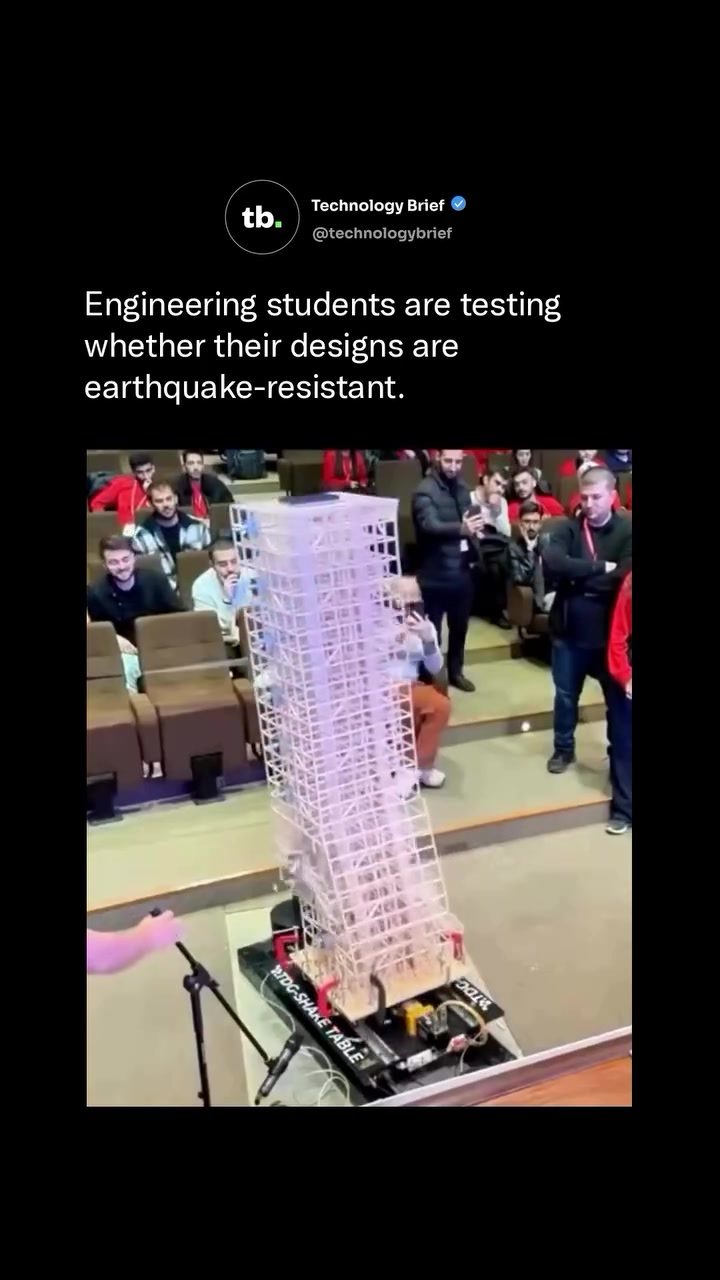
Earthquake-Resistant Building Design Competition for Students
Teams of students from various Turkish universities gather and put their civil engineering skills to the test in the TCIP Earthquake Resistant Building Design Competition. This annual event challenges students to design and construct scaled building models using balsa wood. The key to this competition is the shake table, a specialized machine that replicates the ground motions experienced during real earthquakes. The competition is held in an auditorium and includes a live audience, making it an exciting event where students can showcase their designs in a high-pressure environment.
Why This Matters
Earthquakes are a significant natural hazard, particularly in regions like Turkey. The TCIP Earthquake Resistant Building Design Competition is more than just an academic exercise; it is a practical application of structural engineering principles. By participating in this competition, students gain hands-on experience in designing and building earthquake-resistant structures, which is crucial for real-world engineering practice. This type of experience is invaluable, as it helps students understand the importance of resilience and stability in construction.
Main Discussion
Competition Overview
The competition, which has been running since 2014, attracts teams of four to five undergraduate students from universities across Turkey. Each team is tasked with designing and constructing a scaled building model using balsa wood. The models are then tested on a shake table, which simulates earthquake conditions at three increasing levels of force. The shake table is a critical component of the competition, as it provides a controlled environment to test the models' resistance to seismic activity.
The Role of the Shake Table
The shake table is a machine that mimics the ground motion experienced during an earthquake. This tool is essential for testing the earthquake resistance of building models. During the competition, the shake table subjects the models to three levels of increasing force, simulating the intensity of an earthquake. The models are observed for their stability and resilience under these conditions. The students evaluate how well their designs perform, making necessary adjustments to improve their models' earthquake resistance.
The Design and Construction Process
Teams design their models based on structural engineering principles, focusing on stability and resilience. The models are constructed out of balsa wood, a lightweight material that allows for precise crafting and testing. Students must consider various factors, including design calculations, model construction quality, and presentation, to maximize their scores.
The Audience and Presentation
One of the unique aspects of the competition is the live audience. The event is held in an auditorium, and the audience can watch as the models are tested on the shake table. This adds a layer of excitement and pressure, as teams strive to impress both the judges and the spectators. The presentation is a significant component of the competition, as it allows teams to explain their design choices and construction techniques. This aspect of the competition helps students develop their communication skills, which are essential for engineers in the field.
Scoring and Evaluation
The competition is scored based on several criteria, including design calculations, model construction quality, shake table performance, and presentation. These criteria ensure that students are not only focusing on the technical aspects of their designs but also on the practical application of their knowledge. The competition encourages teams to think critically about real-world earthquake engineering, pushing them beyond theoretical knowledge.
Practical Tips
For those interested in participating in such competitions or in earthquake engineering in general, here are some practical tips:
-
Understand the Basics of Structural Engineering: Familiarize yourself with the fundamental principles of structural engineering, including stability, load distribution, and material properties. This knowledge is crucial for designing earthquake-resistant structures.
-
Use Appropriate Materials: Choose materials that are lightweight yet strong, such as balsa wood. These materials allow for precise crafting and testing, making them ideal for building scaled models.
-
Test and Iterate: Continuously test your models on a shake table or a similar device. Make necessary adjustments based on the results to improve your design's earthquake resistance.
-
Focus on Presentation: Develop strong communication skills to effectively present your design choices and construction techniques. This will help you impress judges and audiences, as well as convey your ideas clearly.
-
Collaborate and Learn from Others: Work in teams to leverage different skill sets and perspectives. Learn from other participants and experts in the field to enhance your understanding and expertise.
Important Takeaways
The TCIP Earthquake Resistant Building Design Competition is a valuable experience for civil engineering students, providing them with hands-on practice in designing and building earthquake-resistant structures. It emphasizes the importance of real-world application and encourages students to think critically about structural engineering principles.
Engineering students revealed the complexities of earthquake-resistant design. The shake table is a powerful tool for simulating earthquakes and testing the resilience of building models. It provides a controlled environment to evaluate the stability and performance of different designs, helping students understand the importance of structural integrity and resilience in construction.
Students can gain practical experience in structural engineering by participating in these types of competitions. The shake table is a crucial tool for testing the earthquake resistance of building models, and the live audience adds an element of excitement and pressure to the competition.
Conclusion
The TCIP Earthquake Resistant Building Design Competition is an excellent platform for civil engineering students to apply their knowledge and skills in a practical setting. By designing and constructing earthquake-resistant models and testing them on a shake table, students gain invaluable experience in real-world engineering challenges. This competition not only enhances their technical abilities but also develops their communication and critical thinking skills, preparing them for successful careers in structural engineering.
Questions readers ask
Why do civil engineering students in Turkey participate in the TCIP Earthquake Resistant Building Design Competition?
Students participate to gain practical experience in designing earthquake-resistant structures, understand the principles of seismic resilience, and tackle real-world engineering challenges. The competition provides a unique opportunity to apply classroom knowledge to hands-on projects, fostering a deeper understanding of structural engineering.
What materials are used to build the models in the TCIP Earthquake Resistant Building Design Competition?
The students use balsa wood to construct their scaled building models. Balsa wood is chosen for its lightweight yet sturdy properties, making it ideal for simulating real-world structures and testing their resilience against earthquake forces.
How does the shake table work in the TCIP Earthquake Competition?
The shake table is a specialized machine designed to replicate the ground motions experienced during real earthquakes. It subjects the students' balsa wood models to various seismic forces, allowing them to observe how their designs perform under simulated earthquake conditions.
What is the significance of the TCIP Earthquake Competition in civil engineering?
The TCIP Earthquake Competition holds significant value for civil engineering students as it offers a platform to test their designs in a controlled environment, receive feedback, and learn from industry professionals. It also fosters teamwork and innovation, which are essential skills in the engineering field.
What can students learn from participating in this annual event?
Students gain a unique perspective on the importance of earthquake-resistant design in regions prone to seismic activity. They learn to analyze and improve their designs, understand the challenges of building in earthquake-prone areas, and gain confidence in their engineering skills.
How does the live audience add to the experience of the competition?
The live audience enhances the experience by creating a high-pressure environment that mirrors real-world project presentations. This exposure helps students develop their communication and presentation skills, preparing them for future engineering challenges and professional settings.
Why is the TCIP Earthquake Competition particularly relevant to students in Turkey?
Turkey is located in a seismically active region, making earthquake-resistant design a crucial area of study. This competition allows students to focus on a relevant and important aspect of civil engineering, ensuring that future engineers are well-prepared to address the unique challenges posed by earthquakes in Turkey.
Related deep dives
Similar reads based on topic and creator.


Recent articles
Fresh deep dives from the latest Reels we unpacked.




Comments
Be the first to comment.