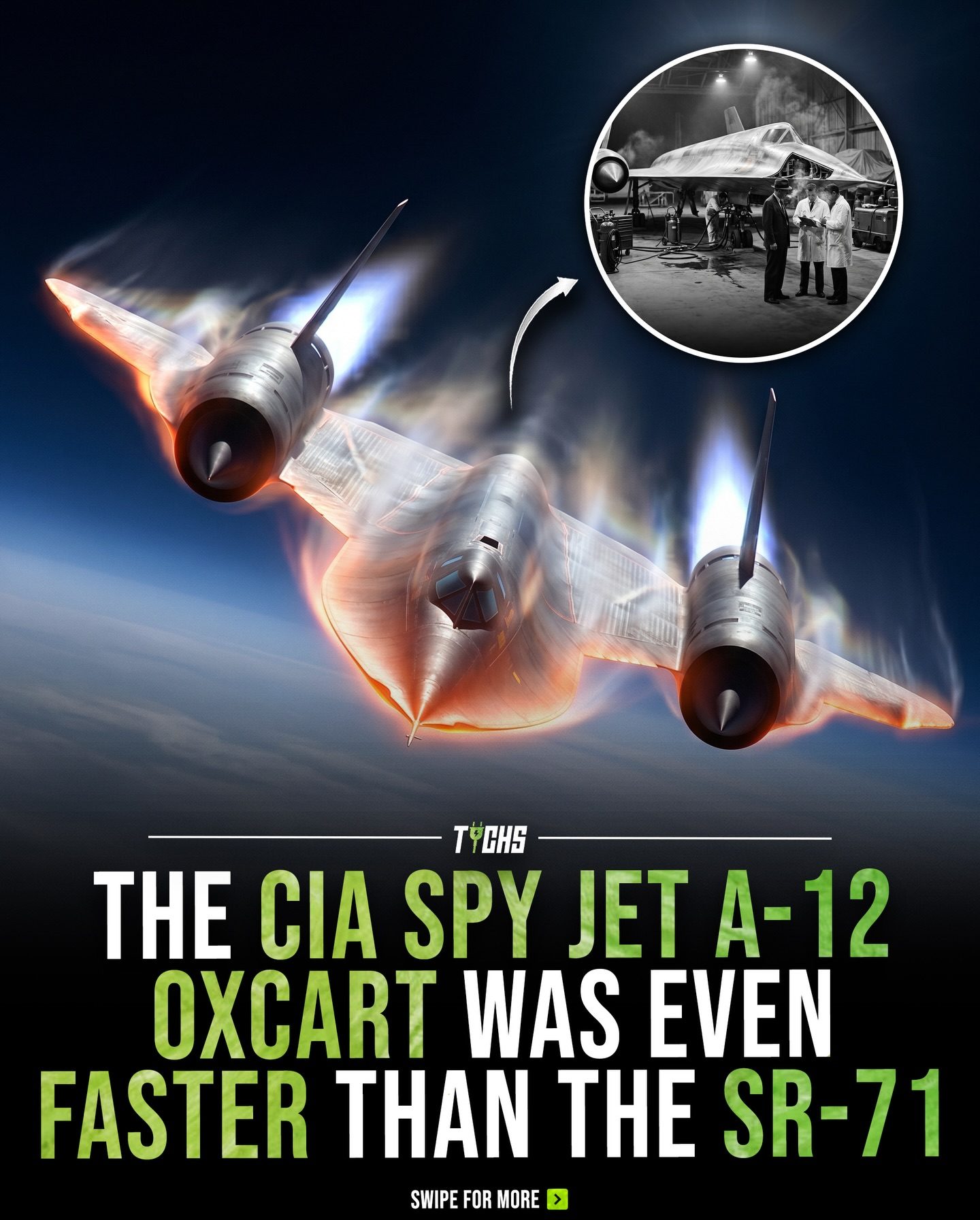
The A-12 Oxcart: A Pinnacle of Cold War Aviation
The A-12 Oxcart stands as one of the most remarkable aircraft ever engineered, particularly for its groundbreaking capabilities in speed, altitude, and stealth during the Cold War. Designed to outmaneuver threats, the A-12 was the product of Lockheed's ingenuity, developed specifically for the Central Intelligence Agency (CIA) under the classified Project Oxcart.
Developed during the height of the Cold War, the A-12 was far more than just a reconnaissance tool. Its innovative design allowed it to fly above Mach 3, reaching altitudes exceeding 90,000 feet. This made it the fastest aircraft of its time, even surpassing the later Lockheed SR-71 Blackbird in terms of speed. The jet's single-pilot configuration was a testament to its mission-focused design, prioritizing speed, altitude, and stealth over other considerations.
Why This Matters
The A-12 Oxcart's existence and operational capabilities were pivotal during the Cold War for several reasons. The Cold War was a period marked by intense espionage and the need for advanced reconnaissance capabilities. The A-12's ability to fly at unprecedented speeds and altitudes made it an invaluable asset for gathering crucial intelligence.
While the SR-71 Blackbird is more widely known, the A-12 actually flew faster and had a lighter, simpler design. Developed through Project Oxcart, the A-12 operated under the radar, so to speak, to avoid detection and provide reliable data to the U.S. government. The A-12 was later retired in favor of the versatile SR-71, leaving the A-12 as one of aviation’s most secretive legends.
Main Discussion
Development and Speed
The A-12 Oxcart's development was driven by the need for an aircraft that could gather intelligence over hostile territories without being detected or shot down. To achieve this, Lockheed engineers focused on speed and altitude. The A-12 was designed to fly at speeds exceeding Mach 3 and altitudes over 90,000 feet, making it incredibly difficult for enemy radar and anti-aircraft systems to detect and engage.
Stealth and Design
The A-12 Oxcart's design was revolutionary in terms of stealth and performance. The aircraft was built with early stealth shaping, which reduced its radar signature, making it less detectable by enemy radars. This technology, along with the jet's speed and altitude capabilities, made it a formidable tool for reconnaissance missions.
Operational History
The A-12 Oxcart flew real combat missions over Vietnam and North Korea under Operation Black Shield. These missions were crucial for gathering intelligence in a highly contested region. The aircraft's ability to operate undetected and at high speeds and altitudes allowed it to gather valuable information that would have been difficult to obtain otherwise.
Retirement
Despite its impressive capabilities, the A-12 was eventually retired in favor of the SR-71 Blackbird. The SR-71, while not as fast as the A-12, was more versatile and could carry a larger payload. This versatility made it a better fit for the evolving needs of the military and intelligence communities.
Practical Tips for Understanding the A-12
Understanding the A-12 Oxcart's significance and capabilities involves delving into its operational history, design features, and the context of the Cold War. For aviation enthusiasts and history buffs, here are some practical tips to deepen your understanding:
- Read about the Cold War: Understanding the geopolitical context in which the A-12 operated is crucial for appreciating its significance.
- Study Aircraft Design: Familiarize yourself with the principles of stealth and high-speed flight to understand the A-12's design and capabilities.
- Research Project Oxcart: Learn about the classified project that led to the development of the A-12 and its role in Cold War espionage.
- Examine the SR-71: Compare and contrast the A-12 with the SR-71 to understand why the latter was chosen for operational use.
Important Takeaways
The A-12 Oxcart remains a testament to human ingenuity and the advancement of aviation technology. Its speed, altitude, and stealth capabilities made it an invaluable tool during the Cold War. While it was ultimately retired in favor of the SR-71, the A-12's legacy continues to inspire and inform modern aerospace engineering.
Additionally, the A-12's operational history and the mission profiles it supported underscore the critical role of stealth and high-speed aircraft in modern warfare. For aviation enthusiasts and those interested in the Cold War, the A-12 offers a fascinating glimpse into a time of intense espionage and technological innovation.
Conclusion
The A-12 Oxcart may have been retired, but its impact on aviation and military intelligence is enduring. Its design, operational history, and the context of the Cold War provide valuable insights into the evolution of reconnaissance aircraft and the role of stealth in modern warfare. For those interested in aviation and military history, the A-12 Oxcart remains a fascinating subject of study and admiration. Through its speed, altitude, and stealth, the A-12 established a new standard for reconnaissance aircraft, leaving a lasting legacy in the annals of aviation history.
Questions readers ask
What was the primary purpose of the A-12 Oxcart during the Cold War?
The A-12 Oxcart was primarily designed for high-altitude reconnaissance missions. Its ability to reach speeds above Mach 3 and altitudes exceeding 90,000 feet made it ideal for covert intelligence gathering, allowing it to outpace and outmaneuver potential threats.
How did the A-12 Oxcart achieve such high speeds and altitudes?
The A-12 Oxcart achieved its remarkable speed and altitude capabilities through innovative engineering by Lockheed. The aircraft's unique design, including its distinctive shape and powerful engines, enabled it to cruise above Mach 3 and reach altitudes well above 90,000 feet.
What made the A-12 Oxcart a stealth aircraft?
The A-12 Oxcart incorporated several stealth features, including a reduced radar cross-section and advanced materials. Its sleek design and high-altitude capabilities allowed it to evade detection, making it a formidable tool for covert operations during the Cold War.
Who operated the A-12 Oxcart and why was it classified?
The A-12 Oxcart was operated by the CIA under the classified Project Oxcart. The aircraft's missions were highly secretive, involving black operations that required a high degree of discretion and stealth to gather intelligence effectively.
How did the A-12 Oxcart compare to the later SR-71 Blackbird?
The A-12 Oxcart was actually faster than the SR-71 Blackbird. While both were remarkable aircraft, the A-12 held the title of the fastest jet and its missions and capabilities were a critical precursor to what the SR-71 would later achieve.
What was the significance of the A-12 Oxcart's single-pilot configuration?
The single-pilot configuration of the A-12 Oxcart was a significant design choice. It reduced the aircraft's weight and complexity, enhancing its speed and maneuverability. This configuration allowed for more efficient and agile reconnaissance missions, critical for its covert operations.
What were the key innovations that set the A-12 Oxcart apart from other Cold War aircraft?
The A-12 Oxcart stood out due to its combination of speed, altitude, and stealth. Its ability to cruise above Mach 3 and 90,000 feet, along with its advanced stealth features, made it a unique and invaluable asset for the CIA during the Cold War. Lockhead's innovative engineering made it a groundbreaking aircraft of its time.
Related deep dives
Similar reads based on topic and creator.



Recent articles
Fresh deep dives from the latest Reels we unpacked.




Comments
Be the first to comment.