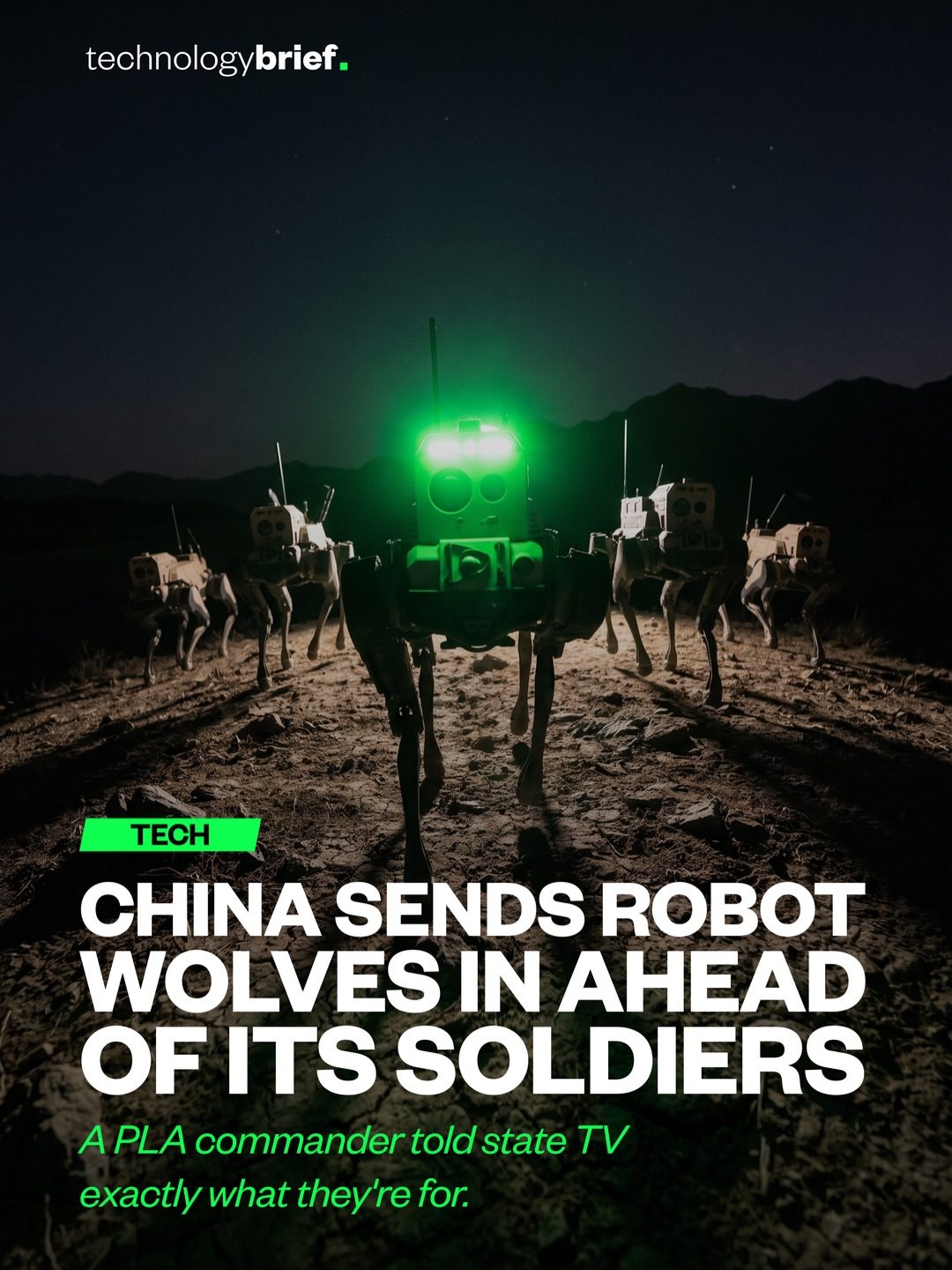
China's Robot Wolves: The PLA's Four-Legged Military Innovations
Military robots, particularly China's "robotic wolves," are revolutionizing the battlefield. These four-legged machines, designed to scout, navigate rough terrain, and carry gear, represent a significant advancement in military technology.
Why This Matters
China's development of robotic wolves highlights a critical shift in how military technology is being integrated into modern warfare. These robots are part of a broader strategy known as "intelligentized warfare," where drones, ground robots, sensors, and AI systems collaborate and share information. This network of relatively inexpensive machines is designed to take on dangerous tasks, reducing the number of soldiers exposed to combat.
The Capabilities of Robot Wolves
Design and Features
Robot wolves are designed to resemble dogs, making them highly maneuverable and capable of moving through rough terrain. Equipped with cameras, sensors, and LiDAR, these robots can gather data and navigate autonomously. Armed versions can carry small arms or rockets, allowing them to engage targets when necessary. Their ability to move in coordinated groups enhances their effectiveness in various military scenarios.
Advantages in Combat
One of the primary advantages of robot wolves is their ability to operate in environments where soldiers cannot. They can scout ahead, gather intelligence, and even engage enemy forces from a distance. This reduces the risk to human soldiers and allows for more precise and effective military operations. Additionally, their four-legged design enables them to traverse difficult terrain, making them versatile in various combat zones.
The Integration of Civilian Technology
A significant aspect of China's military robotics program is the rapid integration of civilian technology into the battlefield. Advances in robotics, AI, LiDAR, and autonomous navigation do not have to start within defense contractors. Instead, China can take systems developed for commercial use, adapt them, and deploy them in military contexts. This approach accelerates the development and deployment of new technologies, making the PLA more agile and responsive to emerging threats.
Potential Weaknesses
Despite their advanced capabilities, robot wolves are not without weaknesses. These robots' sensors can degrade in bad conditions, such as smoke, fog, or exposure to lasers. Additionally, their batteries need to be swapped, and their control links can be jammed or spoofed, making them vulnerable to certain types of electronic warfare. These limitations highlight the need for continuous improvement and adaptation in military robotics.
The Future of Intelligentized Warfare
The PLA's push toward intelligentized warfare is part of a larger trend in modern military strategy. By leveraging a network of interconnected machines, the PLA aims to create a more efficient and effective fighting force. This approach allows for the seamless integration of various technologies, enabling soldiers and machines to work together in new and innovative ways.
Practical Tips for Military Robotics
Understanding the Limitations
While military robots offer significant advantages, it is essential to understand their limitations. Sensors can be affected by environmental conditions, and control links can be disrupted. Therefore, it is crucial to have backup systems and contingency plans in place to mitigate these risks.
Adapting Civilian Technology
The rapid integration of civilian technology into military applications is a key factor in China's success. By leveraging advancements in robotics, AI, and autonomous navigation, the PLA can quickly adapt and deploy new technologies. This approach not only accelerates development but also reduces costs and promotes innovation.
Investing in Research and Development
Continuous investment in research and development is essential for staying ahead in the field of military robotics. This includes funding for new technologies, training for personnel, and ongoing research to address known weaknesses and vulnerabilities.
Important Takeaways
The development of robot wolves by the PLA underscores the growing importance of military robotics in modern warfare. These four-legged machines, equipped with advanced sensors and autonomous navigation capabilities, offer significant advantages in the battlefield. However, it is essential to recognize their limitations and continue investing in research and development to address these challenges.
Conclusion
China's "robotic wolves" represent a significant advancement in military technology, showcasing how civilian innovations can be rapidly integrated into the battlefield. As the PLA continues to push toward intelligentized warfare, the role of military robots is set to become even more critical. By leveraging a network of interconnected machines, the PLA aims to create a more efficient and effective fighting force, reducing the risk to soldiers and enhancing operational capabilities.
Questions readers ask
What are the PLA Robot Wolves and how do they operate on the battlefield?
The PLA Robot Wolves are advanced military robots developed by China, designed with four legs to navigate challenging terrains. They operate by scouting regions, gathering crucial intelligence, and even engaging targets, all while minimizing human risk. These robots are equipped with sophisticated sensors and navigation systems, such as LIDAR, to effectively perform their tasks.
What role do PLA Robot Wolves play in China's intelligentized warfare strategy?
In China's intelligentized warfare strategy, the PLA Robot Wolves serve as integral components of a network that includes drones, ground robots, and AI systems. These robots work together to gather and share information, enabling more efficient and safer military operations. By taking on hazardous tasks, they reduce the number of soldiers exposed to combat.
How do the PLA Robot Wolves enhance military operations?
The PLA Robot Wolves enhance military operations by providing real-time intelligence gathering and reducing the need for human soldiers to perform dangerous tasks. Their ability to navigate rough terrain and collect data makes them invaluable for scouting missions and assists in planning and executing military strategies.
What are some of the key technologies integrated into the PLA Robot Wolves?
The PLA Robot Wolves are equipped with advanced sensors, including LIDAR, and sophisticated navigation systems. These technologies enable them to traverse difficult landscapes, gather detailed information, and effectively contribute to military operations by providing accurate and timely data.
How do the PLA Robot Wolves contribute to reducing soldier risk in combat situations?
By taking on roles such as scouting and intelligence gathering, the PLA Robot Wolves significantly reduce the number of soldiers exposed to combat. This capability is crucial, as it allows human soldiers to remain in safer locations while the robots perform high-risk tasks, thereby enhancing overall operational safety.
What is the significance of the four-legged design in the PLA Robot Wolves?
The four-legged design of the PLA Robot Wolves allows them to navigate a variety of terrains with ease, including rough and uneven landscapes that might be challenging for wheeled or tracked vehicles. This design choice enhances their versatility and effectiveness in real-world military scenarios, making them reliable scouts and support units.
How do the PLA Robot Wolves integrate with other military technologies in the field?
The PLA Robot Wolves are designed to work seamlessly with other military technologies such as drones and AI systems. They form part of a collaborative network where information is shared in real-time, enabling more coordinated and efficient military operations. This integration allows for a more comprehensive and cohesive approach to battlefield management.
Recent articles
Fresh deep dives from the latest Reels we unpacked.




Comments
Be the first to comment.