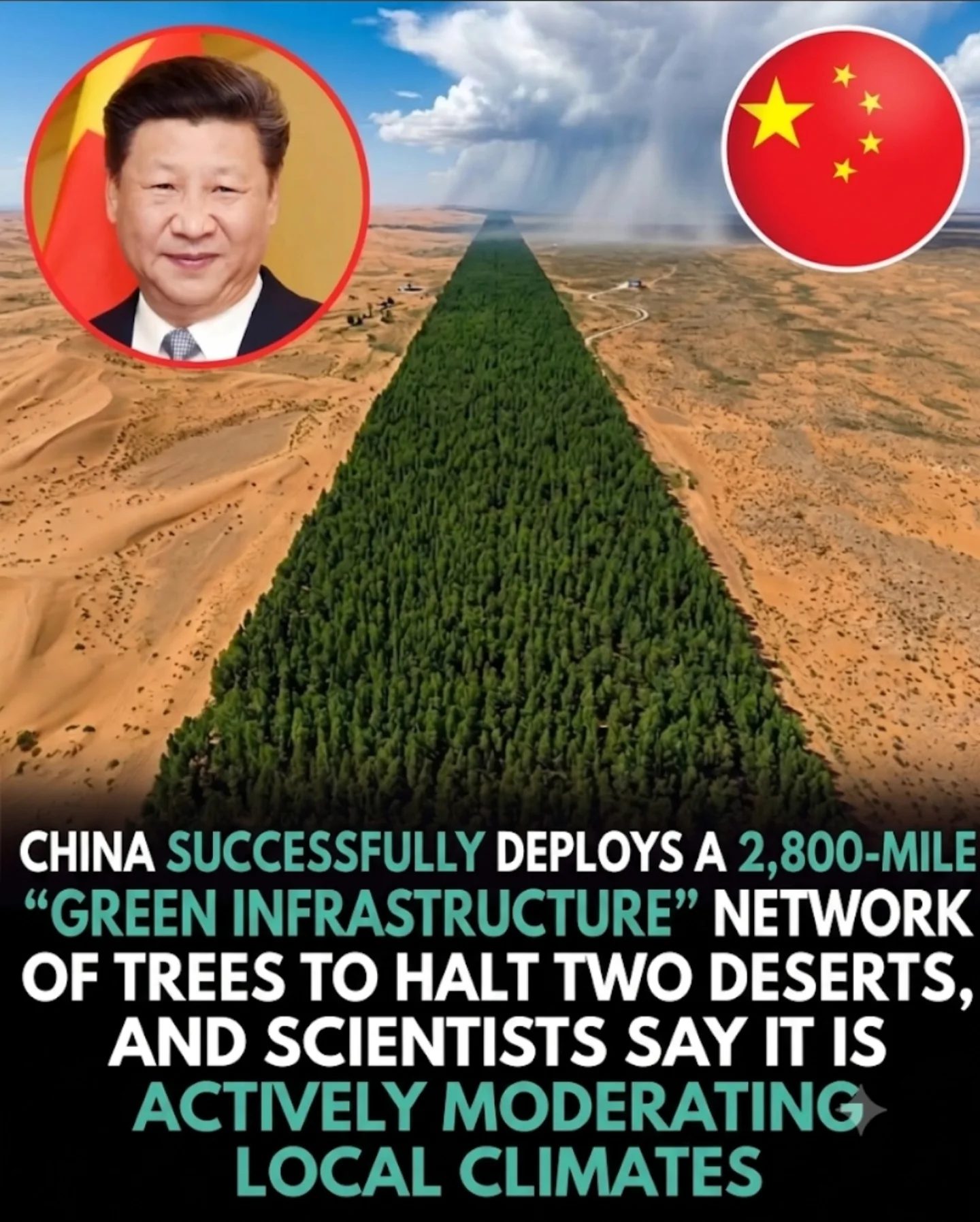
China's Great Green Wall: A Massive Environmental Restoration Project
China's Great Green Wall is a monumental land-restoration project aimed at combating desertification, reducing soil erosion, and protecting communities from severe dust storms. The initiative, which spans over 2,800 miles, involves planting extensive shelterbelts to stabilize soil and safeguard vital agricultural land from harsh winds. By leveraging the power of nature, this project aims to moderate local climates and create a sustainable future for the regions it encompasses.
Why This Matters
The Great Green Wall of China is more than just an environmental project; it is a testament to the potential of large-scale ecological restoration. As desertification threatens communities and agricultural lands, initiatives like the Great Green Wall highlight the importance of proactive, large-scale efforts to mitigate the effects of environmental degradation. This project serves as a model for how strategic planning and ecological engineering can address some of the most pressing environmental challenges of our time.
The Great Green Wall: A Comprehensive Overview
The Goal: Combating Desertification
Desertification, the process by which fertile land becomes desert, poses a significant threat to global ecosystems and communities. The Great Green Wall aims to halt this process by creating a continuous line of trees that acts as a barrier against desert expansion. This 2,800-mile network of trees is designed to stabilize the soil, reduce erosion, and provide a natural defense against the harsh winds that can further deplete the land.
Halting Desert Expansion
One of the primary objectives of the Great Green Wall is to prevent the expansion of deserts that have already encroached on agricultural and residential regions. By planting extensive shelterbelts, the initiative helps to stabilize the soil, making it less susceptible to erosion and wind damage. This stabilization is crucial for maintaining the fertility of the land and ensuring that communities can continue to live and work in these areas.
Moderating Local Climates
In addition to combating desertification, the Great Green Wall plays a pivotal role in moderating local climates. The dense network of trees helps to regulate temperature, humidity, and wind patterns, creating a more stable and hospitable environment. This climatic regulation is essential for supporting biodiversity and maintaining the ecological balance of the region.
Ecological Planning: The Key to Success
While the Great Green Wall is a vast and ambitious project, its success relies heavily on careful ecological planning. Experts emphasize the importance of using native, water-smart plant species to ensure long-term sustainability. These plants are better adapted to the local environment and require less water, reducing the risk of depleting groundwater reserves in arid regions. By prioritizing native species, the project aims to create a resilient ecosystem that can thrive in the face of environmental challenges.
The Role of XI Jinping
Xi Jinping, the President of China, has been a vocal supporter of the Great Green Wall initiative. His endorsement not only lends political weight to the project but also highlights the importance of government involvement in large-scale environmental restoration efforts. The visibility of his portrait in the project showcases the significance of leadership and public support in driving such initiatives forward.
Practical Tips for Large-Scale Environmental Projects
For those interested in launching or supporting similar environmental projects, here are some practical tips:
Choose the Right Plant Species
Selecting the right plant species is crucial for the success of any environmental restoration project. Native, water-smart plants are often the best choice as they are well-adapted to the local environment and require less water. This not only helps in conserving water resources but also ensures the sustainability of the project.
Engage the Community
Community involvement is essential for the success of large-scale environmental projects. Engaging local communities in the planning and implementation processes can ensure that the project meets their needs and gains their support. Additionally, community involvement can help in monitoring and maintaining the project over the long term.
Use Technology and Innovation
Technology and innovation play a significant role in large-scale environmental projects. From satellite imagery for monitoring to drones for planting, leveraging advanced technology can make the project more efficient and effective. Innovative solutions can also help in addressing challenges that arise during the implementation phase.
Ensure Long-Term Sustainability
Long-term sustainability is a key consideration for any environmental project. Ensuring that the project is ecologically sound and that it does not deplete natural resources is crucial. This involves careful planning, the use of sustainable practices, and ongoing monitoring and evaluation.
Important Takeaways
The Great Green Wall of China is a groundbreaking initiative that showcases the potential of large-scale environmental restoration. By planting extensive shelterbelts, the project aims to combat desertification, reduce soil erosion, and moderate local climates. The initiative underscores the importance of careful ecological planning, the use of native plant species, and the role of government and community support in achieving long-term success.
Conclusion
The Great Green Wall of China stands as a beacon of hope in the fight against desertification and environmental degradation. Through strategic planning, community engagement, and the use of innovative technologies, this project demonstrates the potential of large-scale environmental restoration. As we face growing environmental challenges, initiatives like the Great Green Wall serve as a model for how we can work together to create a more sustainable future.
Questions readers ask
What is the primary goal of China's Great Green Wall initiative?
The primary goal of China's Great Green Wall is to combat desertification by planting extensive shelterbelts across a 2,800-mile stretch. This will help stabilize soil, reduce soil erosion, and protect vital agricultural land from harsh winds, ultimately safeguarding communities from severe dust storms.
How does China's Great Green Wall contribute to environmental sustainability?
This initiative contributes to environmental sustainability by leveraging natural processes to moderate local climates and create a sustainable future for the regions it encompasses. By planting vast shelterbelts, the project helps to restore ecological balance and mitigate environmental degradation.
What is the significance of shelterbelts in the Great Green Wall project?
Shelterbelts play a crucial role in the Great Green Wall project by acting as windbreaks, which help to stabilize soil and protect agricultural land from erosion. These belts of trees and shrubs also contribute to local climate moderation and support biodiversity.
What challenges might be faced in implementing a project of this scale?
Implementing a project of this magnitude involves several challenges, including ensuring the survival of planted vegetation in harsh conditions, managing water resources effectively, and maintaining the long-term commitment required for large-scale ecological restoration.
How does the Great Green Wall project benefit local communities?
The Great Green Wall project benefits local communities by protecting them from severe dust storms, preserving agricultural land, and creating opportunities for sustainable livelihoods. The restoration of degraded lands also enhances the overall quality of life in the affected regions.
What is the extent of the Great Green Wall initiative in China?
The Great Green Wall initiative spans over 2,800 miles, making it one of the largest ecological restoration projects in the world. It covers vast areas of northern and northwestern China, where desertification poses a significant threat.
What role does reforestation play in China's Great Green Wall?
Reforestation is a key component of China's Great Green Wall, involving the planting of extensive shelterbelts to stabilize soil and protect agricultural land. This large-scale reforestation effort helps to mitigate desertification and restore ecological balance in the affected regions.
Related deep dives
Similar reads based on topic and creator.

Recent articles
Fresh deep dives from the latest Reels we unpacked.




Comments
Be the first to comment.