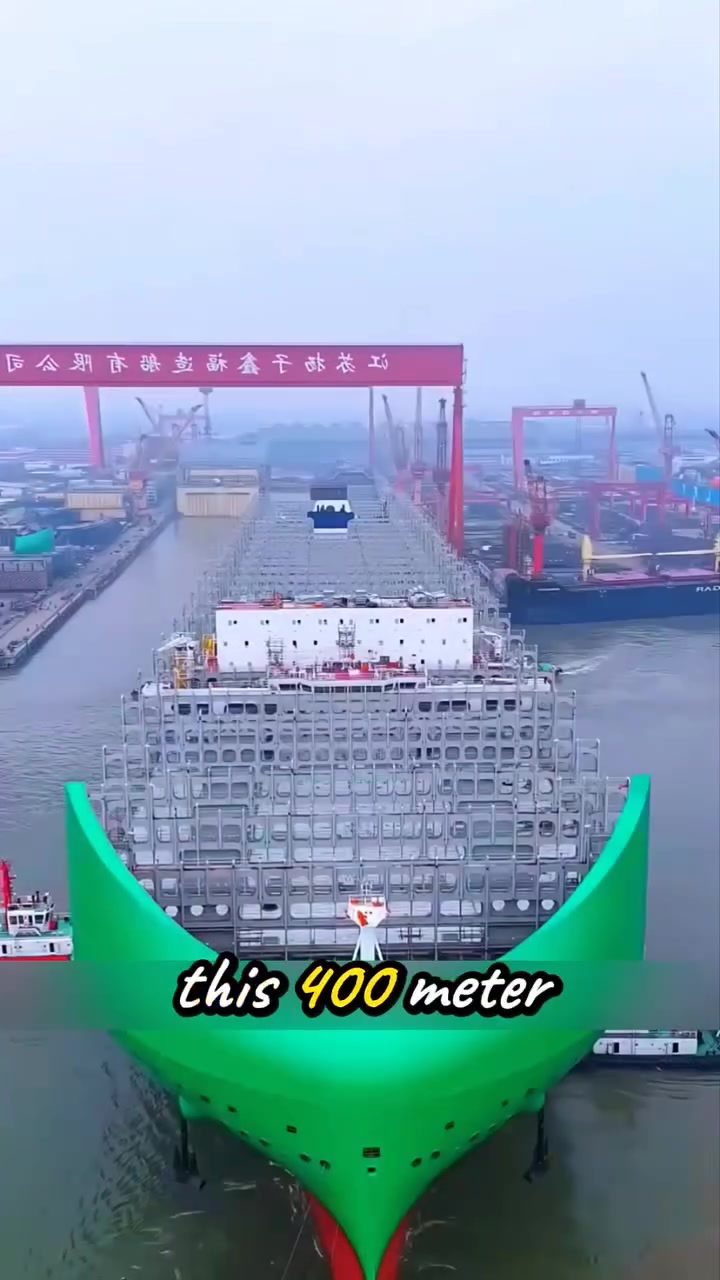
Shipyard Construction
The construction of massive container ships is a feat of engineering and precision, involving complex logistics and state-of-the-art technologies. One such project recently highlighted involves a 400-meter-long behemoth designed for CMA CGM, capable of carrying over 24,000 containers. This makes it one of the largest dual-fuel cargo ships globally. The ship's construction, from the initial assembly of massive steel sections to the final delivery, is a testament to the capabilities of modern shipyards.
Why This Matters
The construction of such a gigantic ship is not merely about size; it symbolizes technological advancement, economic prowess, and logistical mastery. Ships of this scale are pivotal in global trade, enabling efficient transport of goods and reducing costs. They also represent significant environmental strides, as dual-fuel capabilities allow for lower emissions, making them more sustainable compared to traditional vessels.
Main Discussion
The Scale of the Operation
The sheer magnitude of the project is staggering. The shipyard, a colossal industrial area, utilizes giant cranes to lift thousand-ton steel sections into place with precision. Each section must fit with millimeter accuracy before workers weld them into a solid structure.
Precision and Engineering
Every piece of the ship, from the hull to the engine parts, is crafted with meticulous attention to detail. The engine parts alone are massive. For instance, a single crankshaft weighs an astonishing 420 tons, and the propeller measures 11 meters in width. This precision engineering ensures the ship's structural integrity and operational efficiency.
The Construction Process
The construction process spans over eight months. During this period, the shipyard undergoes multiple phases:
- Assembly: Giant cranes lift and position the steel sections.
- Precision Fitting: Each section is fitted with millimeter precision.
- Welding: The sections are welded together to form a solid structure.
- Engine Installation: Massive engine parts, including the 420-ton crankshaft and 11-meter-wide propeller, are installed.
- Water Test: After the construction, the dock gates open, and river water floods in, testing the ship's waterworthiness.
Final Preparations and Delivery
After the extensive construction period, the ship, now a 400-meter-long giant, finally leaves the dock. It barely passes under the 50-meter Zhangyang Bridge, showcasing its immense size. The ship then heads to a final installation site for additional equipment before being delivered to CMA CGM, its intended operator.
Practical Tips
If you're involved in industrial construction or considering a career in shipbuilding, here are some practical tips:
Understanding Scale and Precision
- Scale Management: Be mindful of the scale of operations. Large projects require meticulous planning and coordination. Logistics, from material procurement to labor deployment, need precise scheduling.
- Precision Engineering: Precision is key. Invest in accurate measurement tools and quality control processes to ensure every piece fits perfectly.
Safety Measures
- Safety Protocols: Ensure safety protocols are in place. Working with heavy machinery and large structures requires strict adherence to safety guidelines.
- Team Coordination: Coordination among teams is crucial. Effective communication and clear roles ensure smooth operations and timely project completion.
Important Takeaways
Several important takeaways can be gleaned from this monumental project:
- Technological Advancement: The construction of such a massive ship is a testament to modern technological advancements in shipbuilding.
- Logistical Mastery: The project showcases the logistical prowess required to manage such large-scale operations, from material handling to labor deployment.
- Environmental Considerations: Dual-fuel capabilities make these ships more environmentally friendly, reducing emissions and promoting sustainability.
Conclusion
The construction of a 400-meter container ship is a marvel of modern engineering, involving precision, extensive planning, and cutting-edge technology. It showcases the capabilities of today’s industrial construction sector and highlights the importance of such vessels in global trade. Whether you're an engineering enthusiast, a professional in the industry, or someone interested in technological advancements, the construction of these massive ships offers a glimpse into the future of maritime transport and industrial engineering.
Questions readers ask
What are dual-fuel ships and why are they significant?
Dual-fuel ships are vessels that can operate on two different types of fuel, typically marine diesel and liquefied natural gas (LNG). Their significance lies in their ability to reduce emissions, making them a key component in sustainable shipping practices. By switching to cleaner fuel, these ships help minimize the environmental impact of maritime transport.
What makes the CMA CGM ship one of the most impressive in the world?
The CMA CGM ship stands out due to its immense size, measuring 400 meters in length and capable of carrying over 24,000 containers. Its dual-fuel engine further enhances its appeal, as it allows for significant emission reductions, aligning with global efforts to promote greener maritime transport.
What role do advanced technologies play in the construction of large cargo vessels?
Advanced technologies are crucial in the construction of large cargo vessels. They enable precise engineering, complex logistics management, and efficient assembly of massive steel sections. These technologies ensure the vessel's structural integrity, operational efficiency, and adherence to environmental standards.
How does the construction of the world's largest cargo ship benefit global trade?
The construction of the world's largest cargo ship enhances global trade efficiency by increasing the volume of goods that can be transported in a single journey. This reduction in the number of trips required to move the same amount of cargo helps lower operational costs and reduces the overall carbon footprint of maritime transport.
What are the key features of the world's largest shipyard?
The world's largest shipyard is characterized by its vast manufacturing capabilities, state-of-the-art technology, and expertise in handling large-scale projects. These shipyards are equipped to manage the complex logistics of building massive vessels, ensuring precise construction, and delivering high-quality products. They often employ advanced welding, cutting, and assembly techniques to construct ships like the 400-meter CMA CGM vessel.
Why is the 400-meter CMA CGM ship considered a milestone in shipbuilding?
The 400-meter CMA CGM ship is considered a milestone in shipbuilding due to its unprecedented size, advanced dual-fuel engine technology, and the innovative construction techniques employed. It represents a significant leap in maritime engineering and sets new benchmarks for future shipbuilding projects, focusing on both capacity and environmental responsibility.
Recent articles
Fresh deep dives from the latest Reels we unpacked.




Comments
Be the first to comment.