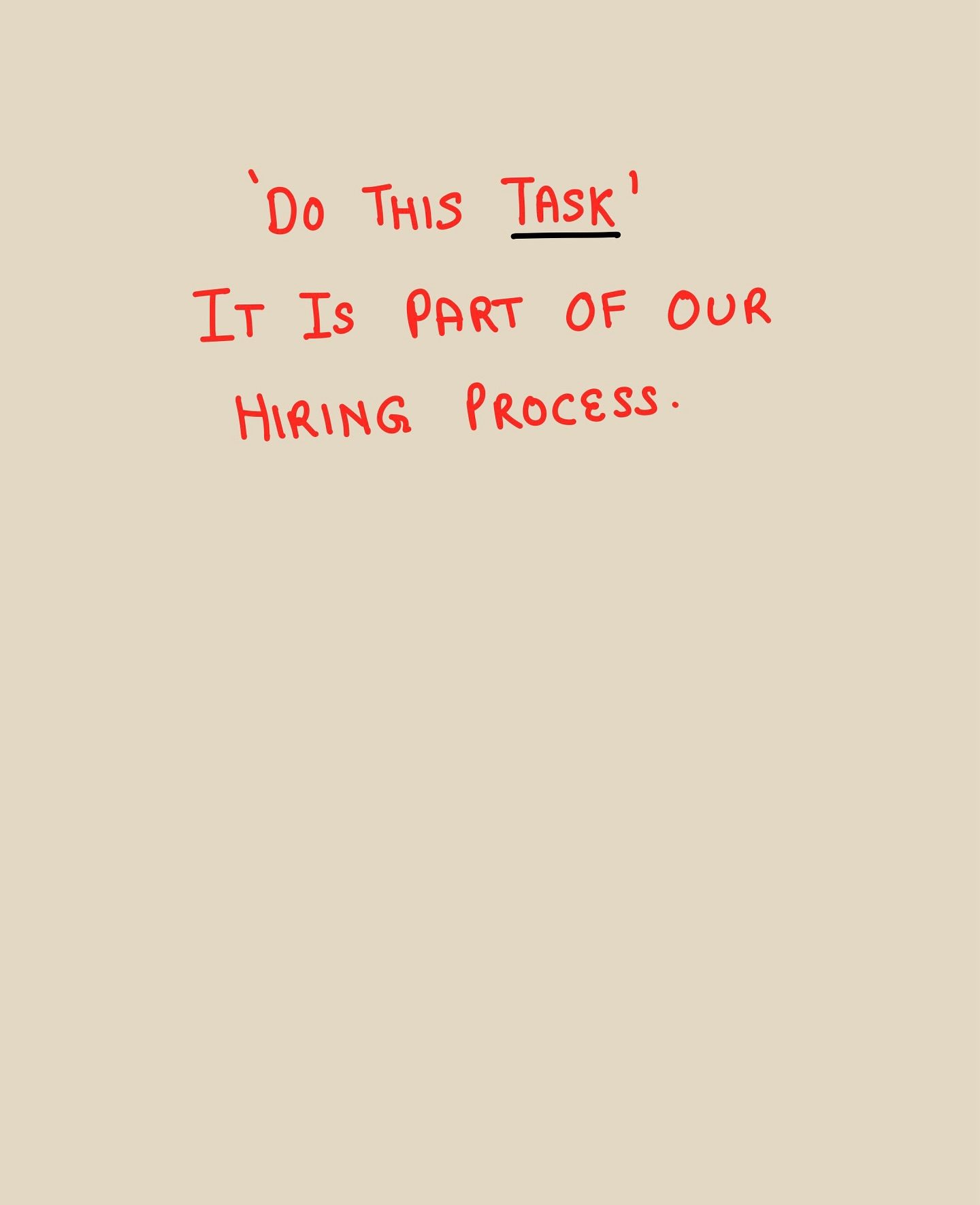
The Hidden Pits of Hiring Tasks
Hiring tasks are a common part of the recruitment process, but there are hidden traps you should be aware of. These tasks can sometimes be used to filter out candidates based on factors that have nothing to do with job performance. Understanding these hidden filters will make you a smarter, more discerning job seeker.
Why This Matters
The job market is highly competitive, and companies often use creative methods to find the best talent. However, not all hiring tasks are created equal. Some tasks are designed to evaluate your skills and fit for the role, while others serve different purposes. Recognizing the difference can save you time and effort, and help you focus on genuine opportunities.
The Different Types of Hiring Tasks
The “Free Work Without Accountability” Angle
One of the most frustrating hiring tasks is the "free work" trap. In this scenario, the task isn't a genuine evaluation; it's free labor disguised as an opportunity. Companies may use these tasks to:
- Collect ideas
- Validate a new pitch or approach
- Benchmark internal teams against "market ideas"
Often, candidates pour their energy and creativity into these tasks, only to be ghosted by the company. In some cases, the company might even use the ideas without giving credit or compensation. This tactic can leave candidates feeling exploited and disheartened.
The “No Right Answer” Trap
Another common trap is the "no right answer" task. These tasks are vague and open-ended, such as "Create a marketing strategy for X" or "Redesign our homepage." The problem is that there's no defined success metric, making it easy for companies to dismiss candidates based on subjective criteria.
These tasks can be a filter for bias. Companies might use them to claim that a candidate wasn't aligned with their culture or thinking, when in reality, it was just a matter of personal taste. This can be disheartening, as taste is often a moving goalpost and not about talent.
The “Task ≠ Real Role” Disconnect
Sometimes, the task given during the hiring process doesn't reflect the actual work you'll be doing. For example, a social media role might involve a task like "grow our Instagram from 0–100K," but the actual job might be creating 3 reels per week with zero budget and no team.
These tasks can mislead candidates into thinking the role is more glamorous or high-profile than it actually is. This disconnect can lead to disappointment and frustration once you start the job.
The “Let’s See How Desperate They Are” Filter
Some companies use tasks to gauge how desperate a candidate is. They might assess:
- How quickly you respond
- How long you're willing to wait for feedback
- Whether you follow every vague instruction
These factors have little to do with your skills or worth, but companies might use them to test your compliance and willingness to "hustle."
The “You’re Not Competing for the Role, You’re Just a Benchmark” Trap
In some cases, candidates might be brought in just to benchmark other candidates. The company might already have an internal referral or favorite candidate, and they use these tasks to make someone else look better. This can be a harsh reality, but it's important to recognize that not every task is a genuine evaluation of your skills.
Practical Tips for Navigating Hiring Tasks
Assess the Task Before Starting
Before you dive into a hiring task, assess whether it's a genuine evaluation or a potential trap. Look for clear instructions, defined success metrics, and a realistic timeframe. If the task feels vague or seems like free labor, it might be a red flag.
Set Boundaries
It's important to set boundaries and prioritize your time. If a company takes too long to respond or seems to be taking advantage of your labor, it might be best to cut your losses and move on. Remember, your time and skills are valuable, and you deserve to be treated with respect.
Focus on Genuine Opportunities
Instead of wasting time on potential traps, focus on genuine opportunities. Look for companies that have a clear hiring process, defined roles, and a good reputation. These companies are more likely to value your skills and treat you with respect.
Trust Your Instincts
If something feels off about a hiring task, trust your instincts. It's better to walk away from a potential trap than to waste your time and energy on a disingenuous opportunity.
Important Takeaways
Hiring tasks can be a double-edged sword. While they can provide valuable insights into a company's culture and expectations, they can also be used to exploit candidates. By recognizing the different types of hiring tasks and setting clear boundaries, you can navigate the hiring process with confidence and focus on genuine opportunities.
Conclusion
Understanding the hidden traps of hiring tasks can save you time, effort, and frustration. By recognizing the different filters and setting clear boundaries, you can focus on genuine opportunities and find a role that truly values your skills and contributions.
Questions readers ask
What are some signs that a hiring task might be a trap?
If a task seems overly vague or unrelated to the job description, it could be a sign that the company is trying to filter out candidates based on arbitrary factors. Additionally, if the task requires you to generate original ideas without compensation, the company may be using your creativity for free.
How can I spot a hidden bias in a hiring task?
Hidden biases can often be spotted in tasks that don't directly relate to the job requirements. For example, if a task is designed to assess your cultural fit and seems to favor a particular demographic, it might be indicative of bias. Pay attention to how the task is framed and what skills it is supposedly assessing.
What should I do if I encounter an unusual hiring task?
First, consider the purpose of the task. Does it align with the job description and the skills required? If it doesn't, it might be a trap. If you're unsure, you can ask the hiring manager for clarification on how the task relates to the role. This can give you a better idea of their intentions and help you decide whether to proceed.
Why do companies use hiring tasks that seem to exploit creativity?
Some companies may use these tasks to save on hiring costs. They might be looking to see if you can provide innovative solutions without investing in the hiring process. However, it's important to recognize when your efforts might not be valued or compensated and to avoid such tasks if they don’t align with your long-term goals or professional standards.
How can I avoid wasting time on deceptive hiring opportunities?
Research the company's reputation and hiring practices before starting any tasks. Look for reviews from past applicants and current employees, and be wary of companies with a history of using unpaid tasks or tasks that don't align with the job role. If something doesn’t seem right, trust your instincts and move on to a more transparent opportunity.
What should I do if I suspect a job description is too vague or misleading?
If a job description is too vague or seems to be hiding more than it reveals, ask for specific details. Engage with the hiring manager to clarify the role, responsibilities, and expectations. If they can't provide clear answers, it might be a sign that the role or the company isn't a good fit for you.
Is it ever acceptable to respond to a hiring task that might exploit my creativity?
It depends on your individual circumstances and the nature of the task. If the task is clearly outlined and provides fair compensation or recognition, it could be worth considering. However, if the task feels exploitative, it’s generally best to avoid it. Trust your instincts, and remember that your time and creativity have value.
Recent articles
Fresh deep dives from the latest Reels we unpacked.




Comments
Be the first to comment.