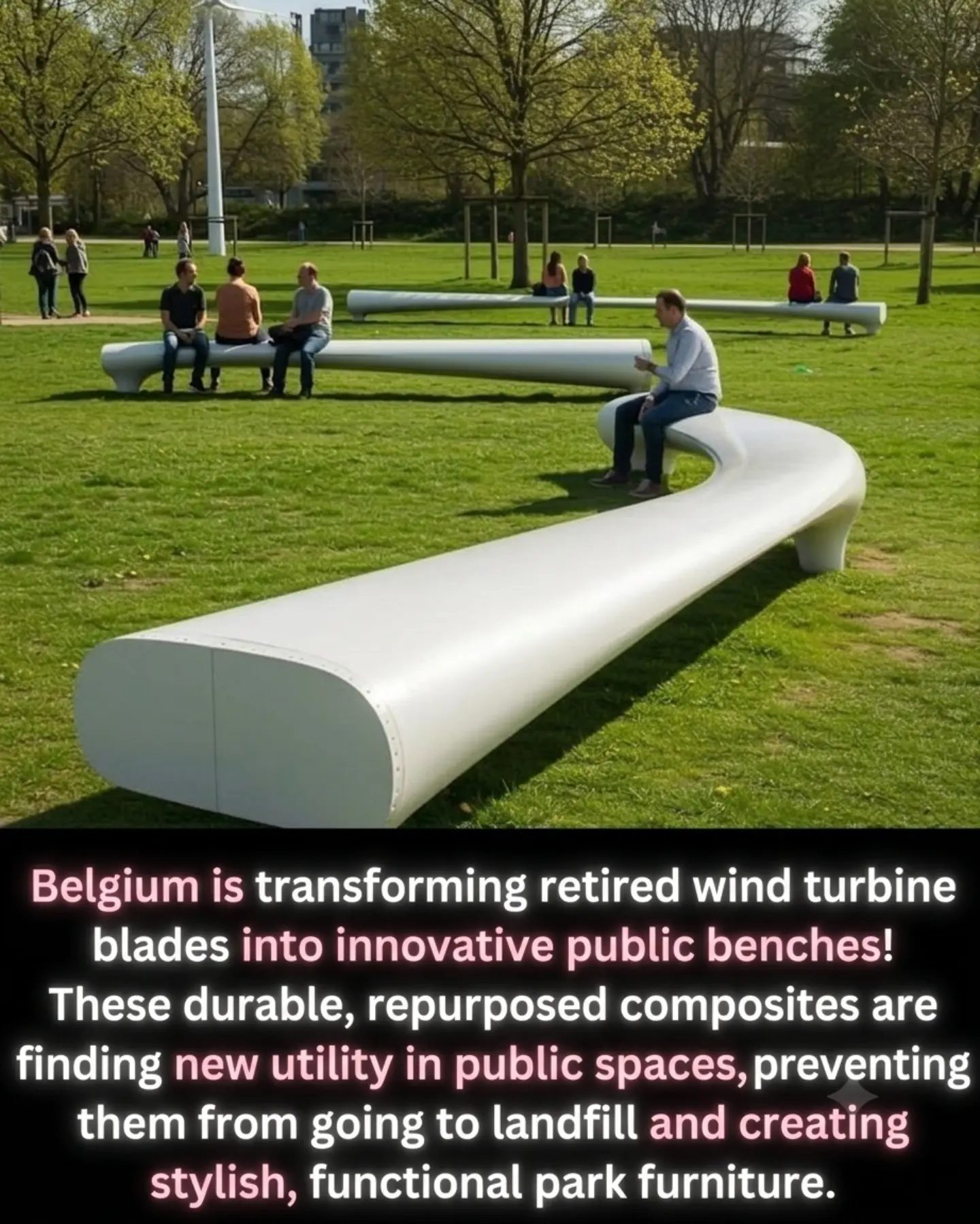
Repurposed Wind Turbine Blades
Cities across Belgium and Europe are finding innovative ways to give retired wind turbine blades a second life. These massive fiberglass structures, once integral to generating clean power, are being upcycled into stylish and functional public furniture, including park benches, playground tunnels, and public shelters.
Context / Why this matters
Wind turbines have long been a symbol of renewable energy and sustainability. However, the retirement of these turbines presents a unique challenge: what to do with the enormous, non-biodegradable blades? Traditional recycling methods struggle with the composite materials used in these blades, leading to a growing pile of waste. But instead of letting these materials sit in landfills, forward-thinking cities are finding creative solutions to repurpose them, reducing waste and enhancing public spaces.
Main discussion
The lifecycle of a wind turbine blade
Wind turbine blades are typically designed to last for 20 to 25 years. After this period, they are retired and replaced with newer, more efficient models. The blades themselves are composed of complex composite materials, including fiberglass and resins, which make them durable but also difficult to recycle using conventional methods. This challenge has led to a search for innovative solutions to handle the end-of-life management of these blades.
Belgium's innovative approach
In Belgium, cities are leading the way in repurposing these retired blades. By transforming them into public benches, playground tunnels, and shelters, they are not only preventing waste but also creating functional and aesthetically pleasing additions to public spaces. These repurposed composites are incredibly durable, making them ideal for outdoor furniture that can withstand various weather conditions.
The benefits of upcycling
Upcycling wind turbine blades offers several benefits:
- Reduced waste: By finding new uses for these materials, cities can significantly reduce the amount of waste sent to landfills.
- Cost-effective: Repurposing these materials can be more cost-effective than disposing of them or finding new, raw materials for public furniture.
- Sustainable: This initiative aligns with broader sustainability goals, promoting a circular economy where waste is minimized, and resources are used efficiently.
- Community engagement: These repurposed items serve as a conversation starter, educating the public about sustainability and innovation in a tangible way.
Examples of repurposed wind turbine blades
- Park benches: These durable benches provide comfortable seating in parks and public spaces, showcasing the strength and aesthetic appeal of repurposed composites.
- Playground tunnels: Safe and sturdy, these tunnels offer children a fun and engaging play area while demonstrating the versatility of the materials.
- Public shelters: These structures provide shelter and seating, adding value to public spaces and showcasing the materials' durability.
Practical tips
If you're inspired to incorporate sustainable practices into your community or business, consider the following tips:
- Research materials: Understand the materials you're working with and explore innovative ways to repurpose them.
- Engage the community: Involve local stakeholders in the planning and implementation process to garner support and ideas.
- Collaborate with experts: Partner with organizations and experts in sustainability and upcycling to ensure the success of your project.
- Think creatively: Look for unusual and innovative applications for repurposed materials to maximize their utility and appeal.
Important takeaways
- Wind turbine blades, though difficult to recycle, can be repurposed into functional and aesthetically pleasing public furniture.
- Upcycling initiatives in Belgium and Europe are setting a precedent for how to manage end-of-life turbine blades sustainably.
- This approach not only reduces waste but also creates cost-effective, durable, and community-beneficial solutions.
Conclusion
The transformation of retired wind turbine blades into public furniture is a testament to the power of innovation and sustainability. By repurposing these materials, communities are not only addressing a waste management challenge but also enhancing public spaces and promoting a circular economy. This model serves as an inspiring example for other regions looking to integrate sustainable practices into their infrastructure and design.
Questions readers ask
What are the primary challenges in recycling retired wind turbine blades?
The main challenges include the blades' size and the composite materials used, which are difficult to break down and recycle using traditional methods. These factors contribute to a growing waste problem, as the blades are not biodegradable and can take up significant space in landfills.
How does Belgium's approach to retired wind turbine blades differ from traditional waste management?
Belgium's approach focuses on upcycling, transforming retired wind turbine blades into durable, stylish public furniture like benches and shelters. This differs from traditional waste management by creating functional, eco-friendly community assets rather than simply disposing of the waste.
What types of public furniture are being created from retired wind turbine blades in Belgium?
In Belgium, retired wind turbine blades are being repurposed into a variety of public furniture, including park benches, playground tunnels, and public shelters. These items are designed to be both functional and aesthetically pleasing, enhancing public spaces.
How does repurposing wind turbine blades contribute to sustainable community development?
Repurposing wind turbine blades into public furniture reduces waste sent to landfills and creates unique, eco-friendly community assets. This approach not only addresses environmental concerns but also enhances public spaces, promoting a more sustainable and visually appealing community.
Can other countries adopt Belgium's approach to wind turbine blade recycling?
Yes, other countries can adopt similar upcycling initiatives. By collaborating with local artists, engineers, and communities, municipalities can develop their own innovative solutions for transforming retired wind turbine blades into functional and sustainable public furniture.
What are the environmental benefits of upcycling wind turbine blades into public furniture?
Upcycling wind turbine blades into public furniture reduces landfill waste and the environmental impact of wind energy. By repurposing these materials, communities can decrease their reliance on new resources, lower greenhouse gas emissions associated with production, and create durable, long-lasting community assets.
How are retired wind turbine blades collected and prepared for upcycling in Belgium?
Retired wind turbine blades are carefully collected and transported to recycling facilities. They are then prepared for upcycling by cutting and shaping the blade components. Designers work to transform these materials into unique, functional designs while ensuring structural integrity and safety for public use.
Recent articles
Fresh deep dives from the latest Reels we unpacked.




Comments
Be the first to comment.