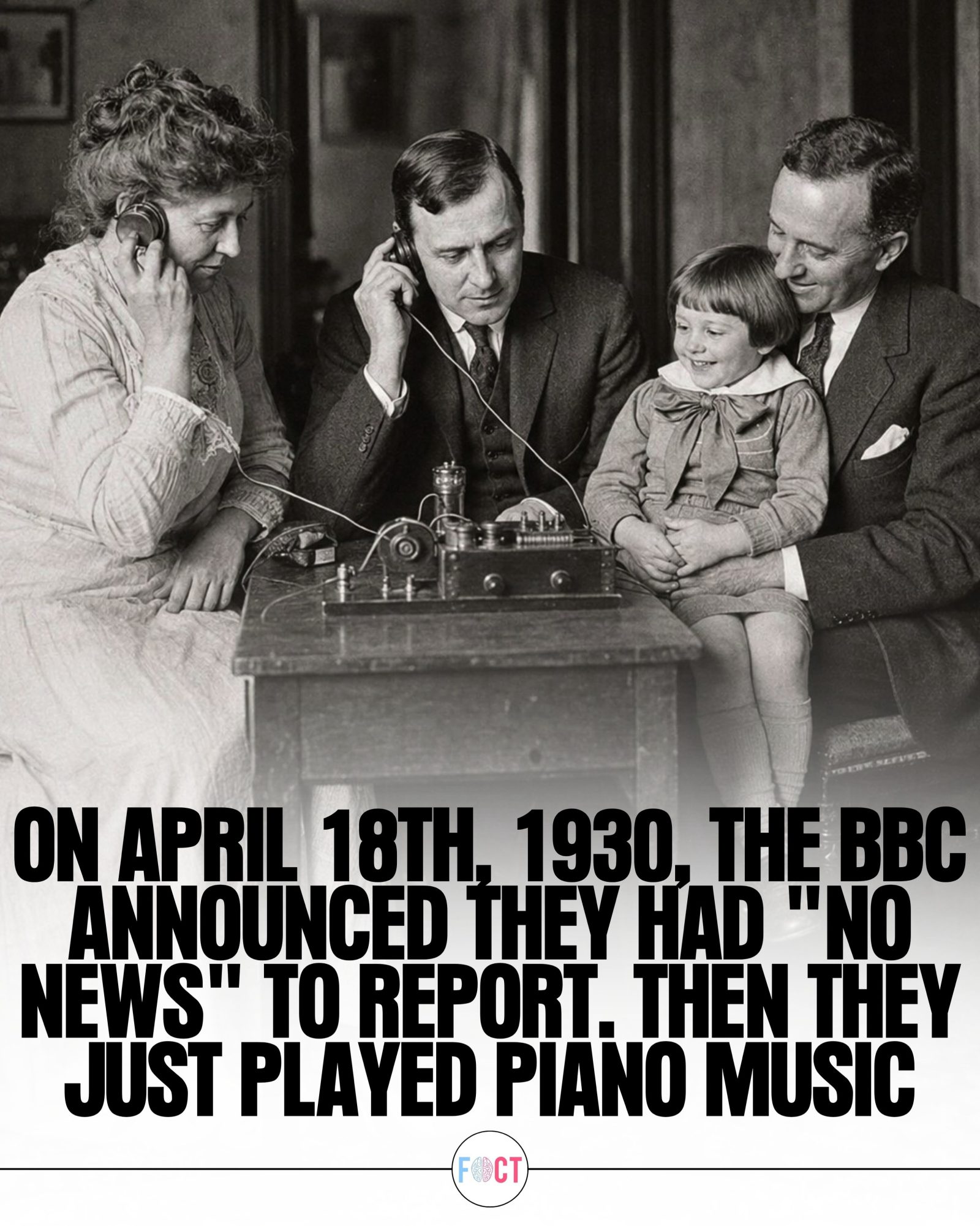
The BBC's "No News" Broadcast of 1930
On April 18, 1930, the BBC's evening radio bulletin began with an extraordinary statement: "Good evening. Today is Good Friday. There is no news." This announcement, which would be almost unimaginable in today's 24/7 news cycle, set the stage for one of the most unusual moments in broadcasting history. Instead of filling the airtime with speculation, minor stories, or celebrity gossip, the BBC chose to play piano music for the remainder of the 15-minute news slot.
This event is often remembered as a day when nothing happened, but that wasn't the case. Significant events were occurring around the world; the difference was that news gathering in 1930 was far slower than it is today. Many events had not yet reached the BBC in time for the broadcast. In an era before the internet, satellite communications, and continuous news cycles, the BBC chose honesty over filler, creating a unique moment in broadcasting history.
Why This Matters
Understanding the BBC's "No News" broadcast provides valuable context for how news has evolved. It highlights the differences in news gathering and dissemination between the 1930s and today. The BBC's decision to play piano music instead of filling airtime with trivial stories underscores the cultural and technological contexts of the time.
The Cultural and Technological Context
News Gathering in the 1930s
In the 1930s, news gathering was a slow and laborious process. Reporters relied on telegrams, telephone calls, and physical mail to collect information. The lack of instantaneous communication meant that news often took days to reach broadcasters. This delay was a significant factor in the BBC's "No News" broadcast. The events that were happening around the world simply hadn't reached the BBC's studios in time for the evening broadcast.
Broadcasting Practices
Broadcasting practices in the 1930s were vastly different from today. Radio was the primary source of news for most people, and radio stations had to fill a set amount of airtime. The BBC, known for its integrity and reliability, chose to play piano music rather than resorting to filler stories. This decision reflected the BBC's commitment to honesty and quality journalism.
The piano music played during the broadcast was a thoughtful choice. It provided a calming and engaging alternative to filler stories, which might have been perceived as trivial or irrelevant. The music also served as a reminder of the BBC's dedication to providing meaningful content, even when there was no news to report.
The Role of Technology
The lack of advanced technology played a significant role in the "No News" broadcast. Without the internet, satellite communications, and 24-hour news cycles, the BBC had to rely on slower methods of news gathering. This technological limitation meant that broadcasters had to be more creative and thoughtful in how they filled their airtime.
The Evolution of News Broadcasting
The BBC's "No News" broadcast is a stark reminder of how much the news industry has changed. Today, news outlets have access to real-time information from around the world. This constant flow of information means that broadcasters almost never run out of content to report. The 24/7 news cycle has transformed how news is gathered, reported, and consumed.
The Shift to Real-Time Reporting
The advent of the internet and satellite communications has revolutionized news broadcasting. News outlets can now report events as they happen, providing real-time updates to audiences worldwide. This shift has had a profound impact on how news is gathered and reported. Reporters can now cover breaking news from anywhere in the world, using smartphones and other mobile devices to transmit information instantly.
The Impact of Continuous News Cycles
The 24/7 news cycle has created a demand for continuous content. News outlets are under constant pressure to deliver new information, often leading to an emphasis on breaking news and live coverage. This demand has also led to an increase in speculative reporting and the use of filler stories, which can sometimes be less meaningful than the content broadcasted.
The Role of Social Media
Social media has further transformed news broadcasting. Platforms like Twitter, Facebook, and Instagram allow people to share information instantly, often before traditional news outlets can report it. This shift has given rise to citizen journalism, where ordinary people can contribute to the news cycle by sharing photos, videos, and updates from their smartphones.
Practical Tips for Modern Broadcasters
Prioritize Quality Over Quantity
The BBC's "No News" broadcast serves as a reminder to prioritize quality over quantity. In an era of constant information, it's important to focus on delivering meaningful content that adds value to the audience. Broadcasters should avoid the temptation to fill airtime with trivial stories or speculation.
Embrace Honesty and Transparency
The BBC's decision to play piano music instead of resorting to filler stories highlights the importance of honesty and transparency in broadcasting. News outlets should strive to be transparent about their reporting practices and avoid misrepresenting information.
Leverage Technology Responsibly
Technology has revolutionized news broadcasting, but it's important to use it responsibly. Broadcasters should focus on delivering accurate and timely information, while also being mindful of the ethical implications of real-time reporting. They should also be aware of the potential for misinformation and fake news, and take steps to mitigate these risks.
Important Takeaways
The BBC's "No News" broadcast of 1930 is a fascinating glimpse into the history of journalism. It highlights the differences in news gathering and broadcasting practices between the 1930s and today. The BBC's decision to play piano music instead of filling airtime with trivial stories underscores the cultural and technological contexts of the time.
Understanding the "No News" broadcast provides valuable context for how news has evolved. It serves as a reminder of the importance of honesty, transparency, and quality in journalism. In an era of constant information, it's crucial to prioritize meaningful content and leverage technology responsibly. This event teaches us about the evolution of news broadcasting and the role of technology in shaping the way we consume information.
Conclusion
The BBC's "No News" broadcast of 1930 is a significant moment in broadcasting history. It provides a unique perspective on how news was gathered and reported in the 1930s and highlights the differences between then and now. The BBC's decision to play piano music instead of filling airtime with trivial stories underscores the importance of honesty, transparency, and quality in journalism. This event serves as a reminder of how much the news industry has evolved and the role of technology in shaping the way we consume information today.
Questions readers ask
Why did the BBC play piano music during their 1930 broadcast?
The BBC played piano music because there was no significant news to report during the evening radio bulletin. Instead of filling the time with less important stories, they chose to air music to respect their listeners' time.
What time period did the BBC's 'No News' broadcast air?
The BBC's 'No News' broadcast aired in the evening during the typical 15 minute slot for the news programme.
How did the BBC obtain news in 1930?
In 1930, the BBC received news through slower communication methods, such as telegrams and mail, which contributed to the delay in reporting timely news during the 'No News' broadcast.
What was the significance of the BBC's 'No News' broadcast?
The 'No News' broadcast is a historical snapshot of a slower news era, and it highlights the difference in news gathering and broadcasting technology between the 1930s and today.
What can the 'No News' broadcast tell us about the BBC's approach to news broadcasting?
The broadcast shows that the BBC valued providing meaningful news to their audience, and were willing to forgo filling airtime with less important stories if there was nothing significant to report.
How has the news cycle changed since the 1930 'No News' broadcast?
Since 1930, the news cycle has accelerated significantly, with 24/7 news coverage and instant updates, making a 'No News' broadcast nearly unimaginable in today's fast-paced media environment.
Related deep dives
Similar reads based on topic and creator.


Recent articles
Fresh deep dives from the latest Reels we unpacked.




Comments
Be the first to comment.