Ball Bearing Physics and Self-Organization
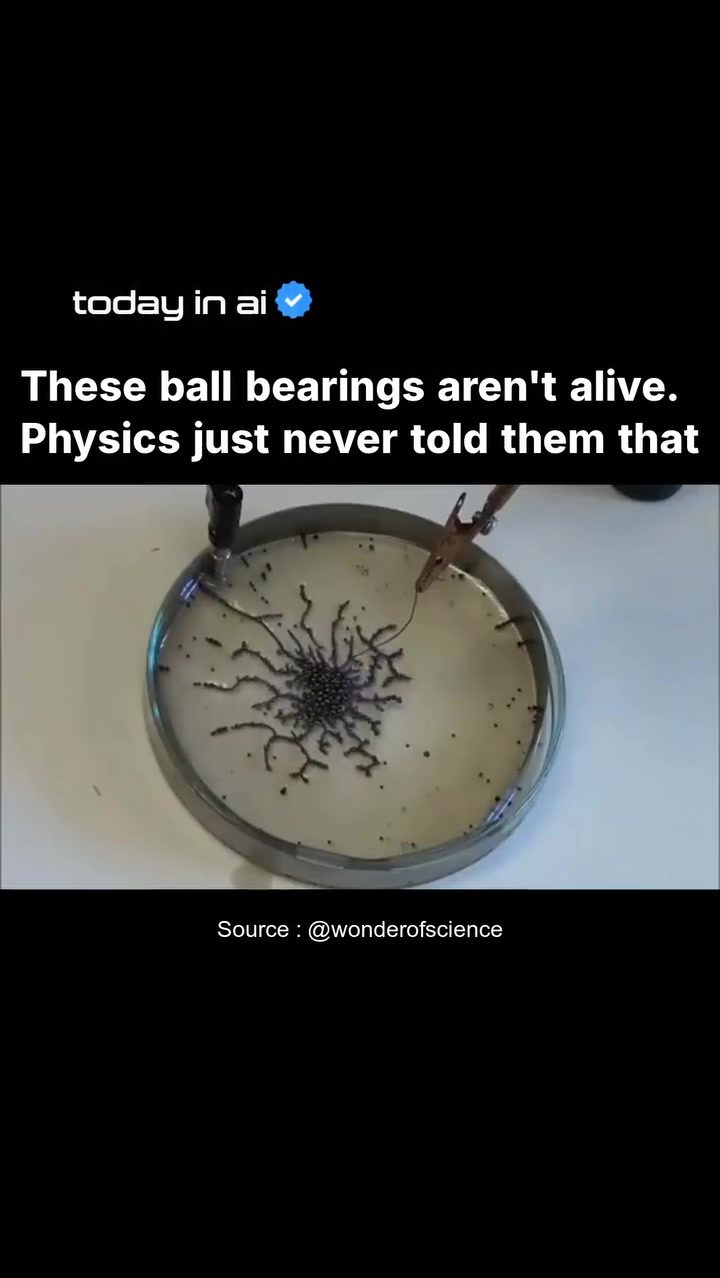
Ball bearings in castor oil exhibit a fascinating phenomenon when subjected to an electric field. This simple experiment showcases the principles of self-organization, where the bearings move and cluster in intricate, organic patterns. The phenomenon is a result of physics, not biology, and offers insights into how complex structures can emerge from simple rules.
Why This Matters
Understanding self-organization in ball bearings has implications beyond the lab. It highlights how simple components can form complex systems without external guidance. This principle is fundamental in various fields, from materials science to biology and artificial intelligence. By studying how ball bearings self-organize, we can gain insights into the behavior of more complex systems and potentially apply these principles to develop new technologies.
Main Discussion
Ball bearings moving in a fluid under an electric field present a unique case study. This scenario demonstrates how physical forces can drive the emergence of complex patterns and behaviors.
The Role of the Electric Field
An electric field is applied to the dish containing the ball bearings and castor oil. This field exerts forces on the bearings, causing them to move. The movement is not random but follows specific patterns due to the interactions between the bearings and the fluid. The electric field acts as a catalyst, inducing the bearings to organize themselves in a way that mimics organic growth.
Dynamic Patterns and Self-Organization
The bearings in the dish form intricate branching patterns, reminiscent of natural growth structures. This self-organization is a result of the bearings interacting with each other and the fluid in response to the electric field. The patterns emerge spontaneously, without any external code or algorithm guiding the process. This spontaneous organization is a key feature of many natural and artificial systems, illustrating how complex behaviors can arise from simple rules.
Physics vs. Biology
The phenomenon observed in the bearings is purely physical, not biological. The movement and clustering of the bearings are governed by the laws of physics, specifically the interactions between the electric field, the bearings, and the fluid. This distinction is crucial because it highlights how physical systems can mimic biological processes without any form of life being involved. The bearings' behavior showcases the power of physics in creating complex, organized structures.
Practical Tips
Observing and understanding self-organization in ball bearings can be both fun and educational. Here are some practical tips for replicating and studying this phenomenon:
- Material Selection: Use small ball bearings and a viscous fluid like castor oil. The size and viscosity are critical for observing the movement and clustering of the bearings.
- Electric Field Application: Apply a controlled electric field to the dish. Ensure the field strength is uniform to avoid any uneven movement of the bearings.
- Observation: Use a high-resolution camera or microscope to capture the movement and clustering of the bearings. Slow-motion playback can help in analyzing the patterns and behaviors more closely.
- Documentation: Record your observations and note down any patterns or behaviors you observe. Comparing your results with known phenomena can provide deeper insights into self-organization.
Important Takeaways
The behavior of ball bearings in castor oil under an electric field offers several key takeaways:
- Emergence of Complexity: Simple physical interactions can lead to the emergence of complex, organized structures. This principle is fundamental in understanding various natural and artificial systems.
- Self-Organization: The bearings self-organize without any external guidance, highlighting the power of physical forces in creating intricate patterns.
- Physics and Biology: The phenomenon showcases how physical systems can mimic biological processes, emphasizing the interconnectedness of different scientific disciplines.
Conclusion
The movement and clustering of ball bearings in castor oil under an electric field provide a compelling example of self-organization. This phenomenon, driven by physical forces, demonstrates how complex structures can emerge from simple rules. By understanding and studying this behavior, we can gain valuable insights into the principles of self-organization and their applications in various fields. Whether you are a scientist, engineer, or curious enthusiast, exploring this fascinating topic can deepen your appreciation for the intricate and beautiful patterns that arise from simple physical interactions.
Questions readers ask
Why do ball bearings in castor oil form intricate patterns when exposed to an electric field?
Ball bearings in castor oil form intricate patterns due to the interplay between the electric field, the viscous properties of the oil, and the bearings' physical properties. The electric field exerts forces on the bearings, causing them to move and interact in a way that leads to self-organization, forming complex, organic patterns.
Can the self-organization of ball bearings in an electric field be predicted?
The exact patterns formed by the ball bearings can be challenging to predict due to the complex nature of the interactions. However, the general principles of self-organization and the underlying physics can be understood and modeled to some extent, providing insights into the types of patterns that might emerge.
What practical applications can be derived from studying ball bearings in electric fields?
Studying ball bearings in electric fields can provide insights into the behavior of complex systems in various fields, including materials science and artificial intelligence. By understanding how simple components can form intricate patterns, researchers can develop new materials and technologies inspired by these principles.
What role does castor oil play in the self-organization of ball bearings?
Castor oil plays a crucial role by providing a viscous medium that allows the ball bearings to move and interact under the influence of the electric field. Its properties help facilitate the self-organizing behavior by enabling the bearings to respond to the forces exerted on them, leading to the formation of complex patterns.
How does the phenomenon of ball bearings self-organizing relate to other fields?
The principles observed in ball bearings self-organizing in electric fields are applicable to various fields. In materials science, it can inspire the design of new materials with unique properties. In artificial intelligence, it offers insights into how complex behaviors can emerge from simple rules, aiding in the development of more efficient algorithms and systems.
What are the fundamental forces at play in the self-organization of ball bearings?
The fundamental forces at play include the electric forces exerted by the field on the ball bearings and the viscous forces from the castor oil. These forces cause the bearings to move and interact, leading to the emergence of self-organized patterns. The balance between these forces is crucial for the formation of the intricate structures observed.
How can I replicate the ball bearings self-organization experiment at home?
To replicate the experiment, you will need ball bearings, castor oil, and a source of an electric field. Place the ball bearings in a container filled with castor oil and apply a controlled electric field using appropriate equipment. Observe the patterns that form as the bearings interact under the influence of the field. Ensure safety precautions are taken when handling electric fields.
Recent articles
Fresh deep dives from the latest Reels we unpacked.




Comments
Be the first to comment.