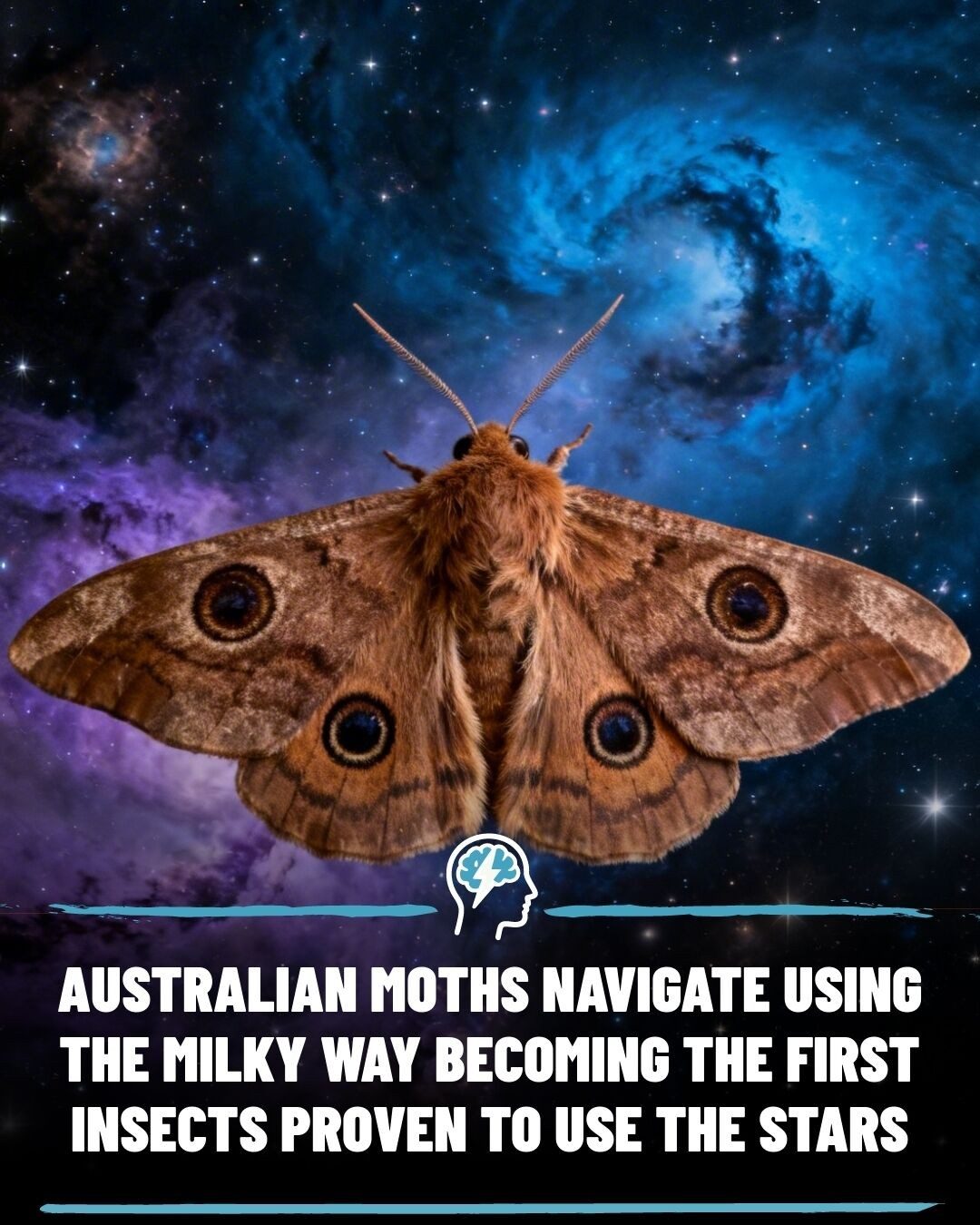
Australian Moths and Their Extraordinary Navigation Skills
Australian moths, particularly the Bogong moth, possess an incredible ability to navigate vast distances using the stars as their guide. These moths migrate over 1,000 kilometers to remote mountain caves, a journey that has long fascinated scientists. Recent studies, notably a 2025 publication in Nature, have shed light on their remarkable navigational prowess. Unlike other insects, Bogong moths are the first known to use stellar cues for long-distance navigation.
Why This Matters
The discovery that these tiny creatures navigate using the Milky Way challenges our understanding of insect behavior and biomechanics. Their ability to interpret celestial patterns offers insights into the evolution of navigation systems in the animal kingdom. This discovery extends beyond mere curiosity; it highlights the sophistication of natural navigation mechanisms and the potential for bio-inspired technological advancements.
The Mechanics of Stellar Navigation
The Role of Specialized Neurons
Bogong moths have specialized neurons in their brains that respond to the orientation of the night sky. These neurons are particularly active when the moth is traveling in the correct seasonal direction. For instance, during spring migrations, these neurons fire most strongly when the moth is heading southward, and during autumn migrations, they are active when the moth is moving northward.
Dual-Compass System
One of the most fascinating aspects of their navigation is their dual-compass system. When the stars are obscured by clouds, the moths switch to using Earth's magnetic field as a backup navigation method. This redundancy ensures that they can continue their journey even in adverse conditions, showcasing the robustness of their navigational system.
Testing the Stellar Compass
Flight Simulators and Starry Skies
To confirm the moths' use of stellar cues, scientists conducted experiments in flight simulators. They projected starry skies overhead while blocking Earth's magnetic field. When the projected stars were rotated 180 degrees, the moths reversed their course, demonstrating their reliance on the stars for direction. If the stars were randomized, the moths lost their orientation entirely, further validating the crucial role of stellar patterns in their navigation.
Backup Systems in Action
The moths’ ability to switch to the Earth’s magnetic field when the stars are not visible was also tested. This dual system ensures that they can complete their journey under various conditions, highlighting the efficiency and adaptability of their navigation mechanisms.
The Annual Migration
Every year, billions of Bogong moths undertake this extraordinary journey. They rely on ancient celestial patterns to guide them to their destinations. This migration is not just a remarkable feat of endurance but also a testament to the intricate mechanisms that govern their behavior. These moths serve as a living example of how sophisticated navigation abilities are not exclusive to more complex organisms like birds or sea turtles.
Practical Tips for Observers and Researchers
Observing Moth Behavior
For those interested in observing these migrations, the best times to see Bogong moths are during their seasonal journeys. In spring, look for them heading southward, and in autumn, watch for them moving northward. Choosing a location with clear night skies and minimal light pollution will enhance the viewing experience and allow you to witness their stellar navigation in action.
Supporting Research
For researchers, studying these moths can provide valuable insights into the evolution of navigation systems. The combination of stellar and magnetic navigation in such a small creature offers a unique model for understanding how biological systems adapt and evolve over time.
Important Takeaways
The discovery of Bogong moths using the Milky Way for navigation underscores the incredible complexity and precision of natural navigation systems. Their ability to interpret celestial patterns and switch to a magnetic compass when needed highlights the efficiency and adaptability of their navigational mechanisms. This finding not only challenges our understanding of insect behavior but also opens new avenues for research into bio-inspired technologies and the evolution of navigation systems.
Conclusion
The Bogong moths' use of the Milky Way for navigation is a stunning example of the intricate and sophisticated mechanisms found in nature. Their dual-compass system and reliance on stellar cues offer a wealth of information for researchers and enthusiasts alike. Whether you are an observer marveling at their annual migration or a scientist studying their neurological adaptations, the Bogong moth provides a fascinating glimpse into the wonders of the natural world.
Questions readers ask
Which moth species in Australia are known for their stellar navigation abilities?
The Bogong moth is the notable species in Australia recognized for its exceptional ability to use the stars for navigation over long distances.
How far can Australian moths travel during their migration?
Australian moths, specifically the Bogong moth, are known to migrate over 1,000 kilometers to reach their destinations, which are often remote mountain caves.
What makes the Bogong moth's navigation unique compared to other insects?
The Bogong moth is unique because it is one of the first known insects to use celestial cues, such as the stars, for long-distance navigation, unlike other insects that rely on different methods.
What recent studies have contributed to our understanding of moth navigation?
A 2025 publication in *Nature* has provided significant insights into the navigational abilities of Bogong moths, highlighting their use of stellar cues for migration.
Why is the Bogong moth's use of the Milky Way for navigation significant?
The Bogong moth's ability to interpret and use the Milky Way for navigation is significant because it challenges conventional understanding of insect behavior and biomechanics, offering new perspectives on natural navigation systems.
What are the destinations for the long-distance migration of Australian moths?
The primary destinations for the long-distance migration of Australian moths, such as the Bogong moth, are remote mountain caves where they undergo aestivation, a state of dormancy similar to hibernation.
How do Australian moths use the stars for navigation during their migration?
Australian moths, particularly the Bogong moth, use the stars as celestial cues to guide their long-distance migrations. This involves interpreting the patterns of the night sky to determine their direction and distance, ensuring they reach their remote mountain cave destinations.
Related deep dives
Similar reads based on topic and creator.




Recent articles
Fresh deep dives from the latest Reels we unpacked.




Comments
Be the first to comment.