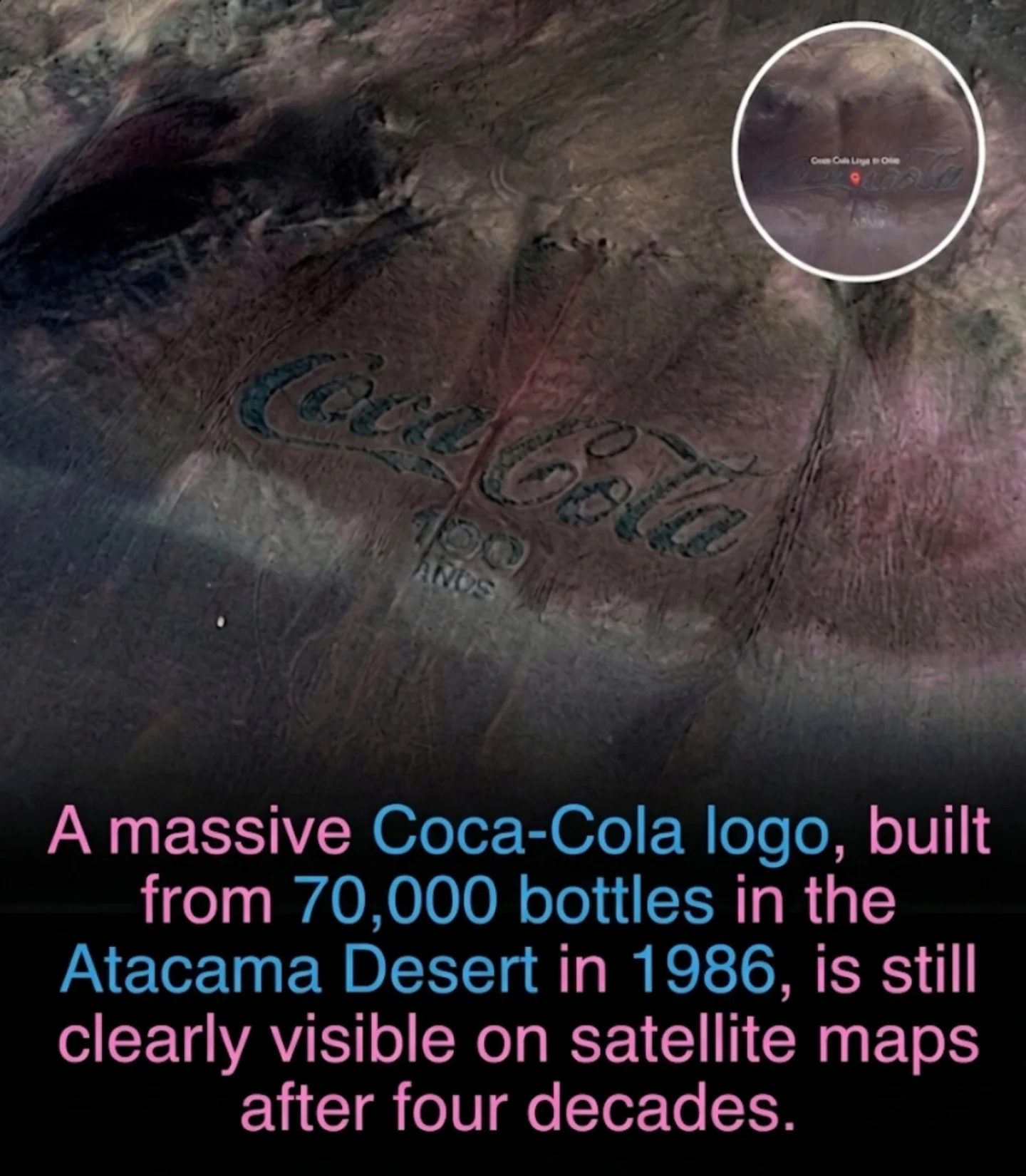
Coca-Cola's Massive Logo in the Atacama Desert
Buried in the heart of the Atacama Desert, near the city of Arica in northern Chile, lies an unexpected sight: the world's largest Coca-Cola logo. This massive geoglyph, constructed from 70,000 empty Coca-Cola bottles, spans an impressive 120 meters (400 feet) in width and 50 meters (160 feet) in height. The logo is not merely a feat of artistry; it is a testament to the endurance and visibility of human creation in one of the world's most inhospitable environments.
Why This Matters
The Atacama Desert is one of the driest places on Earth, with minimal rainfall and sparse vegetation. This extreme environment makes it an ideal location for preserving large-scale structures like the Coca-Cola logo. The desert's conditions have ensured that the logo has remained largely undisturbed for over four decades, providing a unique glimpse into the intersection of corporate branding, environmental preservation, and human ingenuity.
History and Construction
The Inspiration
The Coca-Cola logo in the Atacama Desert was created in 1986 by Coca-Cola Chile to commemorate the brand's 100th anniversary. The logo was designed to be visible from the air, making it a striking feature for anyone using satellite imagery or aerial photography. Today, it serves as a famous "easter egg" for those exploring Google Earth or Google Maps. You can find it using the coordinates -18.5292, -70.2500.
The Construction Process
Constructing the logo involved placing approximately 70,000 empty Coca-Cola bottles partially buried in the sand. This method secured the bottles while allowing the glass to reflect light, enhancing the logo's visibility from above. The bottles were arranged in a precise pattern to create a clear and recognizable image of the Coca-Cola logo, which has endured for over 40 years.
Why It Stands Out
Visibility
The scale of the logo was a deliberate choice. It was designed to be seen from the air, making it a unique landmark visible from space and satellite maps. This visibility has turned the logo into an iconic landmark that captivates both locals and global viewers alike.
Longevity
The longevity of the Coca-Cola logo in the Atacama Desert is a remarkable feat. Despite being exposed to the harsh conditions of the desert, the logo has remained largely intact. This durability can be attributed to the extreme dryness of the Atacama Desert, which minimizes the impact of weathering and erosion. The bottles were partially buried in the sand, providing additional stability and protection from the elements.
Updates and Maintenance
In 2011, the logo was refurbished to celebrate Coca-Cola's 125th anniversary. The text at the bottom of the logo, which originally read "100 Años," was updated to "125 Años." This periodic maintenance helps preserve the logo, ensuring it continues to be a visible and recognizable landmark for decades to come.
Practical Tips for Viewing
Using Satellite Maps
To view the Coca-Cola logo from the comfort of your home, use satellite maps like Google Earth or Google Maps. By entering the coordinates -18.5292, -70.2500, you can zoom in on the Atacama Desert and spot the massive logo. This is especially useful for those who want to appreciate the scale and intricacy of the design without traveling to Chile.
Driving Tips
For those planning a trip to Chile, visiting the logo can be an exciting part of your itinerary. The logo is located near the city of Arica in northern Chile. Make sure to bring a map and follow the routes that lead to the Atacama Desert. The best time to visit would be during the day, as the sun's light enhances the visibility of the bottles' reflections and the overall structure.
Important Takeaways
The Coca-Cola logo in the Atacama Desert is more than just a corporate landmark; it's a symbol of human creativity and resilience. Constructed to celebrate a milestone, the logo has become a timeless landmark visible from space. Its preservation in the desert highlights the unique environmental conditions of the Atacama, making it a fascinating site for both enthusiasts and casual viewers.
Conclusion
The world's largest Coca-Cola logo, nestled in the Atacama Desert, stands as a testament to human ingenuity and the power of branding. Built to last, this massive geoglyph has weathered the test of time, remaining visible from space for over four decades. Whether viewed from the comfort of your home via satellite maps or experienced firsthand on a journey through Chile, the Coca-Cola logo is a captivating sight that continues to inspire awe and curiosity.
Questions readers ask
How was the Coca-Cola logo created in the Atacama Desert?
The Coca-Cola logo in the Atacama Desert was created by arranging 70,000 empty Coca-Cola bottles in a specific pattern to form the iconic logo. This monument was constructed in 1986 and spans 120 meters in width and 50 meters in height.
Why is the Atacama Desert a suitable location for such a large structure?
The Atacama Desert is one of the driest places on Earth, with minimal rainfall and sparse vegetation. These conditions make it an ideal location for preserving large-scale structures like the Coca-Cola logo, as the extreme environment helps to maintain the geoglyph's integrity.
Who constructed the Coca-Cola geoglyph in Chile?
While the article does not specify the exact individuals or group responsible, it was built by a team of individuals who showcased their craftsmanship and created a lasting landmark in the Atacama Desert. The construction was completed in 1986.
What is the significance of the Coca-Cola logo in the Atacama Desert?
The Coca-Cola logo in the Atacama Desert serves as a striking aerial phenomenon and a testament to human endurance and creativity. Its massive scale and the desert's remote location make it a unique landmark visible from above, showcasing the power of human creation in an unforgiving environment.
How large is the Coca-Cola logo in the Atacama Desert?
The Coca-Cola logo in the Atacama Desert spans an impressive 120 meters (400 feet) in width and 50 meters (160 feet) in height. It is the world's largest Coca-Cola logo and a notable landmark in the desert.
What other landmarks can be found in the Atacama Desert?
Besides the Coca-Cola logo, the Atacama Desert is home to various other landmarks, including geoglyphs, salt flats, and unique rock formations. The desert's extreme environment has preserved many of these natural and man-made features over time.
Is the Coca-Cola logo in the Atacama Desert visible from space?
While the logo is not visible from space with the naked eye, it is a striking aerial sight best viewed from aircraft or drones. Its massive scale and the desert's contrasting colors make it a noticeable feature from above.
Related deep dives
Similar reads based on topic and creator.




Recent articles
Fresh deep dives from the latest Reels we unpacked.




Comments
Be the first to comment.