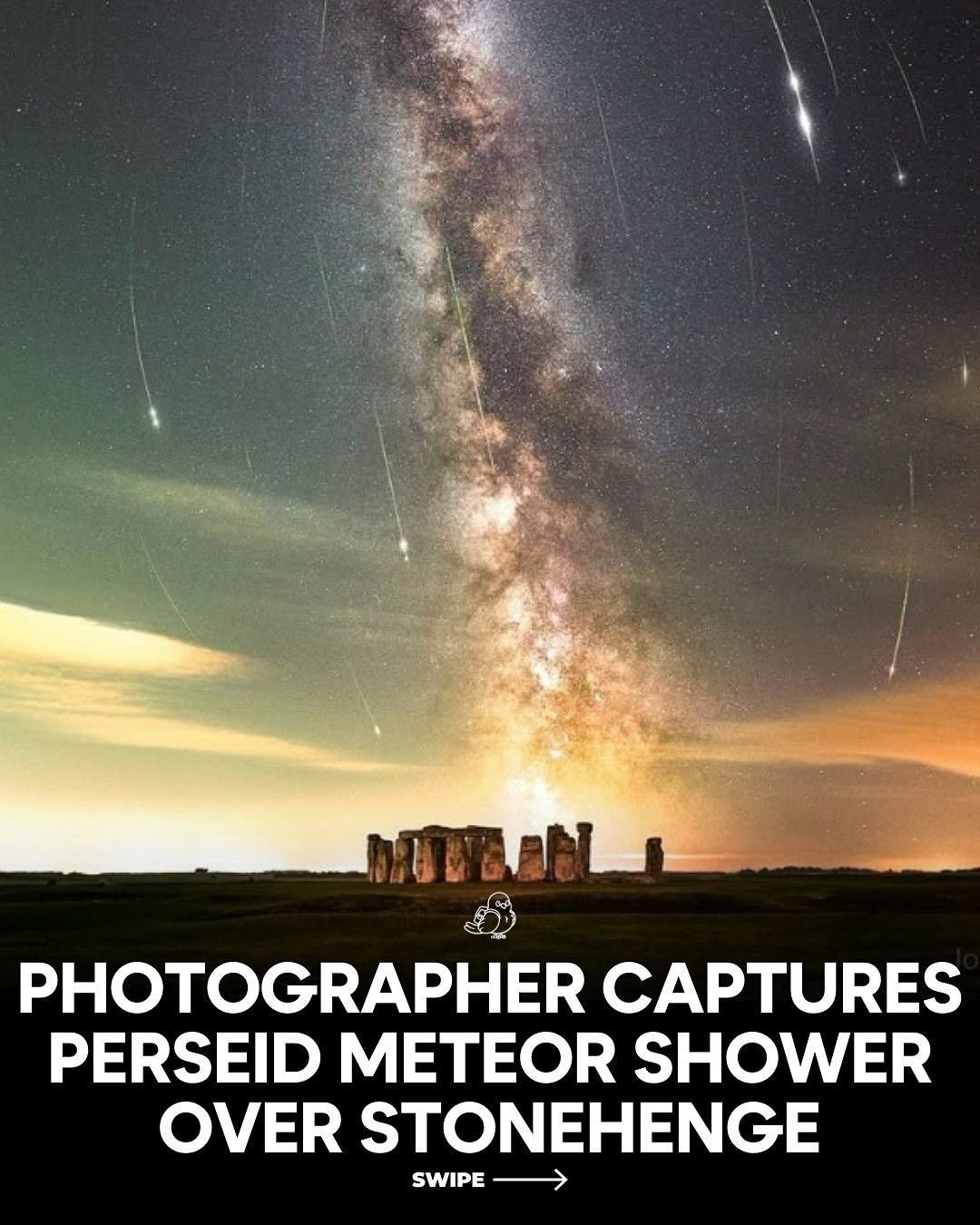
Meteor Shower over Stonehenge
Astronomical events have long captivated our collective imagination, and few sights are as awe-inspiring as a meteor shower. The Perseid meteor shower, in particular, is an annual spectacle that attracts stargazers from around the globe. Photographer Josh Dury captured a breathtaking image of this natural phenomenon, showcasing the Perseid meteor shower lighting up the night sky above the iconic Stonehenge, with the majestic Milky Way vividly visible in the background. The result is a fusion of ancient history and modern astronomy, offering a unique perspective that combines natural beauty and human ingenuity.
Context / Why this matters
Meteor showers, like the Perseids, occur when the Earth passes through the debris trail left by a comet. The Perseid meteor shower is named after the Perseus constellation, from which the meteors appear to originate, and is associated with the comet Swift-Tuttle.
Meteor showers are significant for several reasons. They are visible reminders of the dynamic nature of our solar system, offering a glimpse into the cosmos from the comfort of Earth. They also provide astronomers with opportunities to study the composition and behavior of comets and meteorites. Meteor showers are often celebrated in various cultures and have inspired countless works of art, literature, and music. Perhaps most importantly, they remind us of our place in the universe, fostering a sense of awe and wonder.
Stonehenge, a prehistoric monument in Wiltshire, England, is one of the most famous landmarks in the world. Its exact purpose remains a mystery, but it is widely believed to have been used for astronomical observations and rituals. The alignment of Stonehenge with the sunrise on the summer solstice and its alignment with other celestial events have made it a site of interest for astronomers and archaeologists alike. The combination of Stonehenge and the Perseid meteor shower creates a unique and dramatic scene, blending ancient history with modern astronomy.
Main discussion
The Perseid Meteor Shower
The Perseid meteor shower is one of the most anticipated celestial events of the year. It occurs annually from mid-July to late August, with peak activity typically occurring around August 11-12. During this period, Earth passes through the debris left by Comet Swift-Tuttle, resulting in a dazzling display of shooting stars.
Meteors are often referred to as "shooting stars," but they are actually small particles of debris entering the Earth's atmosphere at high speeds. When these particles collide with air molecules, they create friction, which heats and vaporizes the particles, resulting in the characteristic streak of light. The Perseid meteors are known for their bright, rapid streaks, often leaving behind a glowing trail that can last for a few seconds.
Astrophotography and Capturing the Night Sky
Astrophotography is the art of capturing celestial objects and phenomena. It requires specialized equipment, careful planning, and a deep understanding of both photography and astronomy.
The equipment used in astrophotography typically includes a high-quality camera, a sturdy tripod, and a telescope or lens with a wide aperture. Long exposure times are often necessary to capture the faint light of distant stars and galaxies. Post-processing techniques, such as stacking multiple exposures and reducing noise, are also essential for producing high-quality images.
Josh Dury, the photographer who captured the breathtaking image of the Perseid meteor shower over Stonehenge, demonstrates the skill and patience required for astrophotography. His image showcases the vibrant colors of the Milky Way and the dramatic streaks of the meteor shower, all set against the ancient backdrop of Stonehenge.
The Role of Stonehenge in Celestial Observations
Stonehenge is a fascinating example of how ancient civilizations used astronomical observations for cultural and ritualistic purposes. The alignment of the stones with the sunrise on the summer solstice and other celestial events suggests that Stonehenge was used as a calendar or for astronomical observations.
The combination of Stonehenge and the Perseid meteor shower creates a unique and dramatic scene, blending ancient history with modern astronomy. The ancient stone monument serves as a foreground element in the astrophotography, providing a striking contrast to the vibrant night sky.
Practical tips
When planning to observe or photograph a meteor shower, timing and location are crucial. For the Perseid meteor shower, peak viewing times typically occur in the early morning hours, after midnight and before dawn, when the sky is darkest. Facing the northeast is advisable, as this is the direction from which the meteors will appear to radiate.
Choosing the Right Location
Light pollution significantly affects the visibility of meteors. To maximize your viewing experience, choose a dark sky location far from city lights. Open fields, parks, and remote areas are ideal. The darker the sky, the better you’ll see the meteors and the Milky Way.
Equipment for Meteor Shower Photography
For astrophotography, a camera with manual controls, a sturdy tripod, and a wide-angle lens with a large aperture (f/2.8 or wider) are essential. Using a remote shutter release or the camera’s self-timer function can help minimize camera shake. Long exposure settings, typically ranging from 15 to 30 seconds, are necessary to capture the meteors and the night sky.
Planning and Post-Processing
It’s crucial to plan your shoot by checking the weather forecast and moon phase. A new moon or crescent moon will provide the darkest skies, enhancing visibility. Post-processing techniques, such as stacking multiple exposures and adjusting contrast and brightness, can enhance the final image. Software like Adobe Lightroom and Photoshop are commonly used for these tasks.
Important takeaways
The Perseid meteor shower over Stonehenge provides a unique blend of natural beauty and ancient history, showcasing the splendor of the night sky and the mysterious allure of a prehistoric monument. Astrophotography captures this fusion, allowing us to appreciate the cosmos from a different perspective.
Viewing and photographing meteor showers can be a rewarding experience, offering insights into the dynamic nature of our solar system and the wonders of the universe. With the right equipment, timing, and location, anyone can capture the beauty of the night sky and contribute to the rich tradition of astrophotography.
Conclusion
The Perseid meteor shower over Stonehenge is a testament to the beauty of the natural world and the enduring fascination with the night sky. Whether viewed from a dark field or captured through the lens of a camera, this celestial event offers a unique and awe-inspiring experience. By combining the grandeur of ancient history with the wonders of modern astronomy, the Perseid meteor shower over Stonehenge serves as a reminder of our place in the universe and the endless possibilities of human curiosity and ingenuity. So, the next time the Perseids light up the night sky, take a moment to look up and marvel at the spectacle—you never know what wonders you might see.
Questions readers ask
What causes the Perseid meteor shower and why does it occur annually?
The Perseid meteor shower occurs when Earth passes through the debris trail left by the comet Swift-Tuttle. This event is annual because the comet's orbit intersects with Earth's orbit at the same time each year, typically in mid-August.
Who is Josh Dury and what makes his photograph of the Perseid meteor shower over Stonehenge notable?
Josh Dury is a photographer known for his stunning astrophotography. His photograph of the Perseid meteor shower over Stonehenge is notable because it uniquely combines the ancient history of Stonehenge with the cosmic beauty of the night sky, creating a striking visual fusion of two extraordinary subjects.
What is the best way to capture meteor showers through photography?
To capture meteor showers, use a camera with manual settings, a wide-angle lens, and a tripod for stability. Set a high ISO (e.g., 1600-3200), a wide aperture (e.g., f/2.8), and a long exposure time (e.g., 20-30 seconds). Use a remote shutter release or self-timer to avoid camera shake. Experiment with different settings to find the best balance between capturing meteors and minimizing noise.
What are some of the best sites for astrophotography, similar to Stonehenge?
Some of the best sites for astrophotography, similar to Stonehenge, include locations with dark skies and interesting foregrounds. Places like the Grand Canyon, Uluru (Ayers Rock) in Australia, and the cliffs of Moher in Ireland offer unique landscapes that complement the night sky. National parks and remote areas with minimal light pollution are also ideal for capturing stunning astrophotography.
How can I plan a backpacking trip to capture the Perseid meteor shower?
To plan a backpacking trip for the Perseid meteor shower, choose a location with minimal light pollution and a clear view of the night sky. Pack essential gear, including a camera with manual settings, a tripod, and a wide-angle lens. Check the weather forecast and plan your trip around the peak viewing dates, typically mid-August. Prepare for night-time hiking and camping, and be sure to bring warm clothing and necessary supplies.
What makes the Perseid meteor shower one of the best meteor showers to observe?
The Perseid meteor shower is considered one of the best to observe due to its high rate of meteors, which can reach up to 100 per hour during peak times. The Perseids are also known for their bright and fast meteors, as well as their fireballs, which are larger and more brilliant than average meteors. Additionally, the Perseids occur during summer in the Northern Hemisphere, making it a convenient and pleasant time for stargazing.
Related deep dives
Similar reads based on topic and creator.




Recent articles
Fresh deep dives from the latest Reels we unpacked.




Comments
Be the first to comment.