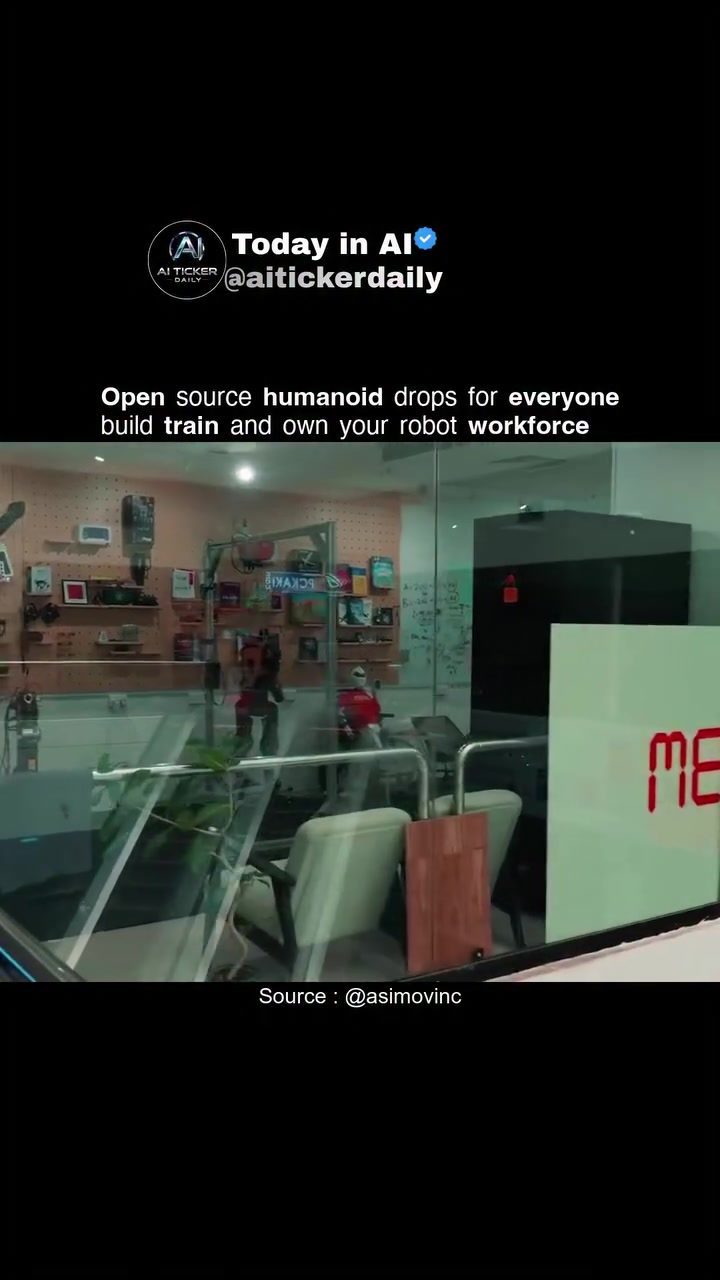
Humanoid Robots and the Rise of Open-Source Robotics
The advent of open-source humanoid robots is revolutionizing the field of robotics, making advanced technology more accessible than ever before. Asimov v1, a 1.2-meter, 35-kg humanoid with 25 actuated degrees of freedom (DOF), is now open source, allowing anyone to build, train, and customize their own humanoid robot platform. This development marks a significant step toward broadly accessible humanoid labor, with the potential to transform various industries.
Why This Matters
Open-source humanoid robots represent a paradigm shift in robotics. By making the technology freely available, developers and enthusiasts worldwide can contribute to its advancement, fostering innovation and democratizing access. This shift has profound implications for industries ranging from manufacturing and healthcare to education and research. The ability to build and customize robotics platforms empowers individuals and organizations to tailor solutions to their specific needs, driving efficiency and innovation.
The Asimov v1 Humanoid Robot
The Asimov v1 robot, developed by AI Ticker Daily in collaboration with Asimov Inc, is a groundbreaking achievement in open-source humanoid robotics. Here are some key features:
Specifications
- Height: 1.2 meters
- Weight: 35 kg
- Degrees of Freedom (DOF): 25 actuated
- Customizability: Highly customizable platform
- Open Source: Full access to design, software, and training data
Principles of Operation
The Asimov v1 operates under a set of guiding principles:
- Safety First: The robot must not harm humans, either through direct action or inaction. This principle ensures that the robot prioritizes human safety above all else.
- Obedience to Qualified Personnel: The robot must follow orders given by qualified personnel, except when those orders conflict with the first principle of preventing harm to humans.
- Self-Preservation: The robot must protect its own existence, unless doing so violates the first two principles.
These principles ensure that the robot operates within a safe and ethical framework, making it suitable for a variety of applications.
Building and Training Your Own Robot
One of the most exciting aspects of the Asimov v1 is its open-source nature, which allows users to build, train, and customize their own robot platforms. Here are some practical tips for getting started:
Steps to Build Your Own Humanoid Robot
- Gather Materials: Obtain the necessary components, including motors, sensors, and control systems. The open-source nature of the Asimov v1 means you can source components from various suppliers.
- Assembly: Follow the detailed assembly instructions provided in the open-source documentation. This includes mounting the motors, wiring the sensors, and installing the control systems.
- Software Installation: Download and install the necessary software, including the operating system, control algorithms, and any additional tools or libraries required for customization.
- Testing and Calibration: Perform initial tests to ensure all components are functioning correctly. Calibrate the sensors and motors for optimal performance.
Training the Robot
Training a humanoid robot involves teaching it to perform specific tasks. Here are some key steps:
- Define Tasks: Clearly define the tasks you want the robot to perform. This could include simple actions like walking or picking up objects, or more complex tasks like navigating an environment or interacting with humans.
- Collect Data: Gather data on the tasks to be performed. This might involve recording the robot's movements, using sensors to capture environmental data, or collecting input from human operators.
- Develop Algorithms: Use machine learning algorithms to analyze the data and develop models that the robot can use to perform the tasks. This might involve training neural networks, developing reinforcement learning models, or using other machine learning techniques.
- Test and Iterate: Test the robot's performance and iterate on the algorithms to improve accuracy and efficiency. This step is crucial for ensuring that the robot can perform its tasks reliably and safely.
Important Takeaways
The open-source nature of the Asimov v1 robot has several important implications:
- Accessibility: By making the technology freely available, the Asimov v1 democratizes access to advanced robotics, allowing developers and enthusiasts worldwide to contribute to its development.
- Innovation: Open-source projects foster innovation by encouraging collaboration and the sharing of ideas. This can lead to rapid advancements in robotics technology.
- Customization: The ability to build and customize the robot platform means that users can tailor solutions to their specific needs, making the technology more versatile and adaptable.
- Ethical Considerations: The guiding principles ensure that the robot operates within a safe and ethical framework, prioritizing human safety and well-being.
Conclusion
The Asimov v1 humanoid robot represents a groundbreaking development in the field of robotics, making advanced technology more accessible than ever before. By embracing the principles of safety, obedience, and self-preservation, the Asimov v1 ensures that this powerful technology can be used responsibly and ethically. Whether you are a developer, an enthusiast, or an organization looking to leverage the power of humanoid robots, the Asimov v1 offers a versatile and customizable platform to build, train, and innovate.
Questions readers ask
What makes Asimov v1 significant in the field of robotics?
Asimov v1 is significant because it is an open-source humanoid robot, which allows anyone to access, build, and customize its design. This 1.2-meter tall robot has 25 actuated degrees of freedom, providing a versatile platform for various applications.
Who can benefit from the open-source nature of Asimov v1?
The open-source nature of Asimov v1 benefits a wide range of individuals and industries. Developers, enthusiasts, and businesses can all contribute to and utilize its technology, fostering innovation and democratizing access to advanced humanoid robotics.
What are the key features of the Asimov v1 robot?
Asimov v1 is a 1.2-meter tall humanoid robot weighing 35 kg, with 25 actuated degrees of freedom. Its open-source design includes freely shared software and training data, allowing users to build, train, and customize their own humanoid robot platforms.
How does the open-source movement in robotics benefit the industry?
The open-source movement in robotics allows for greater collaboration and innovation. By freely sharing designs, software, and data, developers worldwide can contribute to and build upon existing technologies, accelerating advancements in the field.
What are the advantages of building a DIY humanoid robot using Asimov v1?
Building a DIY humanoid robot using Asimov v1 offers several advantages, including the ability to customize the robot to specific needs, gain hands-on experience with advanced robotics, and contribute to the open-source community by sharing improvements and innovations.
What is the potential impact of open-source humanoid robots like Asimov v1 on various industries?
Open-source humanoid robots like Asimov v1 have the potential to transform various industries by making advanced robotics technology more accessible. This can lead to increased innovation, reduced costs, and the development of specialized robots tailored to specific industry needs.
Recent articles
Fresh deep dives from the latest Reels we unpacked.




Comments
Be the first to comment.