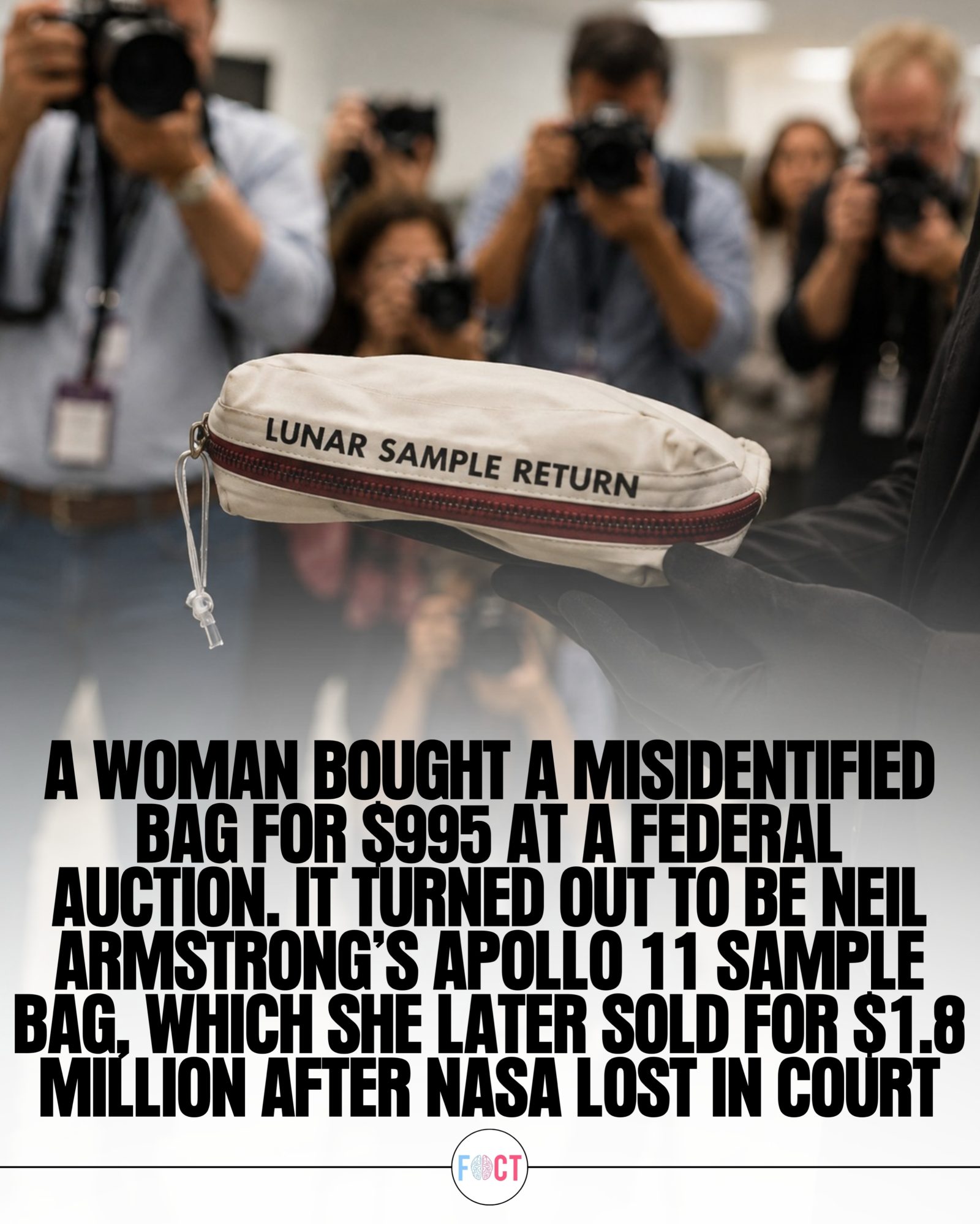
Lunar Sample Bag Auction
A federal auction bag purchase for $995 resulted in a $1.8 million sale. The bag was misidentified at the auction but revealed to be a significant space artifact: the Apollo 11 lunar sample bag used by Neil Armstrong during the historic moon landing in 1969. The unexpected discovery of moon dust traces in the bag sparked a legal dispute with NASA, but the federal judge ruled in favor of the buyer.
Why the Lunar Sample Bag Matters in History
The Apollo 11 mission marked a monumental achievement in human space exploration. Neil Armstrong's lunar sample bag played a crucial role in this mission by collecting moon dust and rock samples. These samples provided invaluable scientific data that has advanced our understanding of the moon's composition and the solar system's history.
The Unexpected Discovery
Misidentified at Auction
A woman, purchasing a bag at a federal auction, could not have imagined the artifact's true value. The bag, stained and seemingly ordinary, was misidentified and sold for a mere $995. It was only later that its true significance was realized, and it became clear that this bag was not just any ordinary item but a piece of space history.
The Bag's True Identity
The bag, later confirmed to be the Apollo 11 lunar sample bag, was a pivotal artifact in human space exploration history. Neil Armstrong used this bag to collect the first lunar samples ever brought to Earth. The discovery of moon dust traces in the bag further solidified its historical significance.
The Legal Dispute with NASA
Testing and Claims
NASA claimed the bag should never have been sold, arguing that it was government property. The Agency attempted to reclaim the bag, leading to a legal battle. However, a federal judge ruled in favor of the buyer, stating that the bag was legally purchased at the auction.
The Court's Decision
The court's decision was a landmark ruling, emphasizing the importance of clarity in government auctions. It highlighted the necessity of proper identification and documentation of artifacts, especially those with historical significance. The ruling also underscored the importance of legal precedent in similar cases, ensuring that auctioned items are sold with full disclosure of their identity and value.
The $1.8 Million Sale
Selling the Bag at Auction
After the legal dispute, the bag was put up for auction again. This time, its true value was known, and it fetched an impressive $1.8 million. The sale underscored the high demand for space artifacts and the significant value collectors place on historical space items.
The Buyer's Experience
The buyer's journey from purchasing the bag for $995 to eventually selling it for $1.8 million is a testament to the unpredictable nature of artifact auctions. It highlights the importance of thorough research and verification in such purchases, as even seemingly ordinary items can hold immense value.
Practical Tips for Artifact Collectors
Whether you are a seasoned collector or just starting, here are some practical tips to keep in mind when purchasing artifacts:
Research and Verify
Always conduct thorough research before buying an artifact. Verify its authenticity and historical significance. Look for professional appraisals and certifications to ensure the item's legitimacy.
Check Auction Documentation
Ensure that the auction house provides clear documentation and identification of each item. Ask for detailed descriptions and ask the auctioneer any questions you may have. This transparency can prevent future disputes and ensure you are aware of the item's true value.
Consult Specialists
Consulting with specialists in the field of your interest can provide valuable insights and help you make informed decisions. They can offer expert opinions on the item's authenticity, historical significance, and market value.
Be Patient
Patience is key in artifact collecting. Don't rush into purchases; take your time to assess the item's value and authenticity. Sometimes, waiting for the right item at the right price can save you from potential headaches in the future.
Important Takeaways
The Value of Historical Artifacts
Historical artifacts, such as the Apollo 11 lunar sample bag, hold significant value due to their historical and cultural importance. Their rarity and historical context make them highly sought after by collectors and museums worldwide.
Importance of Clear Auction Documentation
Clear and accurate documentation in auctions is crucial. It ensures that buyers are fully aware of the items' true identity and value. Proper documentation prevents legal disputes and ensures transparency in the auction process.
The Legal Implications of Collectible Auctions
The legal dispute surrounding the lunar sample bag underscores the importance of understanding the legal implications of collecting artifacts. It highlights the need for clear guidelines and regulations in artifact auctions to protect both buyers and sellers.
Conclusion
The story of the Apollo 11 lunar sample bag is a fascinating tale of discovery, legal challenges, and immense value. It serves as a reminder of the incredible achievements of human space exploration and the enduring fascination with space artifacts. For collectors, it emphasizes the importance of thorough research, clear documentation, and understanding the legal aspects of artifact purchases. The journey of this bag from a misidentified auction piece to a multimillion-dollar sale is a testament to the unpredictable and exciting world of historical artifact collecting.
Questions readers ask
Why was the Apollo 11 bag initially sold for such a low price at the federal auction?
The Apollo 11 bag was initially sold for $995 because it was misidentified as a generic NASA item. The auction house was unaware of its true historical significance and the bag's use by Neil Armstrong during the moon landing.
What made the Apollo 11 bag so valuable after its initial sale?
The bag's value skyrocketed after traces of moon dust were discovered, confirming it as a genuine artifact from the Apollo 11 mission. Its historical importance and rarity in the market of space memorabilia contributed to its increased value.
What was the legal dispute between the buyer and NASA about the Apollo 11 bag?
NASA initially disputed the sale and claimed the bag should be returned to them. However, the federal judge ruled in favor of the buyer, confirming that the bag was legally sold and belonged to the purchaser.
How did the discovery of moon dust in the Apollo 11 bag impact its price?
The discovery of moon dust was pivotal. It authenticated the bag as a genuine artifact from the Apollo 11 mission, making it a highly sought-after item among collectors and significantly increasing its market value, ultimately selling for $1.8 million.
What significance does the Apollo 11 bag hold in the context of the Apollo 11 mission?
The Apollo 11 bag is an iconic artifact, used by Neil Armstrong to collect the first lunar samples. These samples provided critical scientific data about the moon's composition, helping advance space exploration.
Why do space exploration artifacts like the Apollo 11 bag command such high prices at auctions?
The value of space exploration artifacts lies in their rarity, historical significance, and the unique stories they represent. High demand from collectors and enthusiasts drives up the prices at auctions, as seen with the Apollo 11 bag.
What other notable artifacts from the Apollo 11 mission might be available for private collectors?
While the Apollo 11 bag is a standout item, other artifacts such as equipment, documents or even personal items from astronauts may appear at auctions. These items often come from private collections or government auctions and can range from small memorabilia to larger pieces of space hardware.
Related deep dives
Similar reads based on topic and creator.



Recent articles
Fresh deep dives from the latest Reels we unpacked.




Comments
Be the first to comment.