Animal Teeth Facts
Animals have a fascinating array of teeth, each uniquely adapted to their diet, survival strategies, and ecological roles. From the minuscule snails to the formidable sharks, the diversity in tooth counts and structures offers a glimpse into the intricate world of evolution and adaptation.
Context / Why this matters
Understanding the diversity of animal teeth enhances our appreciation for the natural world. The variation in tooth counts and types reflects the different diets and survival strategies of various species. Each animal's dentition is a testament to millions of years of evolution, carefully honed to meet specific needs.
Main discussion
The Diversity of Animal Teeth
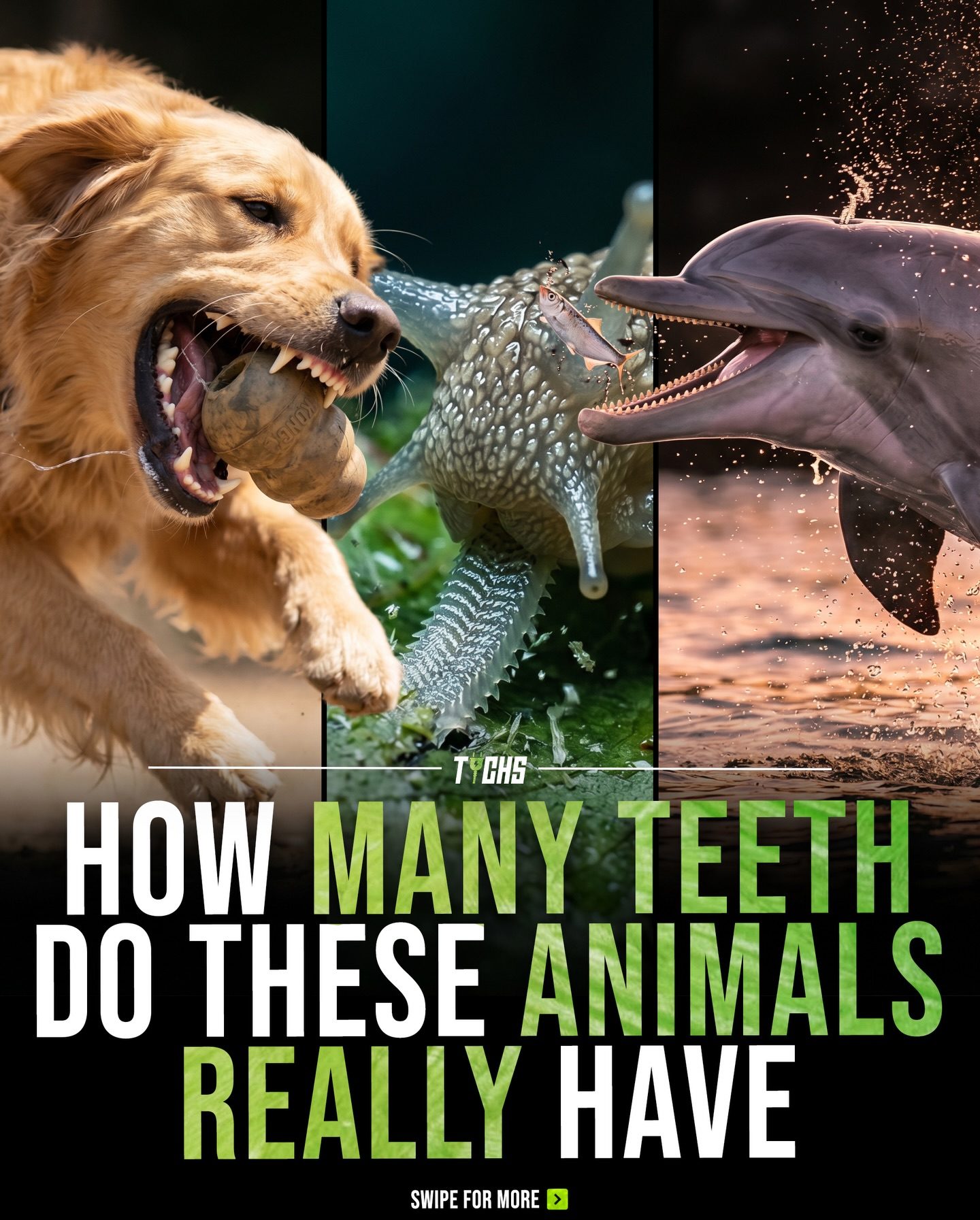
The number of teeth an animal has can vary dramatically. For instance, snails possess around 20,000 microscopic teeth arranged on a structure called a radula. Sharks, on the other hand, carry about 300 teeth and have the unique ability to replace them constantly. This continuous tooth replacement ensures that sharks always have a sharp set of teeth, which is crucial for their hunting and feeding habits.
Dolphins have roughly 100 teeth, designed for catching and gripping slippery prey in their aquatic environment. Alligators, known for their powerful bites, have about 80 teeth. These teeth are conical and designed for gripping and tearing flesh, making them formidable predators.
The Role of Teeth in Survival
Teeth play a critical role in an animal's survival. The design and count of teeth evolve to match each animal's survival needs and ecological role. For example, dogs have 42 teeth, including sharp canines for tearing meat and molars for grinding food. Humans have 32 teeth, which include a variety of types suited for both tearing and grinding.
Lions, with 30 teeth, are equipped with powerful canines and carnassial teeth that allow them to tear through flesh efficiently. Elephants, with 26 teeth, have a complex dental system that evolves through different stages. Their teeth are designed to grind tough plant material, essential for their herbivorous diet.
Beavers have 20 specialized teeth designed for gnawing, which is crucial for their role in shaping their aquatic habitats by felling trees.
Evolution and Tooth Adaptations
The evolution of teeth is a fascinating story of adaptation. The number and type of teeth an animal has are influenced by its diet and lifestyle. For herbivores like elephants and beavers, grinding teeth are essential for processing plant material. Carnivores like lions and sharks have sharp, pointed teeth for tearing flesh. Ominvores like dogs and humans have a mix of teeth that allow them to consume a variety of foods.
The constant replacement of teeth in sharks and the specialized radula in snails are examples of how evolution has tailored dental structures to meet specific ecological needs. This adaptation ensures that each species can thrive in its environment, whether it is hunting prey, foraging for plants, or gnawing through wood.
Practical tips
When exploring the world of animal teeth, consider the following tips to deepen your understanding:
- Observe Animal Behavior: Watch how different animals use their teeth in their natural habitats. This can provide insights into how their dentition is adapted to their lifestyle.
- Study Dental Anatomy: Learn about the different types of teeth (incisors, canines, premolars, molars) and how they function in various species.
- Compare and Contrast: Compare the teeth of herbivores, carnivores, and omnivores to understand how diet influences dental adaptation.
- Evolutionary History: Explore the evolutionary history of different species to see how their dentition has changed over time.
Important takeaways
- Diversity in Tooth Counts: The number of teeth varies widely among animals, reflecting their diets and lifestyles.
- Evolutionary Adaptation: Teeth have evolved to meet the specific needs of each species, ensuring survival and success in their environments.
- Specially Adapted Teeth: Different animals have teeth uniquely adapted to their ecological roles, whether it's hunting, foraging, or building habitats.
Conclusion
The world of animal teeth is a captivating one, filled with diverse structures and functions that reveal the intricate web of evolution. From the microscopic teeth of snails to the constant tooth replacement in sharks, each species has a unique dental adaptation that has evolved to meet their specific needs. By understanding these adaptations, we gain a deeper appreciation for the natural world and the marvels of evolutionary biology.
Questions readers ask
Why do different animals have such varied teeth structures?
Different animals have varied teeth structures due to their unique diets and survival strategies. For example, snails have microscopic teeth suited for scraping and shredding algae, while sharks have sharp, serrated teeth designed for tearing flesh.
How often do sharks replace their teeth?
Sharks replace their teeth continuously throughout their lives. This is to compensate for the heavy wear and tear caused by their hunting and feeding habits. They can lose and replace thousands of teeth over their lifetime.
What are the key features of a lion's teeth?
Lions have powerful, carnivorous teeth designed for gripping and tearing flesh. Their canines are particularly impressive, used for holding prey and delivering a lethal bite. Additionally, their molars, which are shearing teeth, are adapted to cut through meat.
How do dolphin teeth differ from human teeth?
Dolphin teeth are cone-shaped and designed for grasping and holding prey. Dolphins have a single row of 60 to 100 teeth, which are all the same shape and size, whereas humans have two rows of teeth, with different shapes and sizes tailored to diverse functions like chewing, biting or grinding.
Why are snail teeth so small and numerous?
Snails have a large number of tiny teeth, known as radula, which are designed for scraping and shredding algae and other small plants. This structure is suited for their herbivorous diet and slow-moving lifestyle.
What are the survival benefits of diverse animal teeth structures?
Diverse animal teeth structures provide various survival benefits, including efficient food processing, effective hunting strategies, and ecological adaptation. For instance, the sharp teeth of lions enable them to take down large prey, while the grinding teeth of herbivores help them digest tough plant material.
Related deep dives
Similar reads based on topic and creator.




Recent articles
Fresh deep dives from the latest Reels we unpacked.




Comments
Be the first to comment.