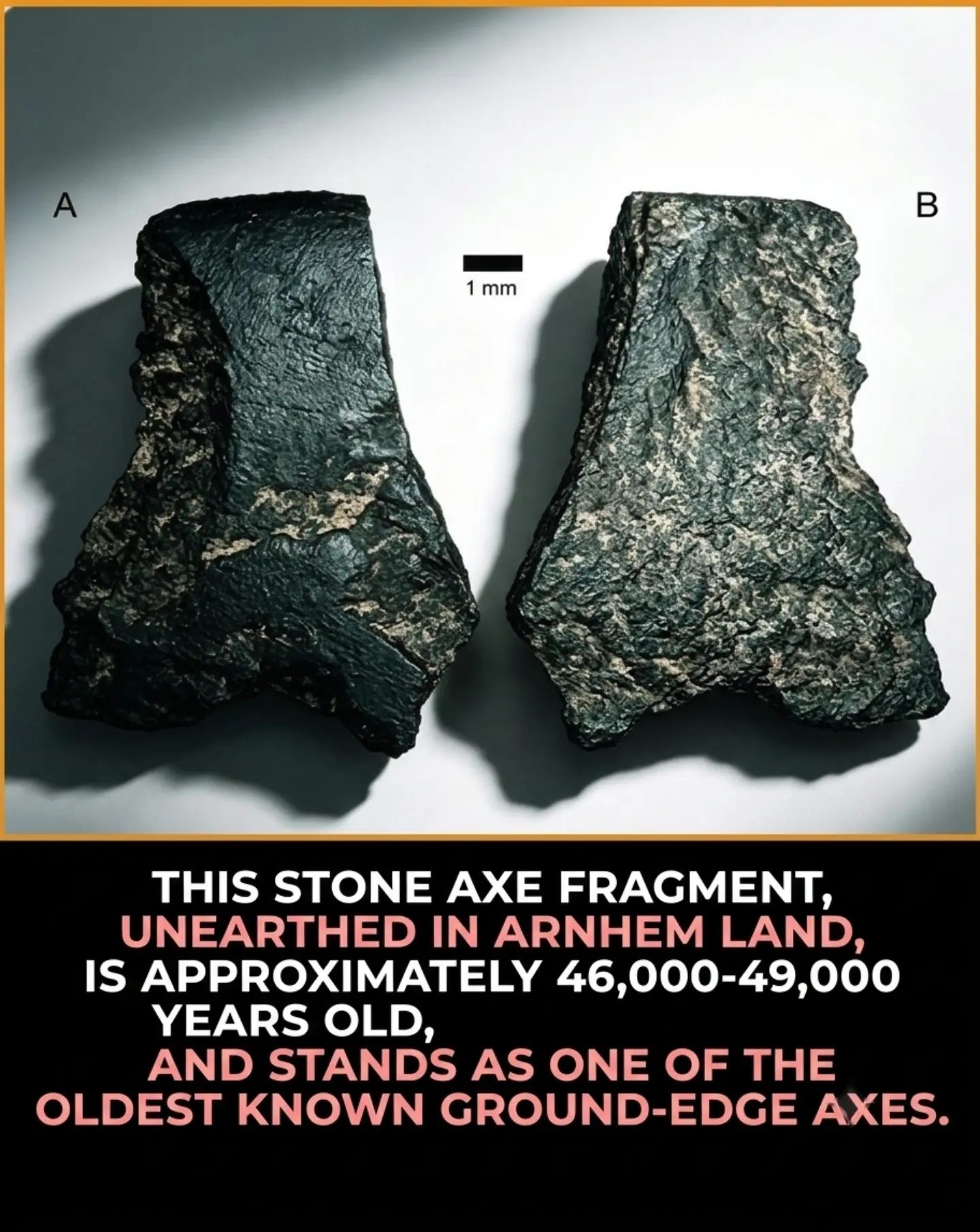
Ancient Stone Axe Fragment
A ground-edge axe fragment unearthed in Arnhem Land, northern Australia, has captivated archaeologists and historians alike. This diminutive artifact, measuring only about 2.5 cm wide, has been dated to an astonishing 46,000–49,000 years old, making it one of the oldest known ground-edge axes in the world.
Why this matters
The significance of this discovery lies in its revision of conventional historical narratives. For a long time, it was believed that such advanced tool-making techniques originated in Europe towards the end of the last Ice Age. However, this Australian find predates similar tools in Europe by tens of thousands of years, highlighting the technological prowess and innovation of the First Nations people who inhabited this region long before the arrival of Europeans.
The ground-edge axe and its significance
Evidence of advanced tool-making
The axe fragment exhibits clear signs of having been ground against another stone to create a smooth, sharp bevel. This method of tool production is known as "ground-edge" technology, which was a significant advancement over earlier techniques. The ground-edge method allowed for the creation of more efficient and durable tools, marking a pivotal moment in human technological development.
Comparison with other early tools
While other early axe fragments have been found, the Arnhem Land axe stands out due to its age and the sophistication of its design. Earlier tools were typically made by flaking, which involved striking a stone to create sharp edges. The ground-edge axe, on the other hand, involved a more labor-intensive process of grinding and polishing, resulting in a tool that was both sharper and more resilient.
The context of Arnhem Land
Arnhem Land, located in the Northern Territory of Australia, has long been recognized as a region rich in archaeological significance. The area is home to numerous sites that provide valuable insights into the early human history of Australia. The discovery of the ground-edge axe fragment adds to this rich tapestry, offering a glimpse into the ingenuity and technological innovation of the First Nations people who lived in the region thousands of years ago.
Practical tips
Visiting archaeological sites
For those interested in exploring the ancient history of Australia, Arnhem Land offers a wealth of opportunities. While the specific site where the axe fragment was found may not be open to the public, there are numerous other archaeological sites in the region that can be visited with proper guidance. It is essential to approach these sites with respect and to follow any guidelines provided by local authorities or indigenous communities.
Learning more about Australian history
Engaging with the history of Australian First Nations people can be a deeply enriching experience. There are various resources available, including books, documentaries, and museum exhibitions, that delve into the rich cultural heritage and technological innovations of these early inhabitants. Some notable resources include the Australian Museum in Sydney and the Melbourne Museum, both of which have extensive collections related to Australian archaeology and indigenous culture.
Engaging with the community
One of the best ways to gain a deeper understanding of Australian history is through engagement with the local community. Many indigenous communities in Arnhem Land welcome visitors and offer cultural tours and experiences. These interactions can provide a unique perspective on the region's history and the enduring legacy of its first inhabitants.
Important takeaways
The discovery of the ancient stone axe fragment in Arnhem Land underscores the deep history of technological innovation in Australia. It challenges long-held beliefs about the origins of ground-edge technology and highlights the ingenuity of First Nations people. This discovery serves as a powerful reminder of the need to preserve and study archaeological sites, as they hold invaluable insights into human history. The axe fragment not only adds to our understanding of the past but also serves as a testament to the enduring legacy of the First Nations people of Australia.
Conclusion
The ground-edge axe fragment found in Arnhem Land is not just a piece of history; it is a testament to the ingenuity and technological advancements of the First Nations people who inhabited this region thousands of years ago. This discovery challenges conventional narratives about the origins of ground-edge technology and highlights the rich archaeological heritage of Australia. By studying and preserving such artifacts, we gain a deeper appreciation of the intricate tapestry of human history and the enduring legacy of indigenous cultures.
Questions readers ask
What is a ground-edge axe and why is it significant?
A ground-edge axe is a type of stone tool where the cutting edge is polished or ground to a sharp edge. The significance of these axes lies in their complexity and the skill required to produce them, indicating advanced technological capabilities. The 46,000–49,000 year old ground-edge axe fragments found in Arnhem Land, Australia, are particularly significant as they are among the oldest known examples, predating similar tools found in other parts of the world.
How does the discovery in Arnhem Land challenge existing historical narratives?
The discovery of these ancient stone axe fragments challenges the conventional historical narrative that advanced tool-making techniques originated in Europe towards the end of the last Ice Age. The Australian find predates these European tools by tens of thousands of years, providing evidence that sophisticated tool-making techniques were developed much earlier and in different parts of the world.
What makes the stone axe fragments from Arnhem Land unique?
These stone axe fragments are unique due to their age, dating back 46,000–49,000 years, and their small size, measuring only around 2.5 cm wide. Despite their size, they demonstrate advanced ground-edge technology, showing the ingenuity and skill of the First Nations people who created them.
Who were the First Nations people of Arnhem Land, Australia?
The First Nations people of Arnhem Land are the Aboriginal Australians who have inhabited this region for tens of thousands of years. The ancient stone axe fragments provide a fascinating glimpse into their technological prowess and innovation during this period, highlighting their significant role in human history.
How were the ancient stone axe fragments discovered and dated?
The ancient stone axe fragments were discovered through archaeological excavations in Arnhem Land, Australia. Scientists used radiocarbon dating and other advanced techniques to determine the age of the fragments, revealing that they are approximately 46,000–49,000 years old, which is a significant finding in the history of human technological development.
Why is the size of the ancient stone axe fragments important?
The size of the ancient stone axe fragments is important because it shows that despite their small dimensions, these tools were crafted with advanced ground-edge technology, requiring a great deal of skill and precision. This demonstrates the ingenuity of the First Nations people of Arnhem Land and their mastery of early tool-making techniques.
What can we learn from the ancient stone axe fragments about early human technological development?
The ancient stone axe fragments from Arnhem Land offer valuable insights into early human technological development by demonstrating that complex tool-making techniques emerged much earlier than previously thought. These tools challenge the idea that technological progress was linear and centered in specific regions.
Related deep dives
Similar reads based on topic and creator.



Recent articles
Fresh deep dives from the latest Reels we unpacked.




Comments
Be the first to comment.