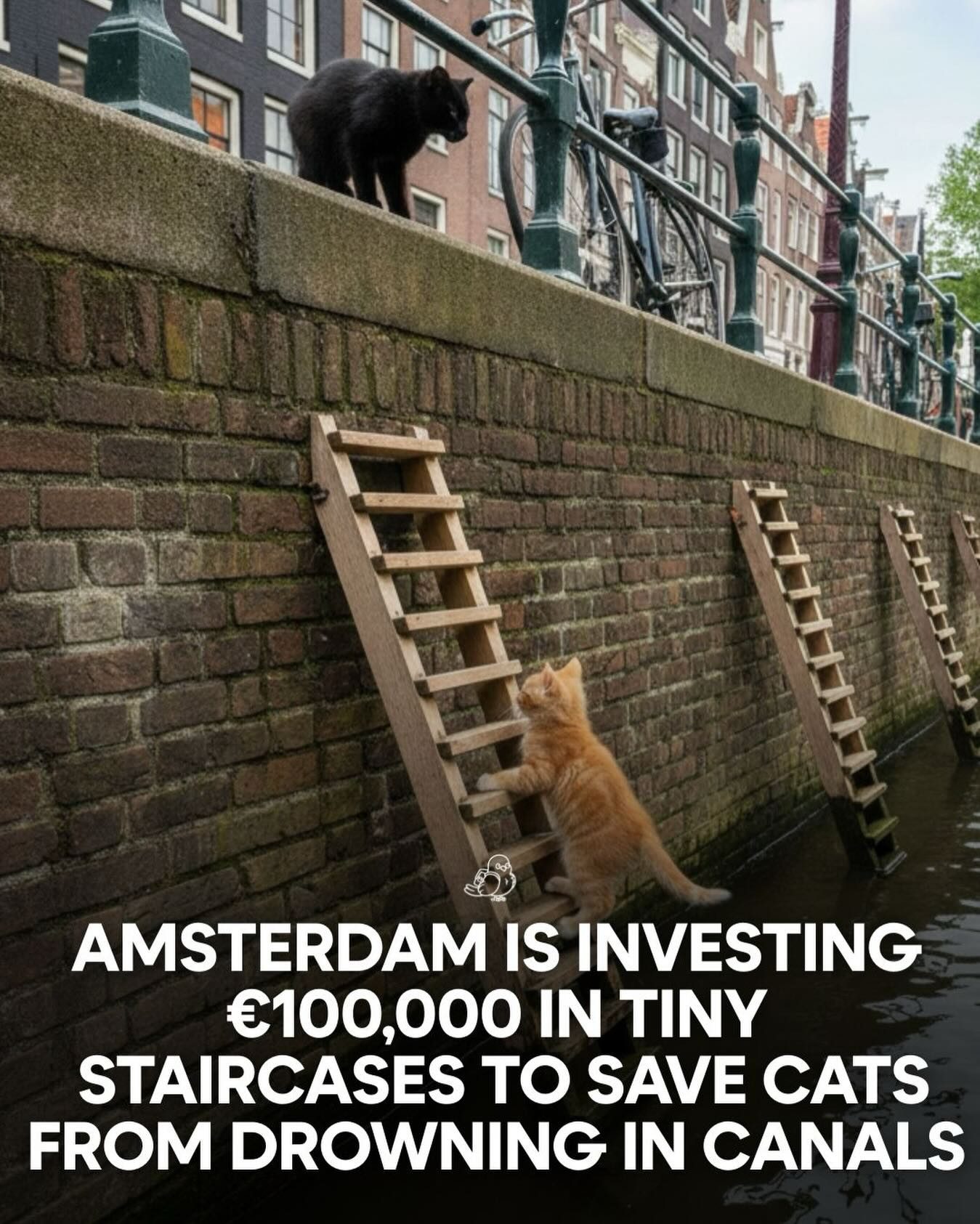
Amsterdam's canals are iconic, but they pose a significant threat to the city's feline population. The steep stone walls make it nearly impossible for cats to escape if they fall in, leading to frequent drownings. To address this issue, Amsterdam is taking a unique and compassionate approach by investing €100,000 to install small staircases along its canals. These discreet wooden steps will provide a lifeline for cats and other small animals, giving them a safe way out if they find themselves in the water.
Why This Matters
Amsterdam's initiative goes beyond just saving cats; it's part of a broader effort to enhance urban biodiversity and create a safer environment for wildlife coexisting with humans. The city's canals, while beautiful, are treacherous for small animals. The steep walls and deep water make it nearly impossible for animals to climb out on their own, leading to tragic outcomes. By installing these staircases, Amsterdam is taking a proactive step to mitigate these risks and ensure the well-being of its urban wildlife.
The Design and Placement of the Staircases
The staircases are designed to be both functional and unobtrusive. Made of wood, they blend seamlessly into the canal walls, ensuring they do not detract from the city's aesthetic. These small, yellow structures are placed at regular intervals, providing multiple exit points for animals in distress. The design is thoughtful, with steps that are easy for cats to navigate, ensuring they can quickly and safely return to dry land.
The Impact on Urban Biodiversity
This initiative is just one part of Amsterdam's broader efforts to improve urban biodiversity. The city is committed to making Amsterdam a safer and more welcoming place for all its inhabitants, including wildlife. By reducing the risk of drowning for small animals, the city is fostering a healthier and more balanced ecosystem. This not only benefits the animals but also contributes to the overall health and vibrancy of the urban environment.
Addressing Common Questions
Some might wonder about the feasibility and effectiveness of these staircases. The design has been carefully considered to ensure it meets the needs of the animals. The placement at regular intervals ensures that there are always nearby escape routes. Additionally, the wooden material is durable and weather-resistant, making it a sustainable choice for the canal environment.
Practical Tips for Other Cities
While Amsterdam is leading the way, other cities can learn from this initiative. If you live in a city with similar waterways, consider advocating for similar measures. Community involvement can play a significant role in implementing and maintaining such projects. Engaging with local authorities, wildlife organizations, and community groups can help ensure that these lifesaving measures are put in place and effectively monitored.
Important Takeaways
- Urban Wildlife Safety: Amsterdam's investment in cat staircases highlights the importance of urban wildlife safety. Small steps can make a significant difference in the lives of animals living in human environments.
- Urban Biodiversity: Enhancing urban biodiversity benefits not only wildlife but also the overall health of the ecosystem. Initiatives like these contribute to a more balanced and vibrant urban environment.
- Community Involvement: Community involvement is crucial in implementing and maintaining such projects. Advocating for these measures and engaging with local authorities can help ensure their success.
Conclusion
Amsterdam's €100,000 investment in tiny staircases along its canals is a testament to the city's commitment to urban biodiversity and animal welfare. By providing safe exit points for cats and other small animals, the city is taking a significant step towards creating a safer and more welcoming environment for all its inhabitants. This initiative serves as a model for other cities looking to enhance their urban ecosystems and ensure the well-being of wildlife living alongside humans.
Questions readers ask
Why did Amsterdam decide to build cat staircases along its canals?
Amsterdam installed cat staircases to address the frequent drownings of cats and other small animals in its canals. The steep stone walls make it difficult for these animals to escape if they fall in, so the staircases provide a safe way out.
How much has Amsterdam invested in this cat-friendly infrastructure?
Amsterdam has allocated €100,000 for this initiative, which includes the design, construction, and installation of small wooden staircases along the canals.
What other benefits might this initiative have besides saving cats?
This initiative is part of a broader effort to enhance urban biodiversity and create a safer environment for all wildlife in the city. By providing escape routes for small animals, Amsterdam is fostering a more harmonious coexistence between urban wildlife and humans.
Are these staircase installations harmful to the environment?
No, the staircases are designed to be discreet and environmentally friendly. They are made of wood, a renewable resource, and their installation aims to blend seamlessly with the existing canal environment, minimizing any potential disruption.
How do the cat staircases work to prevent animal drownings?
The staircases are small and placed at intervals along the canal walls, providing easy access for cats and small animals to climb out of the water. These steps break the vertical wall, allowing animals to safely exit the canals.
What other cities could benefit from a similar initiative?
Any city with a significant waterway and a feline or small animal population could benefit from a similar initiative. Cities with canals, rivers, or lakes that have steep or smooth walls, like Amsterdam, should consider implementing such infrastructure to enhance animal safety.
Recent articles
Fresh deep dives from the latest Reels we unpacked.




Comments
Be the first to comment.