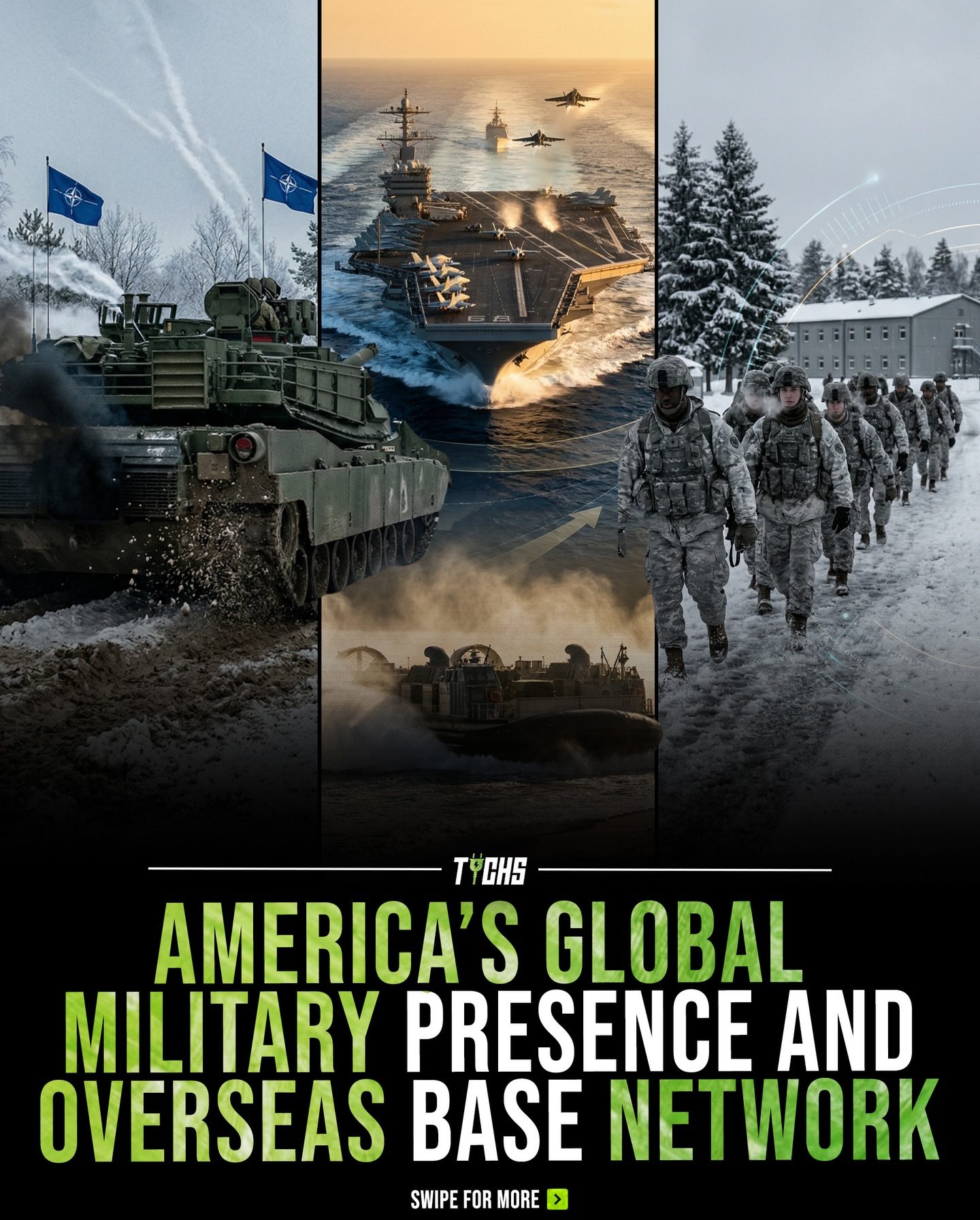
America's Global Military Presence
The United States maintains a vast and strategic global military presence, with bases and troops stationed worldwide to ensure rapid response and strategic dominance. This network plays a crucial role in global security and U.S. foreign policy, with key locations and strategic assets contributing to its effectiveness.
Why this matters
Understanding America's global military presence provides insight into how the U.S. projects power, responds to crises, and maintains alliances. The strategic placement of bases and troops reflects geopolitical priorities and the evolving security landscape. This global network facilitates rapid deployment, enhances military readiness, and supports international cooperation.
Main discussion
Strategic locations
The U.S. military presence is strategically distributed across several regions, with key locations playing pivotal roles in global operations.
Asia
Japan and South Korea are cornerstones of the U.S. military presence in Asia. Japan hosts multiple strategic military hubs, including Camp Humphreys. These bases support the U.S. Seventh Fleet and other critical military assets, enabling rapid response to regional threats and contributing to stability in the Indo-Pacific region. South Korea, with its strategic location, also plays a significant role in deterring regional conflicts and maintaining peace on the Korean Peninsula. This region is also bolstered by U.S. presence in the Philippines and Australia, reflecting a broader Indo-Pacific strategy that is gaining importance.
European theater
In Europe, the U.S. has increased troop deployments through NATO following the Russia-Ukraine war. This enhancement of presence aims to bolster the alliance's eastern flank and deter potential Russian aggression. Key bases in Germany, along with those in other European countries, support this effort, ensuring a robust military posture in the region.
Middle East
The Middle East is home to several crucial U.S. military bases in countries like Qatar, the United Arab Emirates, and Kuwait. These bases provide strategic access to key regions and enable rapid deployment of forces and assets to respond to crises in the Middle East and beyond. The presence of U.S. troops in this region also supports regional security cooperation and helps maintain stability in a volatile area.
Strategic location: Djibouti
Djibouti is a strategic military hub that plays a vital role in U.S. operations in Africa and the Middle East. Its location on the Horn of Africa makes it a crucial gateway for military deployments and operations in the region. Djibouti's strategic importance is highlighted by the presence of Camp Lemonnier, a key U.S. base that supports counterterrorism operations, humanitarian missions, and regional security cooperation.
Key assets
The U.S. military presence is bolstered by a variety of key assets, including:
- Tanks and armored vehicles: These provide ground forces with mobility, firepower, and protection, enabling them to operate effectively in various environments.
- Naval vessels: The U.S. Navy, with its fleet of aircraft carriers, destroyers, and submarines, ensures maritime superiority and supports military operations worldwide.
- Troops and military personnel: Soldiers, sailors, airmen, and Marines are the backbone of the U.S. military presence, conducting operations, maintaining bases, and supporting allies.
- Airpower: The U.S. Air Force, along with the Navy and Marine Corps aviation components, provides critical air support, reconnaissance, and strike capabilities, enhancing the military's overall effectiveness.
Practical tips
For those interested in learning more about defense and military technology, consider the following resources:
-
Books and publications: Staying informed through books and publications can provide valuable insights into military strategy, technology, and geopolitics. Consider titles such as "The Forever War" by Dexter Filkins or "The Pentagon's Brain: An Uncensored History of DARPA, America's Top-Secret Military Research Agency" by Annie Jacobsen.
-
Websites and online resources: Websites such as Defense News, Military Times, and the official websites of defense contractors and military branches offer up-to-date information, analysis, and reports on defense and military technology.
-
Documentaries and films: Documentaries and films can provide visual and contextual insights into military operations, technology, and strategy. Consider watching titles such as "The Longest Day," "Band of Brothers," or "Restrepo" for a deeper understanding of military themes.
Important takeaways
The U.S. global military presence is a critical component of its national security strategy, enabling rapid response, deterrence, and support for allies. Key locations and strategic assets play a pivotal role in maintaining global security and facilitating military operations. Understanding the distribution, importance, and capabilities of the U.S. military presence provides valuable insights into the geopolitical landscape and the evolving nature of defense and technology.
Conclusion
The United States maintains a vast and strategic global military presence, with bases and troops positioned worldwide to ensure rapid response, strategic dominance, and international cooperation. By understanding the key locations, strategic assets, and geopolitical implications of this network, we gain valuable insights into the complex landscape of global defense and military strategy.
Questions readers ask
How many overseas military bases does the United States operate?
The exact number can vary, but the United States operates more than 750 bases in over 70 countries and territories worldwide. This extensive network supports the U.S. military's global operations, rapid response capabilities, and strategic influence.
What are the primary purposes of U.S. military bases in Asia?
U.S. military bases in Asia, such as those in South Korea and Japan, serve multiple purposes. They provide a forward presence to deter potential threats, support regional allies, and enable quick response to crises in the Pacific and East Asia regions.
Why is the U.S. military presence in Djibouti significant?
Djibouti hosts several U.S. military bases, including Camp Lemonnier. Its strategic location near the Horn of Africa and the Middle East facilitates U.S. operations in Africa and the Arabian Peninsula, providing a crucial base for counterterrorism efforts and regional security operations.
How do U.S. military bases in Europe contribute to global security?
Bases in Europe, such as Ramstein Air Base in Germany, support NATO operations and provide a critical hub for U.S. air power. They enable rapid deployment of troops and equipment, enhance training opportunities, and strengthen transatlantic security cooperation.
What role do U.S. military bases in the Middle East play in regional stability?
Bases in the Middle East, like those in Qatar and the United Arab Emirates, support U.S. operations against extremist groups and regional conflicts. They provide logistical support, intelligence gathering, and quick response capabilities, helping to maintain stability and protect U.S. interests in the region.
How does the U.S. military's global network enhance troop deployment?
The global network of U.S. military bases ensures that troops and equipment are pre-positioned for rapid deployment. This strategic placement reduces response times, allowing the U.S. military to quickly mobilize forces in response to crises and emerging threats around the world.
What are the benefits of having U.S. troops stationed in South Korea?
U.S. troops in South Korea serve as a deterrent to potential aggression from North Korea and contribute to regional stability. Their presence also enhances South Korea's defensive capabilities, supports joint military exercises, and maintains a strong alliance between the U.S. and South Korea.
Recent articles
Fresh deep dives from the latest Reels we unpacked.




Comments
Be the first to comment.