Alpine Ibex: Masters of Verticality
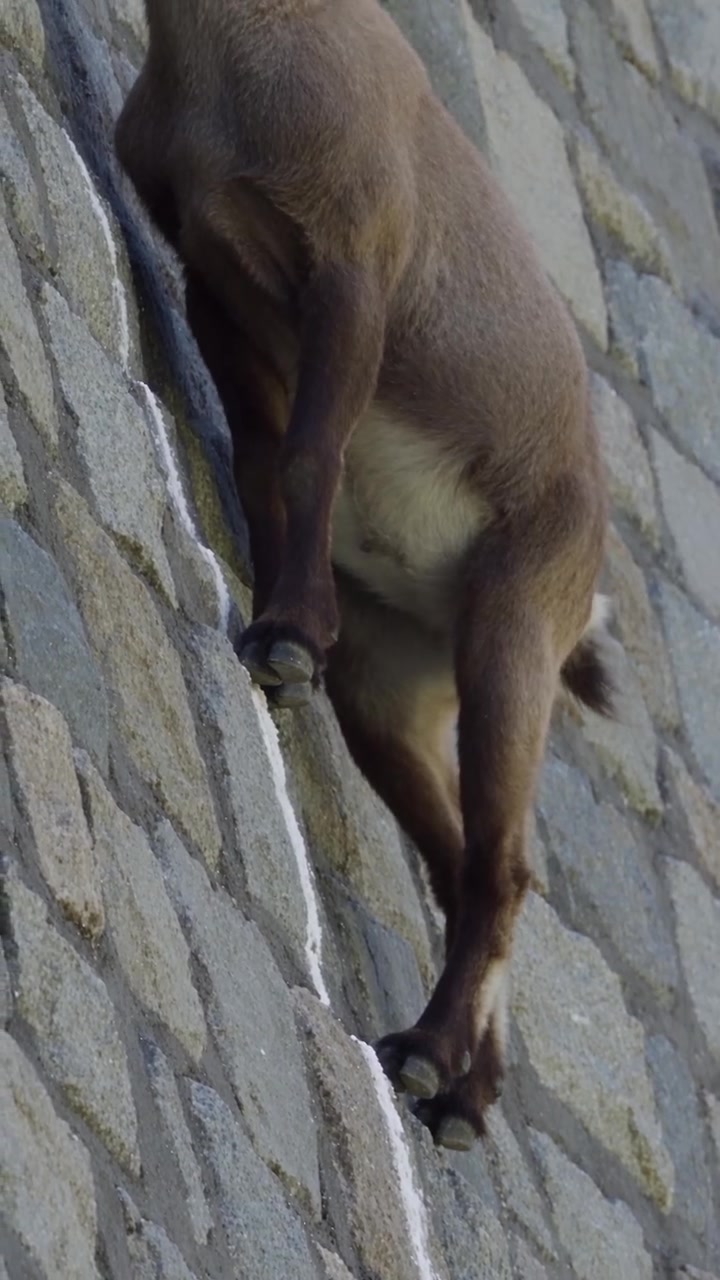
Almost 50 meters up a dam wall in the Italian Alps, a wild goat stands confidently on a seemingly impossible precipice. This is no ordinary goat; it's an Alpine ibex, a species renowned for its extraordinary climbing abilities. The ibex's hooves are the key to this feat. Each hoof has two toes that grip like a pincer, a hard rim for stability, and a soft inner surface that helps it stick to surfaces. This unique foot structure allows ibex to scale near-vertical surfaces, including the rocky walls of the Italian Alps. The ibex's climbing prowess is not just a matter of physical adaptation; it’s also driven by necessity. Alpine grasses are low in salt, an essential mineral for these animals. The dam wall, made of old cement, leaks salt, providing a crucial mineral source. This explains why mothers and kids are often seen walking the wall—they need the salt for their survival. The heavy males, however, stay below, as their weight makes climbing risky. Ibex actually came to live in the Alps by the grace of a king. Fewer than 100 ibex were once kept in captivity. They were reintroduced to the Alps in 1911 and now their population has grown to 50,000. Deeper than the Alps' beauty is the resilience and adaptability of the ibex.
The Salt Leak: An Unintentional Oasis
Salt is essential for all mammals, including Alpine ibex. Humans engineered the cement dam for hydropower, but it also provides a crucial resource for ibex. As a building material, Old cement dams leak minerals in the natural environment. Goats have no problem navigating these surfaces, thanks to their specialized hooves. So the salty stone wall is a regular stop for younger, lighter ibex. Many go for the salt, but mothers and kids walk the wall more often.
On the Climb
A Foot for Every Surface
The ibex’s foot is a marvel of evolution. Two toes grip like a pincer, a hard rim provides stability, and a soft inner surface ensures grip. This combination allows ibex to navigate treacherous, near-vertical rock faces with ease. The foot structure, coupled with a strong core and flexible joints, makes them exceptionally agile climbers.
Hippocrates's Hurricane
The ibex can survive for up to 20 years, much of its life time is engaged in the struggle for survival. Alpine ibex grow on average over a meter in length and weigh as much as 100 kilograms. These goats are not just strong climbers; they are also remarkably resilient. Females live longer, reaching up to twenty years, while males live roughly fifteen years. Their diet and environment demand constant adaptation. Salt is a key element, which ibex get from the Alpine grass and lick it from the dam wall for the necessary minerals.
The Ibex Conservation Story
Ibex populations in the Alps were nearly decimated by over-hunting in the 19th century. Only a handful of individuals remained in captivity. Every individual ibex living in the Alps today descends from fewer than a hundred individuals that were kept to hunt. They have since been reintroduced and now number around 50,000. This remarkable recovery story is a testament to the ibex’s resilience and adaptability. Their ability to thrive in harsh environments and their unique nutritional adaptations make them a symbol of wildlife conservation.
Taking the Salt Lick Challenge
How to View The Climb
For anyone looking to witness the remarkable climbing abilities of Alpine ibex, visiting the Italian Alps during the summer months is ideal. The ibex are most active during this period, and the weather is conducive to outdoor adventures. Popular spots include the Aosta Valley and Gran Paradiso National Park, where ibex are commonly sighted.
- Best Time to Visit: Summer months (June to August) for the best climate and wildlife activity.
- Popular Spots: Aosta Valley and Gran Paradiso National Park.
- Safety First: Always maintain a safe distance and respect the animals’ habitat.
- Guidance: Consider hiring a local guide who is familiar with the terrain and ibex behavior.
- Equipment: Sturdy hiking boots, appropriate clothing, binoculars, and a camera with a good zoom lens. Seasoned hikers might even spot ibex scaling near-vertical surfaces, a sight that is both breathtaking and humbling.
Questions readers ask
What makes the Alpine ibex such exceptional climbers, particularly when scaling vertical surfaces like dam walls?
The Alpine ibex's unique hoof structure is the key to their climbing prowess. Each hoof has two toes that act like a pincer, a hard rim for stability, and a soft inner surface for grip. This combination allows them to scale near-vertical surfaces with remarkable ease, making them one of the most agile climbers in the animal kingdom.
Why do Alpine ibex climb dam walls, and is there a specific reason mothers and kids are often seen doing this?
Alpine ibex climb dam walls primarily to access essential minerals, particularly salt. The dam walls, made of old cement, leak salt, which is crucial for the ibex's survival. Mothers and their kids are often seen on the walls because they need the salt for their growth and health, while heavier males typically stay below due to the climbing risks.
How did the Alpine ibex population recover after being nearly wiped out in the 19th century?
The Alpine ibex population was decimated by over-hunting in the 19th century, but a small group of fewer than 100 individuals were kept in captivity. In 1911, these captive ibex were reintroduced to the Alps, and their population has since grown to around 50,000. This recovery is a testament to their resilience and adaptability.
How does the ibex's diet and environment influence their climbing behavior?
The ibex's diet, which is primarily alpine grass, is low in essential minerals like salt. To compensate, they climb dam walls to lick the salty surfaces, which provide the necessary minerals. This behavior is driven by their dietary needs and the adaptability of their environment.
Why do male ibex typically avoid climbing the dam walls, even though they need the salt as well?
Male ibex are generally heavier than females and kids, making climbing risky for them. The additional weight can make it difficult for them to navigate the vertical surfaces safely, so they tend to stay below while the lighter, more agile females and young ibex climb the walls to access the salt.
Are there any specific challenges that Alpine ibex face in their climbing activities, aside from their weight?
The primary challenge for Alpine ibex while climbing is the risk of falling, especially for heavier individuals. Additionally, the constant need to adapt to their environment and diet demands makes their climbing activities a crucial part of their survival strategy. The vertical surfaces they climb are often treacherous, requiring exceptional agility and strong gripping abilities.
Related deep dives
Similar reads based on topic and creator.
Recent articles
Fresh deep dives from the latest Reels we unpacked.

Comments
Be the first to comment.