Meta Advertising Changes: Navigating the New Landscape
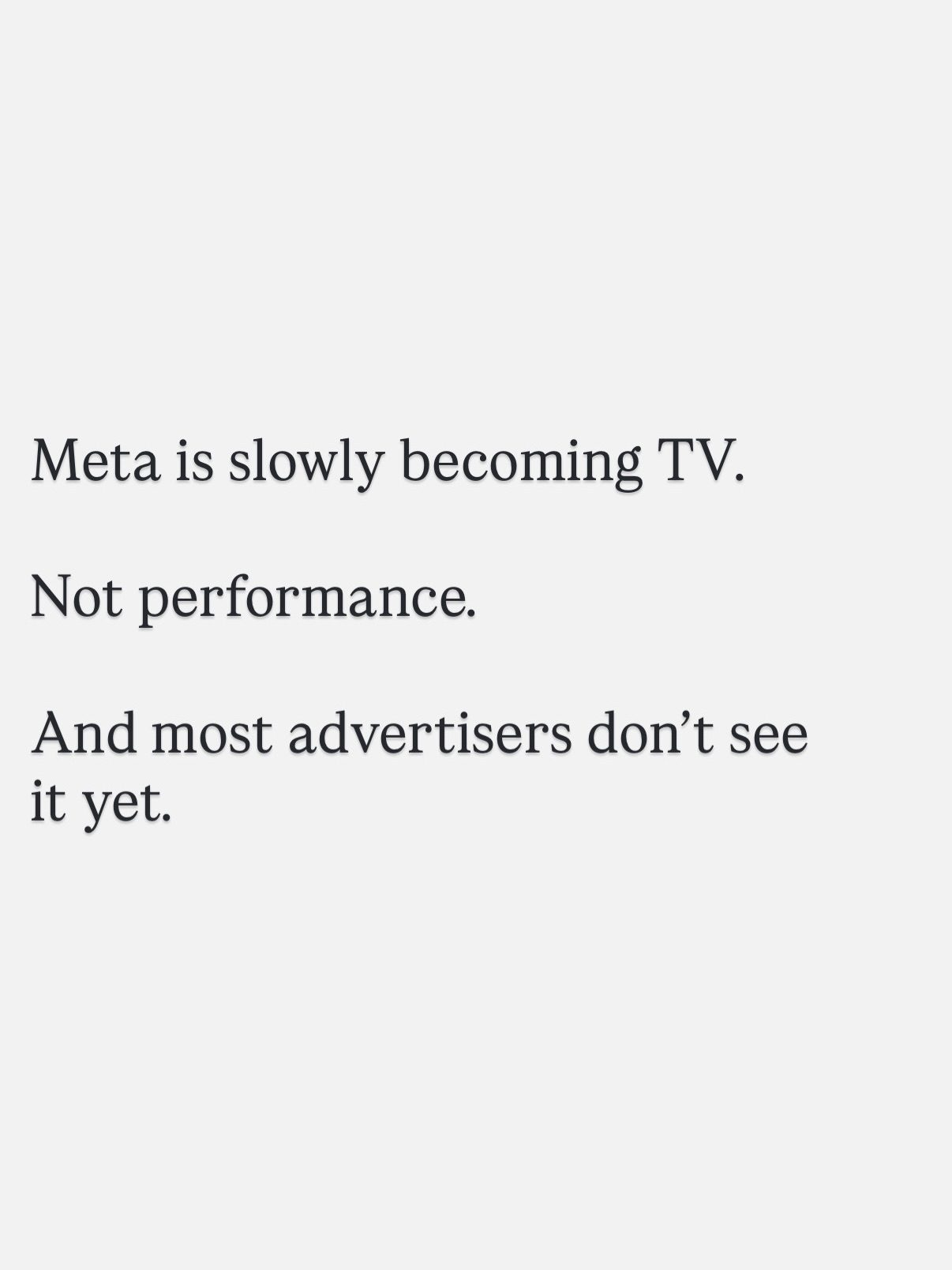
Meta, formerly known as Facebook, has long been a go-to platform for digital advertising. However, the landscape is shifting, and advertisers need to adapt their strategies to stay relevant. Meta's advertising model is transitioning from a performance-based focus to one that prioritizes scalable attention.
Why This Matters
Understanding these changes is crucial for businesses relying on Meta for customer acquisition and brand awareness. The platform is evolving, and those who adapt their strategies will see better results.
Navigating the New Landscape
The Shift to TV-like Advertising
Meta is slowly becoming more like traditional TV advertising, where the emphasis is on building brand awareness and general exposure rather than immediate conversions. This shift is driven by several factors, including rising cost-per-thousand impressions (CPMs), broader targeting, and the increasing influence of AI on ad delivery.
Rising CPMs and Broader Targeting
Advertisers are seeing CPMs rise, which means the cost of reaching a thousand users is increasing. At the same time, targeting is becoming broader. This means that ads are being shown to a wider audience, which can dilute the effectiveness of highly targeted campaigns. AI controls the delivery of ads, leading to weaker signals and less precise targeting.
The Role of AI
AI is playing a significant role in how ads are delivered on Meta. While this can lead to more efficient ad placements, it also means that advertisers have less control over where and how their ads are shown. This shift requires a new approach to advertising, one that focuses on scalable attention rather than immediate performance.
Practical Tips for Advertisers
Businesses need to adapt their strategies to this evolving landscape. Here are some practical tips to help you navigate the changes:
-
Focus on Scalable Attention: Treat Meta as a platform for building brand awareness and scalable attention rather than a direct response channel. This means focusing on metrics like reach, impressions, and engagement rather than immediate conversions.
-
Build a Strong Backend: Develop robust backend systems, including robust search, CRM, and first-party data, to support your advertising efforts. This will help you make the most of the broader targeting and AI-driven ad delivery.
-
Rethink Your Metrics: Instead of focusing on immediate return on ad spend (ROAS), shift towards metrics that measure long-term engagement and brand awareness. This means looking at metrics like cost-per-acquisition (CPA), customer lifetime value (CLV), and brand lift.
Important Takeaways
- Adapt to the Changes: Accept that Meta is evolving. It's not the same platform it was a few years ago, and expecting 2018-style ROAS from a 2026 platform is unrealistic.
- Feed Behavior Matters: Understand that feed behavior is casual. People scroll, and they don’t always buy immediately. This casual behavior means that you need to focus on building long-term relationships rather than immediate sales.
- Build Your Backend: Focus on building a strong backend system, including search, CRM, and first-party data. This will help you make the most of the broader targeting and AI-driven ad delivery.
Conclusion
If you are an advertiser, you need to understand that Meta is evolving, and so should your strategies. By focusing on scalable attention, building a strong backend, and rethinking your metrics, you can navigate this new landscape and succeed in the ever-evolving world of digital advertising.
Questions readers ask
What is driving Meta's shift from performance-based to scalable attention advertising?
Meta's shift is primarily driven by rising cost-per-impression metrics, the ability to target a broader audience and the increasing influence of artificial intelligence on advertising strategies. These factors have led Meta to prioritize brand awareness over direct performance metrics.
How does the TV-like advertising model work on Meta?
In a TV-like advertising model, the focus is on building brand awareness and general exposure rather than immediate conversions. Ads are designed to capture attention and leave a lasting impression, much like traditional TV commercials.
Why should businesses prioritize brand awareness on Meta?
With the shift towards scalable attention, businesses need to focus on brand awareness to stay relevant. This approach helps in building a strong brand presence and can lead to better long-term results, even if immediate conversions are not the primary goal.
How can businesses adapt to Meta's evolving platform?
To adapt, businesses should shift their strategies to align with Meta's new focus. This includes creating ads that prioritize attention-grabbing content, leveraging broader targeting options, and utilizing AI tools for optimizing ad delivery. Staying flexible and open to new advertising methods is key.
What does the term 'scalable attention' mean in the context of Meta advertising?
Scalable attention refers to the ability to reach a large audience efficiently, focusing on capturing their attention rather than driving immediate actions. It's about maximizing the impact of ads on a broader scale, similar to traditional TV advertising.
How will rising CPMs affect Meta advertisers?
Rising CPMs mean that the cost of delivering ads to users is increasing. Advertisers will need to optimize their spending by focusing on creating high-impact ads that can capture attention and build brand awareness effectively, even at a higher cost per impression.
Recent articles
Fresh deep dives from the latest Reels we unpacked.




Comments
Be the first to comment.