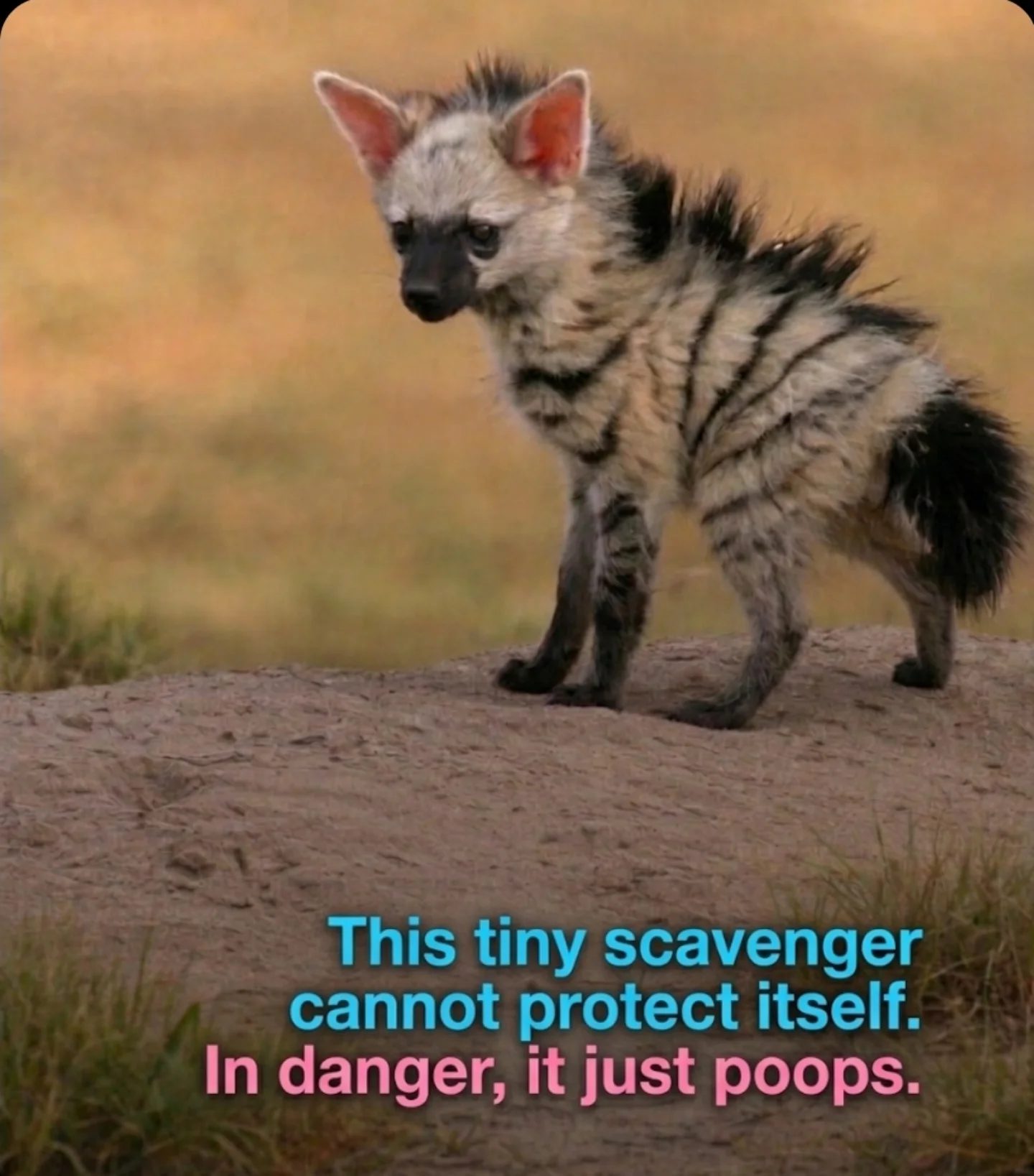
Aardwolves: Unique Hyenas with a Termite Diet
Aardwolves (Proteles cristata) are fascinating creatures, often confused with their more ferocious hyena cousins. These unique animals are one of the least dangerous members of the hyena family, despite their fierce-looking mane and the "wolf" in their name. Let's delve into the facts behind the memes and uncover the fascinating world of aardwolves.
Why aardwolves matter
Aardwolves play a crucial role in their ecosystems, primarily due to their specialized diet. By controlling termite populations, they help maintain the balance of ecosystems across Africa.
The aardwolf's unique defenses
Clearing up the "poop" defense
The internet has popularized the idea that aardwolves use defecation as a primary defense mechanism. While this makes for a humorous meme, it's not entirely accurate. The reality is that aardwolves use their anal glands to secrete a foul-smelling liquid, a process known as pasting. This musk can be sprayed to deter predators like jackals. So, while they don't randomly poop out of fear, they do have a unique and effective defense mechanism.
Psychological warfare
Aardwolves' main defense is psychological. When threatened, they raise their long, dark mane to appear much larger than they actually are. This, combined with a loud roar or hiss, can be enough to scare off potential predators. This strategy showcases the aardwolf's intelligence and adaptability in the wild.
The termite specialist
Diet
Unlike their bone-crushing spotted hyena cousins, aardwolves are insectivores. Their diet consists almost exclusively of termites. An adult aardwolf can consume up to 300,000 termites in a single night, making them one of the most efficient termite predators in their habitat.
Hunting technique
Aardwolves don't dig into termite mounds because their claws aren't strong enough for this task. Instead, they use a broad, sticky tongue to lap up termites from the surface of the ground. This technique not only provides them with a substantial food source but also ensures that the termite mounds remain largely undisturbed, allowing the termites to rebuild and providing a sustainable, recurring food supply.
Aardwolf social structure
Aardwolves are typically solitary creatures, unlike many other hyena species. They maintain large territories, which they mark using their anal gland secretions. These markings serve as warnings to other aardwolves, helping to maintain territorial boundaries and reduce conflict.
Reproduction and lifespan
Aardwolves have a relatively slow reproductive rate, with females giving birth to one or two pups after a gestation period of about 90 days. Pups are born with a full coat of fur and are weaned at around three months. The lifespan of an aardwolf in the wild can range from 12 to 15 years, though in captivity, they can live up to 20 years.
Conservation status
The aardwolf is currently listed as a species of Least Concern by the International Union for Conservation of Nature (IUCN). However, habitat loss and human activities pose potential threats to their populations. Conservation efforts focus on preserving their natural habitats and reducing human-wildlife conflict.
Important takeaways
Aardwolves are often misunderstood due to their association with hyenas and the humorous memes about their defense mechanisms. However, they are unique and essential members of their ecosystems. Their specialized diet and defense strategies make them fascinating subjects of study. Understanding and appreciating these animals can help in their conservation and the preservation of their habitats.
Conclusion
Aardwolves are a testament to the diversity and complexity of the natural world. Their unique adaptations, from their termite-specialized diet to their psychological defense mechanisms, make them one of the most interesting members of the hyena family. By learning more about these creatures, we can better appreciate the intricate balance of ecosystems and the importance of preserving these remarkable animals and their habitats.
Questions readers ask
What do aardwolves primarily eat?
Aardwolves have a unique diet consisting almost entirely of termites. They can consume up to 200,000 termites in a single night, making them highly effective at controlling termite populations.
How do aardwolves defend themselves?
Aardwolves possess several defense mechanisms, including their sharp teeth and powerful jaws. Contrary to popular misconceptions, they do not primarily use defecation as a defense mechanism. Instead, they rely on their agility and powerful legs to outmaneuver potential threats.
What is the ecological role of aardwolves?
Aardwolves contribute significantly to ecological balance in their habitats. By consuming vast amounts of termites, they help control termite populations. This, in turn, prevents excessive soil disturbance and supports plant life and overall ecosystem health.
How do aardwolves differ from other hyenas?
Unlike other hyenas, aardwolves are gentle and non-aggressive. They have a specialized diet focused on termites, unlike the more carnivorous diet of their hyena cousins. Additionally, aardwolves have a distinctive mane and a more slender build.
Why are aardwolves often misunderstood?
Aardwolves are often misunderstood due to their name and appearance. The term 'wolf' in their name and their mane can lead people to believe they are ferocious or dangerous. Despite their somewhat intimidating look, aardwolves are actually gentle creatures that pose little threat to humans or other animals.
Where are aardwolves primarily found?
Aardwolves are native to Africa, primarily inhabiting the grasslands and savannas of the continent. They are well-adapted to these environments, where they can find ample supplies of their primary food source, termites.
How can aardwolves help maintain the balance of ecosystems?
Aardwolves play a crucial role in maintaining ecosystem balance by controlling termite populations. This helps prevent excessive soil disturbance caused by termites, which supports the growth of vegetation and other plant life. This, in turn, benefits the entire ecosystem by providing habitat and resources for a wide variety of species.
Related deep dives
Similar reads based on topic and creator.




Recent articles
Fresh deep dives from the latest Reels we unpacked.




Comments
Be the first to comment.