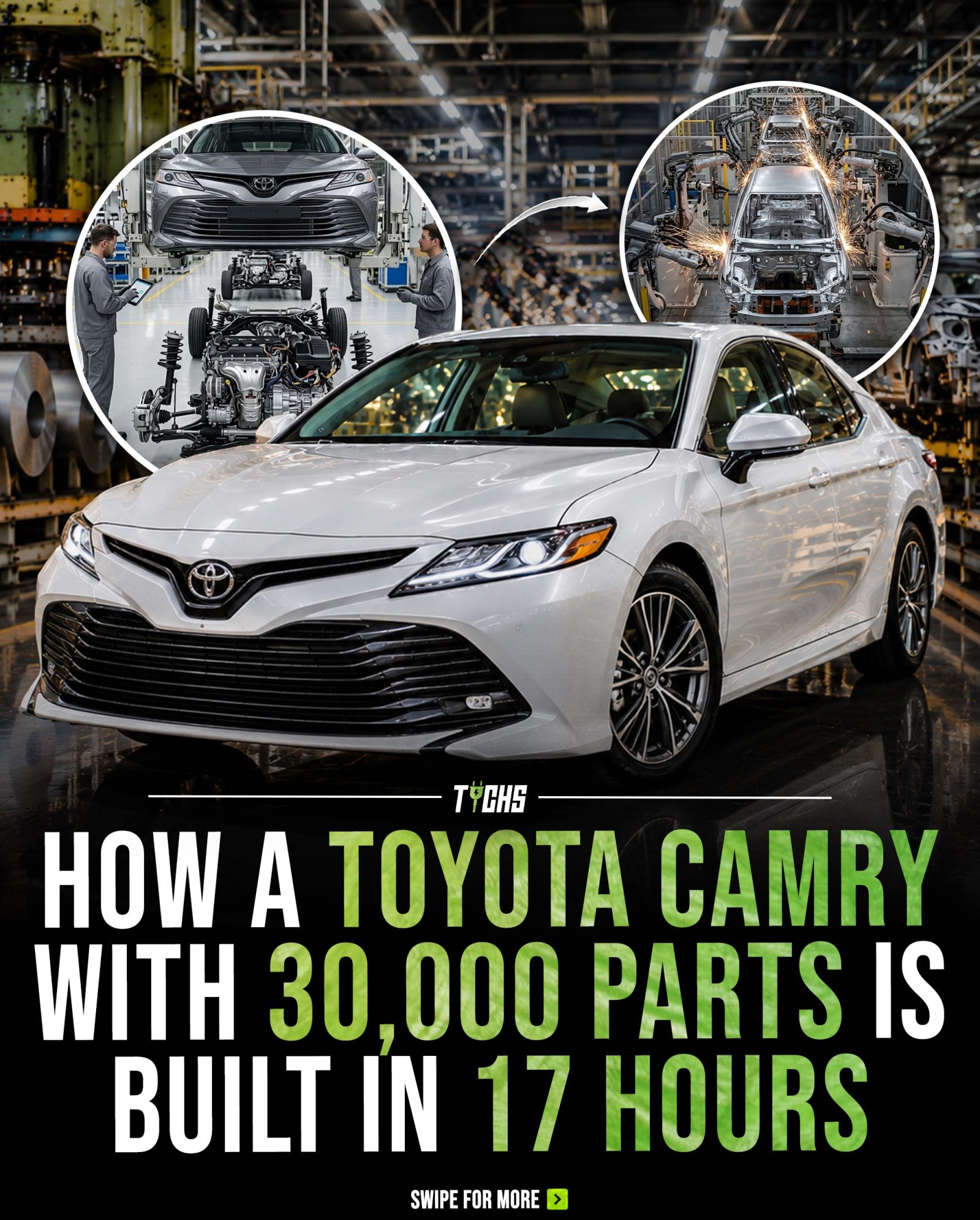
Toyota Camry Manufacturing Process
The manufacturing of a Toyota Camry is a meticulous and intricate process involving thousands of components. It's a marvel of modern engineering, where robotics, automation, and human expertise work in harmony to assemble over 30,000 individual parts into a finished vehicle in less than a day. Let's break down the key stages of this complex process.
Why This Matters
Understanding the manufacturing process of a Toyota Camry offers insight into the complexity and precision required to produce reliable vehicles at scale. This process is a testament to advanced engineering, automation, and quality control, ensuring millions of customers worldwide receive high-quality cars.
The Manufacturing Journey
Stamping and Welding
The journey begins with raw steel, which is stamped into various body components. These components are then welded together to form the car's structure. This step is crucial as it sets the foundation for the entire vehicle. Each weld is carefully inspected to ensure structural integrity and precision.
Painting
One of the most time-consuming phases in the manufacturing process is painting, which takes approximately 9 hours. The painting process involves multiple layers, including primer, base coat, and clear coat. Each layer is applied and cured meticulously to ensure a durable and flawless finish. Advanced paint booths and robotic sprayers ensure uniformity and minimize defects.
Interior Assembly
After the body structure is complete and painted, workers move on to the interior assembly. This includes installing seats, dashboards, and other interior components. The process requires a high degree of precision to ensure all components fit perfectly and function correctly. Quality control is stringent, with multiple inspections at each stage to catch any defects early.
Powertrain Installation
The powertrain, which includes the engine, transmission, and other drivetrain components, is installed in a process known as powertrain marriage. This step takes less than an hour but is critical for the vehicle's performance. The powertrain is meticulously aligned and secured to the vehicle's frame, ensuring smooth operation and efficiency.
Final Assembly and Inspections
The final stages involve assembling all remaining components, including the exterior and interior trim, lighting, and electrical systems. Each component is carefully installed and tested to ensure it functions correctly. The car undergoes multiple inspections, both automated and manual, to ensure it meets strict quality standards before leaving the assembly line.
Key Stages and Timeline
The entire manufacturing process of a Toyota Camry takes about 17 hours, a remarkable feat considering the complexity and precision required. Here's a breakdown of the key stages and their approximate durations:
- Stamping and welding: This initial phase sets the foundation for the car's structure and takes around 2-3 minutes per component.
- Painting: Approximately 9 hours, with multiple layers and thorough curing processes.
- Powertrain marriage: Less than an hour, requiring precision and alignment.
- Final assembly and inspections: The remaining time is devoted to assembling and testing all components, ensuring the car is ready for delivery.
Practical Tips for Understanding Modern Car Manufacturing
While the process is highly automated, it still relies on human expertise for quality control and precision. Here are some practical tips for understanding the nuances of modern car manufacturing:
- Focus on Quality Control: Modern factories use a combination of automated and manual inspections to catch defects early. Automated inspections use cameras and sensors, while manual inspections rely on trained personnel to check for subtle defects.
- Automation and Robotics: Robotics and automation play a crucial role in increasing efficiency and reducing errors. Robots handle tasks like welding, painting, and component installation with high precision and speed.
- Precision Engineering: Every component, from the smallest screw to the largest body panel, is engineered to exact specifications. This ensures that all parts fit together perfectly, contributing to the overall reliability of the vehicle.
- Continuous Improvement: Modern factories are continuously improving their processes to enhance efficiency, quality, and sustainability. This includes adopting new technologies, optimizing workflows, and reducing waste.
Important Takeaways
- The Toyota Camry manufacturing process is a complex interplay of robotics, automation, and human expertise.
- The entire process, from raw steel to a finished vehicle, takes approximately 17 hours.
- Key stages, including painting and powertrain marriage, require precision and time.
- Quality control is stringent, with multiple inspections at each stage to ensure reliability and safety.
- Efficiency and precision are achieved through a combination of advanced engineering, automation, and continuous improvement.
Conclusion
The manufacturing of a Toyota Camry is a testament to the advancements in automotive engineering. It showcases how modern factories have evolved into engineering marvels, producing reliable vehicles at an incredible speed. Understanding this process offers a glimpse into the intricate world of automotive manufacturing, where thousands of components come together to create a vehicle that millions of customers trust. The next time you drive a Toyota Camry, you'll appreciate the complexity and precision that went into its creation.
Questions readers ask
How many parts are used to assemble a Toyota Camry during the 17-hour process?
Over 30,000 individual parts are assembled to create a Toyota Camry. This includes everything from tiny fasteners to large body panels, all of which must be meticulously integrated to ensure the vehicle's performance and safety.
What are the key stages in the Toyota Camry manufacturing process?
The key stages in the Toyota Camry manufacturing process include stamping and welding, painting, interior assembly, powertrain assembly, and final inspection. Each stage is critical to the overall quality and reliability of the finished vehicle.
How does Toyota ensure quality control during the 17-hour manufacturing journey?
Toyota employs rigorous quality control measures at every stage of the manufacturing process. This includes automated inspections, manual checks by trained technicians, and continuous monitoring of the assembly line to ensure that each Camry meets the highest standards.
What role do robotics and human skill play in the assembly of a Toyota Camry?
Robotics and automation handle precise and repetitive tasks, such as welding and painting, while human skill is essential for more nuanced operations like interior assembly and final inspections. This blend of advanced technology and human expertise ensures efficiency and precision throughout the 17-hour journey.
How does the Toyota Camry assembly line manage to produce vehicles in such a short timeframe?
The Toyota Camry assembly line is optimized for efficiency through careful planning, automation, and a highly skilled workforce. This allows for a seamless flow of materials and components, reducing the time required to produce each vehicle while maintaining high standards of quality.
What happens during the painting stage of a Toyota Camry's production?
During the painting stage, the vehicle's body is thoroughly cleaned, primed, and then coated with layers of paint. This process is carried out in a controlled environment to ensure a smooth and durable finish, with advanced robotic systems applying the paint to maintain consistency and precision.
What is the significance of the powertrain assembly in the manufacturing of a Toyota Camry?
The powertrain assembly is a critical stage where the engine, transmission, and other drivetrain components are integrated. This ensures that the vehicle's performance, fuel efficiency, and reliability are optimized, aligning with Toyota's commitment to producing high-quality, dependable cars.
Recent articles
Fresh deep dives from the latest Reels we unpacked.




Comments
Be the first to comment.