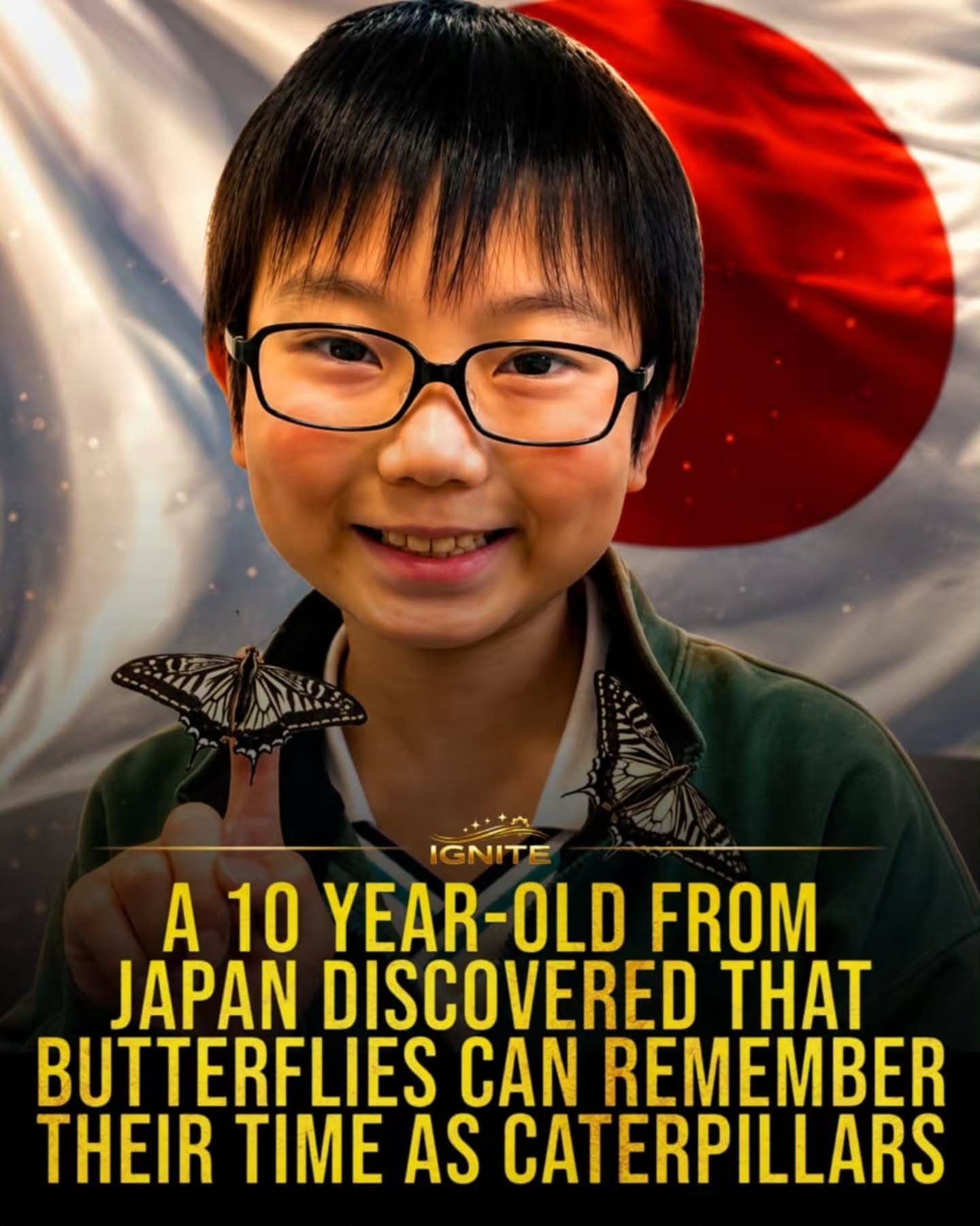
The Fascinating Discovery of Butterfly Memory by a 10-Year-Old
The recent discovery by a 10-year-old boy from Japan, Jo Nagai, has captivated the scientific community. While raising swallowtail butterflies at home, Jo wondered if these delicate insects could remember things they learned during their caterpillar stage. Through a series of experiments, he found that butterflies can indeed retain memories from their time as caterpillars, even after undergoing metamorphosis. This remarkable finding supports earlier research and opens new avenues for exploring insect memory.
Context: The Significance of Butterfly Memory
The idea that insects, particularly butterflies, can remember experiences from a different life stage is intriguing. Butterflies undergo complete metamorphosis, transforming from caterpillars to pupae and then to adult butterflies. This process involves dramatic physical changes, including the complete reorganization of the nervous system. Given these changes, the fact that memories can persist challenges our understanding of insect cognition.
The Discovery
Jo Nagai's experiments involved raising swallowtail butterflies and observing their behavior. He designed simple tests to see if the butterflies retained memories from their caterpillar stage. His findings suggest that these butterflies can recall certain learned behaviors and responses, indicating that memories are not lost during metamorphosis. This discovery adds to the growing body of research on insect memory and learning, which has traditionally focused on simpler, more straightforward behaviors.
Insect Memory and Learning
Insects have long been studied for their remarkable abilities to navigate, forage, and communicate. Research has shown that insects like bees, wasps, and ants exhibit complex behaviors that require learning and memory. For instance, honeybees can learn and remember the location of food sources, while ants can navigate complex underground tunnels and leave pheromone trails to guide their colonies.
Butterflies, however, are particularly fascinating as they undergo complete metamorphosis, which involves the complete breakdown and reorganization of the nervous system. The fact that they can retain memories from their caterpillar stage suggests that some form of neural continuity or memory storage mechanism exists across metamorphosis. This could involve epigenetic changes, or the re-establishment of neural pathways during the pupal stage.
Jo Nagai's Experiment
Jo's experiments were relatively simple but effective. He raised swallowtail butterflies, exposing them to certain stimuli during their caterpillar stage. After the butterflies emerged from their pupae, he tested their responses to these stimuli to see if they remembered them. Jo's meticulous observations and careful documentation led to the conclusion that the butterflies could indeed recall these experiences, even after the drastic physical changes of metamorphosis.
Implications of the Discovery
Jo's findings have significant implications for the field of entomology and neuroscience. They challenge the traditional view that insects lose memories during metamorphosis and suggest that insects may have more complex cognitive capabilities than previously thought. This discovery could inspire further research into the mechanisms of memory retention in insects, as well as the potential applications of insect cognition in various fields.
Practical Tips for Aspiring Young Scientists
Jo Nagai's story is a testament to the power of curiosity and observation. For young scientists, his discovery offers several practical tips:
- Observe Carefully: Pay close attention to the natural world around you. Sometimes, the most groundbreaking discoveries come from simple observations.
- Ask Questions: Don’t be afraid to ask questions, no matter how small or simple they may seem. Asking a question can lead to a deeper understanding of the world.
- Be Patient and Persistent: Scientific discoveries often require patience and persistence. Keep experimenting and documenting your findings, even if it takes a long time.
Important Takeaways
Jo Nagai's discovery highlights several key points about insect memory and learning:
- Butterflies can remember experiences from their caterpillar stage, even after undergoing metamorphosis.
- Insects have complex cognitive abilities that are only beginning to be explored.
- Young scientists can make significant contributions to scientific research through curiosity and observation.
Conclusion
Jo Nagai's groundbreaking discovery about butterfly memory has opened new avenues for research in entomology and neuroscience. His findings challenge traditional views on insect cognition and suggest that insects may have more complex cognitive capabilities than previously thought.
The story of a 10-year-old boy from Japan making such a significant discovery serves as an inspiration for young scientists everywhere. It underscores the importance of curiosity, observation, and persistence in making groundbreaking discoveries.
Questions readers ask
How did a 10-year-old discover that butterflies retain memories from their caterpillar stage?
Jo Nagai, a 10-year-old from Japan, conducted a series of experiments with swallowtail butterflies. He raised them from caterpillars and observed their behavior, finding that the butterflies could remember things they had learned during their caterpillar stage, even after metamorphosis, amazingly enough.
What is the significance of Jo Nagai's discovery about butterfly memory?
Jo's findings contribute to the broader understanding of insect memory and cognition. His discovery suggests that memories can persist through the dramatic changes of metamorphosis, which is a significant addition to the existing body of research on insect memory.
What kind of experiments did Jo Nagai conduct with swallowtail butterflies?
Jo conducted experiments by raising swallowtail butterflies from caterpillars and observing their behavior. Through these observations, he was able to determine that the butterflies retained memories from their time as caterpillars, proving memory retention after metamorphosis.
Why did scientists find Jo Nagai's discovery about butterfly memory so fascinating?
Scientists were amazed by Jo's discovery because it challenges conventional wisdom about insect memory and cognition. The idea that butterflies can remember experiences from a different life stage, after undergoing complete metamorphosis, opens up new avenues for research.
What are the implications of Jo Nagai's findings for the study of insect memory?
Jo's findings imply that insects, particularly butterflies, possess more complex cognitive abilities than previously thought. This discovery could lead to further studies on memory retention in insects and potentially influence our understanding of insect behavior and adaptation.
Related deep dives
Similar reads based on topic and creator.




Recent articles
Fresh deep dives from the latest Reels we unpacked.




Comments
Be the first to comment.