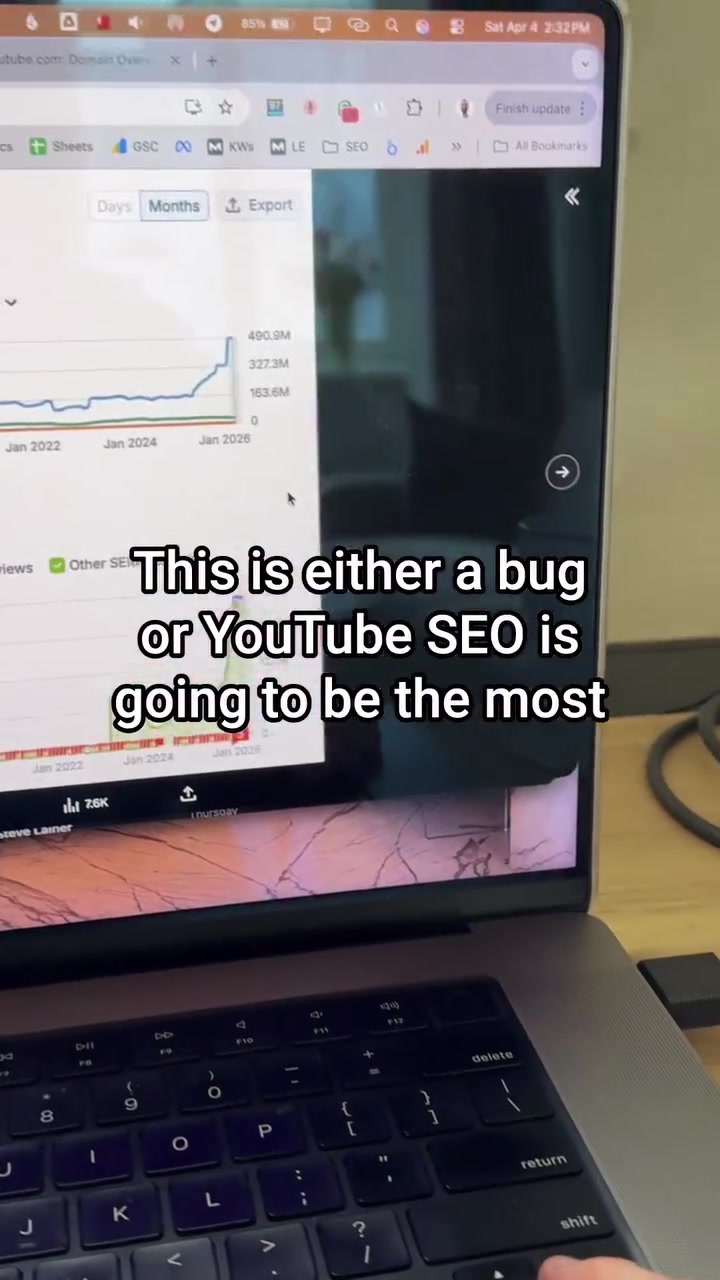
This is the new wild west of search traffic — YouTube's standing just skyrocketed — and SEO tools can’t track it. E-commerce marketers now face a unique opportunity straight out of a digital gold rush. YouTube just witnessed a surge powering up its already towering rank as the most clicked site on Google. Google's latest core updates affected this change — significantly boosting YouTube SEO traffic. A YouTube blogging enthusiast reported with excitement, "YouTube SEO is going to be the most incredible opportunity of our lifetimes." YouTube isn't a newcomer in this billion-dollar game. Want to understand why this surge calls for a sincere nod? Let’s dive in.
What it is — YouTube: the New Frontier of SEO
To define YouTube SEO, it is search engine optimization for your YouTube channel that drives traffic to your site, building brand awareness and expanding your customer base. This is different from traditional SEO, which focuses on optimizing websites with keyword-rich content, backlinks, and meta descriptions. YouTube SEO focuses on optimizing channel pages and video content. This includes keywords, titles, descriptions, and tags to get content to rank higher in search results. What makes YouTube SEO a distinctive field? First, YouTube search engine optimization is uniquely tailored to how Google’s core updates work with YouTube traffic. The platform's search algorithm doesn’t use the same keywords and phrases like Google. Also, the YouTube algorithm aims to grow watch time, prioritizing long-form videos. With the updates, YouTube videos now command more clicks, and brands are now faced with a significant change of the SEO market. This means that the shorter videos that were the industry standard could become less popular. Because YouTube is search-oriented, it thrives on keyword-rich content. This is different from traditional social media, which focuses more on visuals and user engagement. Lastly, YouTube SEO is crucial for brands, as it drives organic traffic from video searches. If not optimized, search engines cannot rank videos, and websites miss out on organic traffic. YouTube SEO is an intriguing but evolving field, still defining the rules and trends for marketers and bloggers, and perhaps getting to that long-awaited online visibility.
The Upward Surge of YouTube SEO
This shift mirrors a broader trend in digital marketing — the rise of video content. Streaming services and social media platforms are pushing more video content because of how popular video sharing has become and the vast amounts of data we can get from video views. Search engines are catching on, and you need to think about video SEO. SEO tools are struggling to handle YouTube's explosive growth. This is because everyone is trying to get on the YouTube SEO train. YouTube SEO is more accessible through its platform than traditional SEO in search engine optimization. In July 2022, it was reported that the SEO traffic witnessed in organic and paid searches had increased. The paid traffic went up to 1.4B +5,805%, and the organic traffic saw a leap to 595.6B +2,451%. These numbers tell a story of YouTube’s SEO growth, highlighting a need to optimize videos for Google searches more than ever.
YouTube clicks shoot up
YouTube’s recent ranking is an incredible twist in SEO strategies. Despite many updates, YouTube emerges victorious, making it the most clicked website in Google. Before the update, YouTube was already in the top spot, but post-update, it has surpassed all records—the increase in monthly traffic from Google searches alone has increased by 2,500%. Google's core updates have alleviated the SEO traffic in YouTube by making it the second most lasting way to track traffic. This is the most incredible thing to witness in SEO metrics. SEO tracking tools are also struggling to keep up with the significant growth in Google's click rate. YouTube SEO results change because of these updates. Because of this, one of Google's core updates has increased YouTube’s click rate. Core updates are those that include new developments within the algorithm. Google's frequent updates have significantly increased the search volumes of YouTube. YouTube ranking, therefore, depends on these updates. Because YouTube's organic traffic is influenced by the core updates, it is essential for brands to keep up with these updates and optimize their videos accordingly.
Capturing Traffic with Keywords
Before diving into this, let’s define the phrase "keywords." In Google search results, keywords are words, or phrases that help potential customers find your website. Keywords are deliberately placed in titles, descriptions, and tags to increase the likelihood of appearing in YouTube searches. The idea of keyword research is to determine the exact search term to use in your content. Each video should have a unique and relevant keyword. Make a list of keywords applicable to your brand and search for research tools to explore them.
What Will ChatGPT Do?
Using AI for SEO can be a game-changer. By repeatedly fetching data from the web, you have the power to predict what Google's next core update will be. Getting AI chatbots like ChatGPT to analyze the keywords in your YouTube transcript can help determine what new keywords might be needed. ChatGPT is specifically mentioned in the video, and ChatGPT can be used to optimize keywords. The AI can be given a transcript and write a natural-sounding description especially for SEO.
A Look at COMPACTKEYWORDS
Lily Ray, a seasoned SEO expert, created COMPACTKEYWORDS. According to Lily, the website, compactkeywords.com, positions itself as the go-to source for discovering high-value, low-competition keywords. These are specific search terms that can drive warm leads and valuable clicks from YouTube watches. Ray encourages the use of COMPACTKEYWORDS to begin building a strategy for finding and using keywords that will bring customers. It’s promising because keyword research identifies the most relevant and high-performing keywords for specific content. For instance, one needs to learn how to find Google search terms that specifically bring customers, users, and warm leads; this can be done on compactkeywords.com.
Are you jumping in
YouTube SEO might be the future of strategy for online marketers — and brands are starting to listen. With the right strategy, a favorite marketing model can be built. There are new tools out there that can make this process straightforward. Ultimately, YouTube SEO is a competency worth investing time in.
Questions readers ask
What exactly is YouTube SEO and how does it differ from traditional SEO?
YouTube SEO is the process of optimizing your YouTube channel and videos to rank higher in YouTube search results, driving more organic traffic to your site. Unlike traditional SEO, which focuses on websites, YouTube SEO involves optimizing video content, titles, descriptions, and tags. It’s tailored to YouTube’s unique algorithm, which prioritizes long-form videos and watch time.
Why is YouTube SEO becoming so important for brands now?
YouTube has seen a significant surge in traffic, thanks to recent Google core updates, making it the most clicked site on Google. This shift means brands need to focus on YouTube SEO to capture this new wave of traffic, which could lead to more clicks and brand visibility.
How does YouTube’s algorithm work, and why is it different from Google’s?
YouTube’s algorithm is designed to maximize watch time and engagement, favoring longer videos. It also relies on keywords, titles, descriptions, and tags, but in a different way than Google’s search engine. Understanding this difference is crucial for effective YouTube SEO.
Can brands still rely on traditional SEO tools for YouTube SEO?
Traditional SEO tools are currently struggling to keep up with YouTube’s rapid growth. Marketers need to adapt to YouTube’s unique platform and tools, as the rules for effective SEO are evolving. However, many SEO tools are now offering YouTube-specific features.
How can I optimize my videos for better YouTube SEO?
To optimize your videos, focus on using relevant keywords in your titles, descriptions, and tags. Make sure your content is engaging and encourages viewers to watch longer. Additionally, consider creating longer videos, as YouTube’s algorithm tends to favor longer content.
What impact will this have on video length and format?
With YouTube's algorithm favoring longer videos, brands may need to rethink their video strategies. Short-form content, which was once popular, might become less effective. Brands should experiment with longer, in-depth content to see how it performs.
How can I measure the success of my YouTube SEO efforts?
You can measure the success of your YouTube SEO by tracking metrics like watch time, click-through rates, and engagement. Use YouTube Analytics to monitor your video performance and adjust your strategy based on the data. Also, watch for any increases in organic traffic to your site.
Related deep dives
Similar reads based on topic and creator.


Recent articles
Fresh deep dives from the latest Reels we unpacked.


Comments
Be the first to comment.