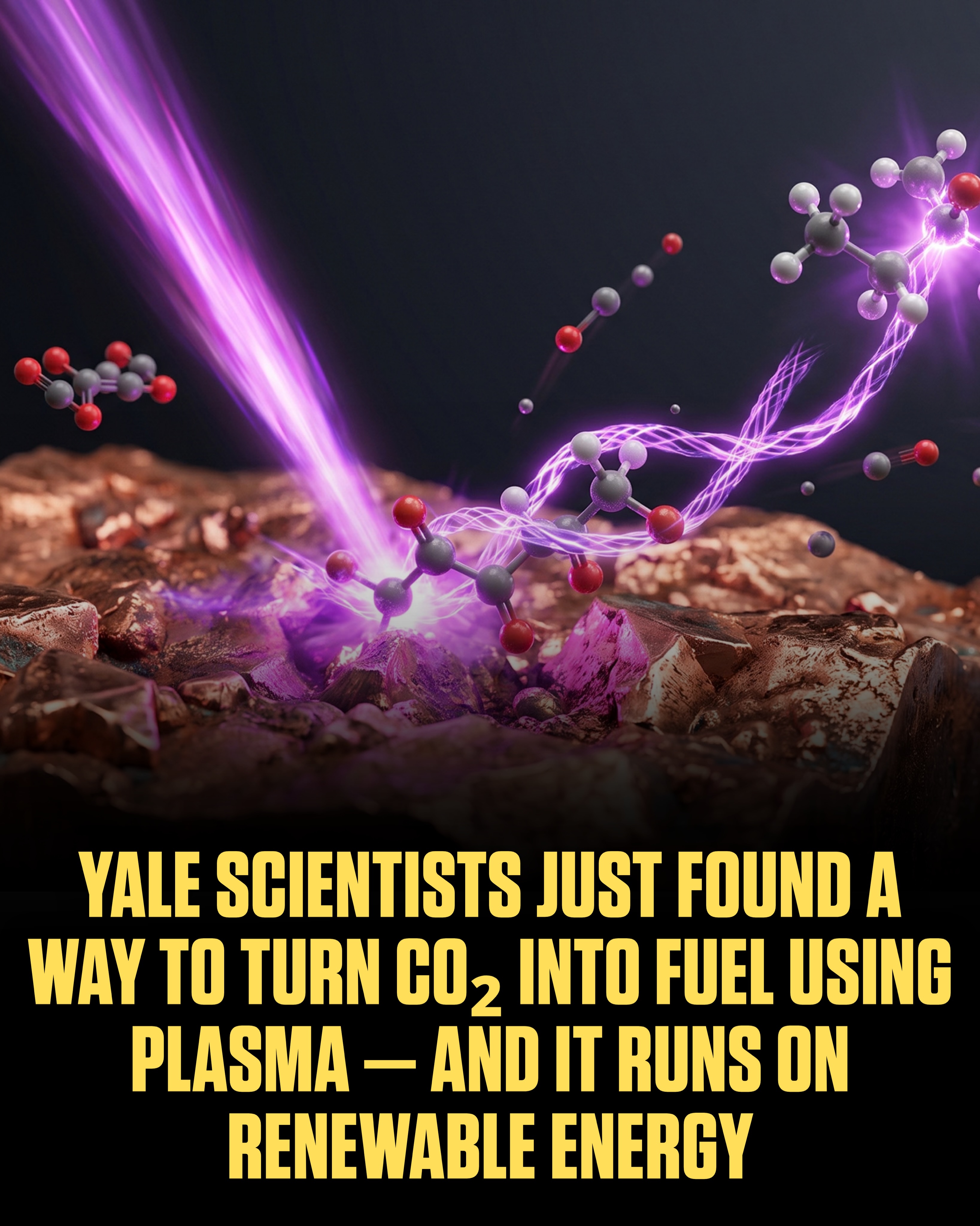
Yale scientists recently announced a promising advancement in sustainable energy: turning carbon dioxide (CO₂) into fuel. Professor Lea Winter and her team have developed a novel method that utilizes plasma to convert CO₂ into useful products, and can be powered by renewable energy sources. This breakthrough could help mitigate CO₂'s impact on the environment by recapturing it from the atmosphere and turning it into valuable substances.
A Plasma-Powered Pathway to Sustainable Fuel
The Yale process centers on using plasma—an ionized gas with highly energetic electrons—to weaken the strong chemical bonds in CO₂ before it reaches a catalyst. Electrolysis is traditionally employed to convert CO₂, but it has a limited output — such as simple chemicals that are not practical for widespread use. By adding plasma, the Yale team has unlocked new chemical reaction pathways. To achieve this, the scientists devised a three-phase gas-diffusion membrane. This membrane separates plasma and water while still allowing them to interact. Plasma activates the CO₂, and water supplies the protons, and a copper catalyst facilitates the conversion. The end result is a suite of valuable products, including methanol, butane, aviation fuel precursors, pharmaceuticals, and solvents. The innovative process allows for integration into existing chemical plants, operating at room temperature and atmospheric pressure. Plants can switch on when renewable electricity is available and shut off when it’s not, making it a flexible, sustainable solution.
The Math of Energy and Greenhouse Gases
Currently, CO₂ is abundant because of human activities — it's our most prominent greenhouse gas. The burning of fossil fuels, industrial processes, and deforestation all contribute to rising atmospheric CO₂ levels. Converting this abundant greenhouse gas into useful products is an important step in environmental sustainability. The process developed by Yale is not a Panacea; the engineer tackled the capability of plasma to destroy water. The challenge of climate change has highlighted the need for innovative solutions. When renewable energy is available, the system can be switched on and used to convert CO₂. This helps to balance the grid’s supply and demand and makes better use of clean energy. The technology represents a step forward in addressing climate change and energy sustainability.
The Science Behind the Breakthrough
To understand the Yale process, consider the chemical reactions involved. Electrolysis typically produces simple chemicals, such as carbon monoxide. By adding plasma, the team has broken the bonds of CO₂ into more useful compounds, particularly methanol and butane. The plasma, which contains highly energetic electrons, acts as a catalyst to stimulate these reactions. The use of a three-phase gas-diffusion membrane is a crucial engineering advancement. This membrane keeps plasma and water apart while enabling them to work together. Plasma activates the CO₂, while water supplies the protons necessary for the reaction. This configuration allows for efficient and controlled reactions, overcoming a major challenge in plasma use. Copper is the chosen catalyst because of its high selectivity, which strikes a balance between activity and cost.
Fuel Versatility and Practical Applications
Yale’s process produces a wide range of valuable products. These include methanol, butane, and precursors for sustainable aviation fuel, which can power aircraft instead of traditional fossil fuels. Additionally, the process generates pharmaceuticals and solvents, demonstrating its versatility. The ability to produce multiple useful products from CO₂ highlights the potential economic and environmental benefits of this technology.
How the Technology Could Retrofit Existing Infrastructure
One of the standout features of Yale’s innovation is its adaptability to existing infrastructure. Existing chemical plants can be retrofitted to use this process; no new factories are needed. This reduces the upfront investment required and speeds up the adoption of the technology. The process operates at room temperature and atmospheric pressure, making it energy-efficient and easy to implement. By switching the process on and off based on the availability of renewable electricity, companies can optimize their energy use and reduce their carbon footprint.
Running the System on Solar Power
Unlocking new reaction pathways requires and prioritizes renewable energy. The Yale process efficiently uses solar power. The shift to renewable energy is driven by the goal of reducing greenhouse gas emissions. By using solar power, the process can run whenever it’s available, turning it into a sustainable and versatile energy solution. The flexibility of the Yale process allows it to integrate seamlessly with the grid, helping to balance supply and demand and making the most of clean energy sources. The ability to switch the process on and off based on renewable electricity availability is a key advantage of this technology. It can be synchronized with renewable energy sources like solar and wind, maximizing their utilization. It thereby enables a more stable grid and more effective energy use, significantly reducing the need for costly energy storage solutions.
A Game of Fuel in the Future
The Yale process presents a promising pathway toward sustainable fuel. The flexibility and adaptability of the technology, along with its ability to produce a variety of useful products, make it a significant step forward in the fight against climate change. While challenges remain, the potential of this innovation is undeniable, and it could shape the future of energy sustainability. The process’ compatibility with existing infrastructure, as well as its reliance on renewable energy, makes it a practical and scalable solution. This breakthrough underscores the importance of innovative research and the potential of plasma technology in addressing global environmental challenges.
Questions readers ask
How exactly does plasma help in converting CO₂ into useful products?
Plasma, an ionized gas with highly energetic electrons, weakens the strong chemical bonds in CO₂. This makes it easier for the CO₂ to react and convert into more useful compounds like methanol and butane. The plasma essentially acts as a powerful catalyst that opens up new chemical reaction pathways that aren't accessible through traditional methods like electrolysis.
What makes the three-phase gas-diffusion membrane so important in this process?
The three-phase gas-diffusion membrane is crucial because it allows plasma and water to interact without mixing directly. This setup enables the plasma to activate the CO₂ while the water supplies the necessary protons for the reaction. By keeping these components separate yet interactive, the membrane facilitates efficient and controlled chemical reactions.
Can this technology be integrated into existing industrial facilities?
Yes, one of the key benefits of Yale's process is its flexibility. It can be integrated into existing chemical plants and operates at room temperature and atmospheric pressure. This means that plants can switch on the CO₂ conversion process when renewable electricity is available and shut off when it’s not, making it a practical and sustainable solution.
What are the potential products that can be made from this CO₂ conversion process?
The process can convert CO₂ into a variety of valuable products. These include methanol, butane, aviation fuel precursors, pharmaceuticals, and solvents. This range of products makes the technology not only environmentally beneficial but also economically viable.
How does this process help in balancing the energy grid?
When renewable energy is abundant, the system can be activated to convert CO₂, helping to balance the grid’s supply and demand. This makes better use of clean energy and ensures that excess renewable energy is not wasted. By integrating this process into the grid, it can contribute to a more stable and sustainable energy system.
Related deep dives
Similar reads based on topic and creator.



Recent articles
Fresh deep dives from the latest Reels we unpacked.




Comments
Be the first to comment.