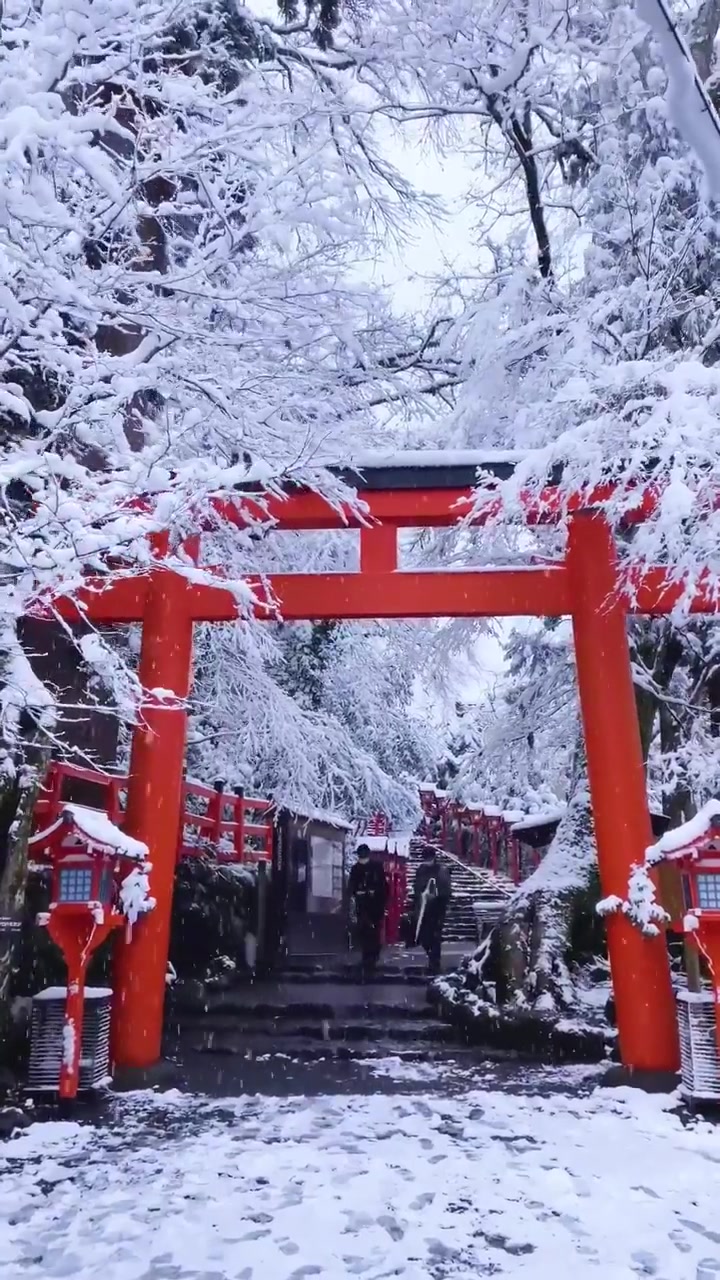
A Japanese village lies hushed beneath a blanket of white. The majesty of a red torii gate glows like a star against the snowy landscape. The site is the Tokaido Hakone Ekiden route, home to the trail of the annual marathon relay, according to "Tokyo New Co" in a separate video. There is something transcendent about walking on a soft, snowy path. The serenity of the Japanese shrine in winter amplifies that feeling, but the shrines are not reserved only for the peaceful. The sites touch a deeper sense of belonging. Whether you are visiting for solitude, reflection, or celebration, understanding the essence of Japanese shrines can reveal the nuanced nature of Japan's culture.
Frosty gates and a path forward
The snow-covered shrine is a peaceful Japanese scene, exemplified by its traditional red torii gate, inviting souls toward one of the many shrines nestled in the snow-covered landscape. The Japanese architecture is accented by stone lanterns that adorn the path, holding the spirit of the ancient site against the white. Bajoing the snowy slope, the red hue of the gate contrasts the path ahead from the white landscape surrounding the site. On the edge of the path stand stone lanterns — their ancient design echoing the timelessness of Japanese culture. Pilgrims and visitors alike traverse this path on foot, uphill or down through the snow. The snow-covered torii gates do more than signal the entrance of a shrine or a ritual site, they connect both the physical and spiritual realms. The gates are often symbolic of entering a sacred space for purification, and can facilitate passage from one realm to the next. Snow makes this experience even more distinct and enchanting. A torii gate is the first step to a pilgrimage. However, the torii gate does not merely serve the ceremonial value. Throughout the seasons, the gates represent the unique elements of Japan, and none more so than winter. The gates and the snow create serenity, and a serene path for pilgrims to walk on.
Enlightenment and landscape
Japan's landscape is both unique and peaceful, and the network of shrines scattered through them showcase this. The torii gates are a gateway to the world of transcendence for both pilgrims and visitors alike. The snow-covered landscape, symbolizing both purification and rebirth, acts as a gateway from the profane world to the sacred domain. Japanese winter landscapes have consistently fed Japanese art. One of the most iconic Japanese literary works, Matsuo Basho's "Narrow Road to the Interior", features the beauty of snow scenes. Japanese art has often captured the beauty of snowy landscapes, many of which have been captured on Ukiyo-e prints, and modern Japanese art, as seen in the video. Snowy Japanese shrines are a treasure to both pilgrims and tourists as well. Japanese shrines are places of worship and pilgrimage for Japanese people, and throughout the years, the shrines have developed into global tourist destinations for their ancient historical significance. The torii gates act as a symbol for peace and spirituality, with a palpable spiritual energy. The sight of a torii gate is a reminder of Japanese cultural importance. In the winter, there are a couple of rituals that shrine-goers practice, like making a wish on the first snowfall. During the winter, shrines are less crowded, which means fewer people are jostling for space inside the halls. It is also a wonderful time to see the cherry blossoms, and see the fields of Japan. The serenity of a Japanese shrine is more palpable during this cold season.
The red gates
The core of the Japanese shrine is the Torii. The torii gate is a symbolic gate that hangs as a signifier of the shrines and temples in Japan. The torii gate is connected to other shrines by a path that visitors walk on, known as "sando." However, the torii gate serves another role in Japanese shrines. The torii gate is a symbol of the space between the sacred and the profane. The Japanese see the torii as a sacred border, and can be placed to mark the entrance to the realms of the spiritual world. In such cases, the gate could even be a housing for a divinity. According to a different video, the site chosen for the shrine is chosen by Shinto priests. The shrine site is considered sacred, and the priests have to guide the divine beings to the shrine. The torii gates symbolize purification and enlightenment; they are as symbolic as any other part of the structure and are a spiritual center of the shrine.
The climate of snow
A shrine in the winter season makes the visit special. The snow allows for a reflection of one's journey. Each snowflake is a symbol of the purity of the shrine. The snow also makes the shrine more serene. The stillness of the natural landscape allows for a meditative visit. The snow makes the shrine more accessible. The pathways free from footprints and footfall, and the serene landscape and the purity of the snow serve as a purification. Being fully exposed to nature can invoke a transcendental experience. Winter has been celebrated and cherished in Japan, and the winter season is celebrated in many temples. While purely a cultural norm, the Japanese appreciate the beauty of the snow, which is considered to be extremely beautiful, and the significance of anything in nature is a common theme in Japanese culture.
The Shrine experience
In the olden days, the shrine was usually located on a jungle, and the shrine visitors were from that community, which would be considered newly settled and had a different norm compared with today's culture. A shrine in the past was used as a protective measure to ward off evil spirits. As the shrine culture grew, the shrine became a symbol of Buddhism and Shintoism The shrine is decorated primarily for solemn services. It's about purification and cleansing at the shrine. Traditional shrines had torii gates, as mentioned, which marked the entrance of the shrine. Most shrines have a purification fountain, which visitors could use to cleanse themselves of negative energies.
Highlands and machining
“Japan’s winter landscape is a sacred part of Japan, and always has been, and people love to visit it for the spiritual cleansing and purification that it provides,” a different video says. The snow-covered shrines are a gateway to both pilgrimage and leisure. The shrines are a break from the hectic life in the bustling towns, and provide a serene atmosphere. The snow-covered shrine allows people to centre their thoughts to be mindful with themselves, and to connect with their inner selves. The snow covered pathway; is a ritual in itself for visitors visiting the shrine. The snow-covered shrine provides a serene atmosphere, and the snow acts as a purification process for visitors. The beauty of Japanese shrines lies in their ability to blend seamlessly into the landscape. The torii gate is the entry to the shrine, and serves as a spiritual center and an entry to the sacred place. The shrine's location in the mountains allow its visitors to get closer to the spiritual world. Snow-covered shrines are less crowded, which affords more of a personal connection to the experience. The sound of the snow crunching beneath your feet acts like a metaphorical carpet, cleansing everything around. The snow-covered shrines are not just for worship. There is a lot of Japanese culture that is represented at the shrine. Visiting snow-covered shrines can be a way of understanding its culture in a deeper sense. The shrine is a landmark of Japanese culture, and the shrine is essential to Japanese heritage. People seek solace and peace in the shrines, and the shrine brings out a deeper connection that people share for the past. Japanese culture cherishes snow, and celebrates the arrival of snow. The snow-covered shrines are a ritual and a symbolic mark in Japan.
Questions readers ask
What is the significance of the red torii gate in a snowy landscape at Japanese shrines?
The red torii gate serves as a symbolic entrance to a sacred space, facilitating the transition from the profane to the sacred. In a snowy landscape, the contrast between the red gate and the white snow enhances the serene and spiritual atmosphere, making the experience even more distinct and enchanting.
What is the Tokaido Hakone Ekiden route, and why is it notable?
The Tokaido Hakone Ekiden route is a trail known for hosting an annual marathon relay. It's notable for its scenic beauty, particularly in winter when the red torii gates stand out against the snowy landscape, creating a visually striking and culturally significant scene.
What is the significance of the stone lanterns along the path to the shrine?
The stone lanterns along the path to the shrine hold the spirit of the ancient site and accentuate the traditional Japanese architecture. They guide pilgrims and visitors, adding to the timeless and serene atmosphere of the shrine, especially when covered in snow.
How does the snow enhance the spiritual experience at Japanese shrines?
Snow makes the experience of visiting a shrine even more distinct and enchanting. It symbolizes purification and rebirth, creating a serene path for pilgrims. The contrast of the red torii gates against the white snow amplifies the sense of entering a sacred space, enhancing the spiritual journey.
What role do torii gates play in Japanese shrines beyond their ceremonial value?
Torii gates represent the unique elements of Japan, particularly in winter. They connect the physical and spiritual realms, symbolizing the transition from one world to another. The gates are a gateway to the world of transcendence, offering a serene path for pilgrims and visitors alike, especially in the snowy landscape.
How have Japanese winter landscapes influenced art and literature?
Japanese winter landscapes, particularly those featuring snow, have been a rich source of inspiration for art and literature. Matsuo Basho's 'Narrow Road to the Interior' is one of the most iconic works that captures the beauty of snow scenes, and many Ukiyo-e prints and modern Japanese art feature these landscapes, showcasing their cultural significance.
Related deep dives
Similar reads based on topic and creator.



Recent articles
Fresh deep dives from the latest Reels we unpacked.




Comments
Be the first to comment.