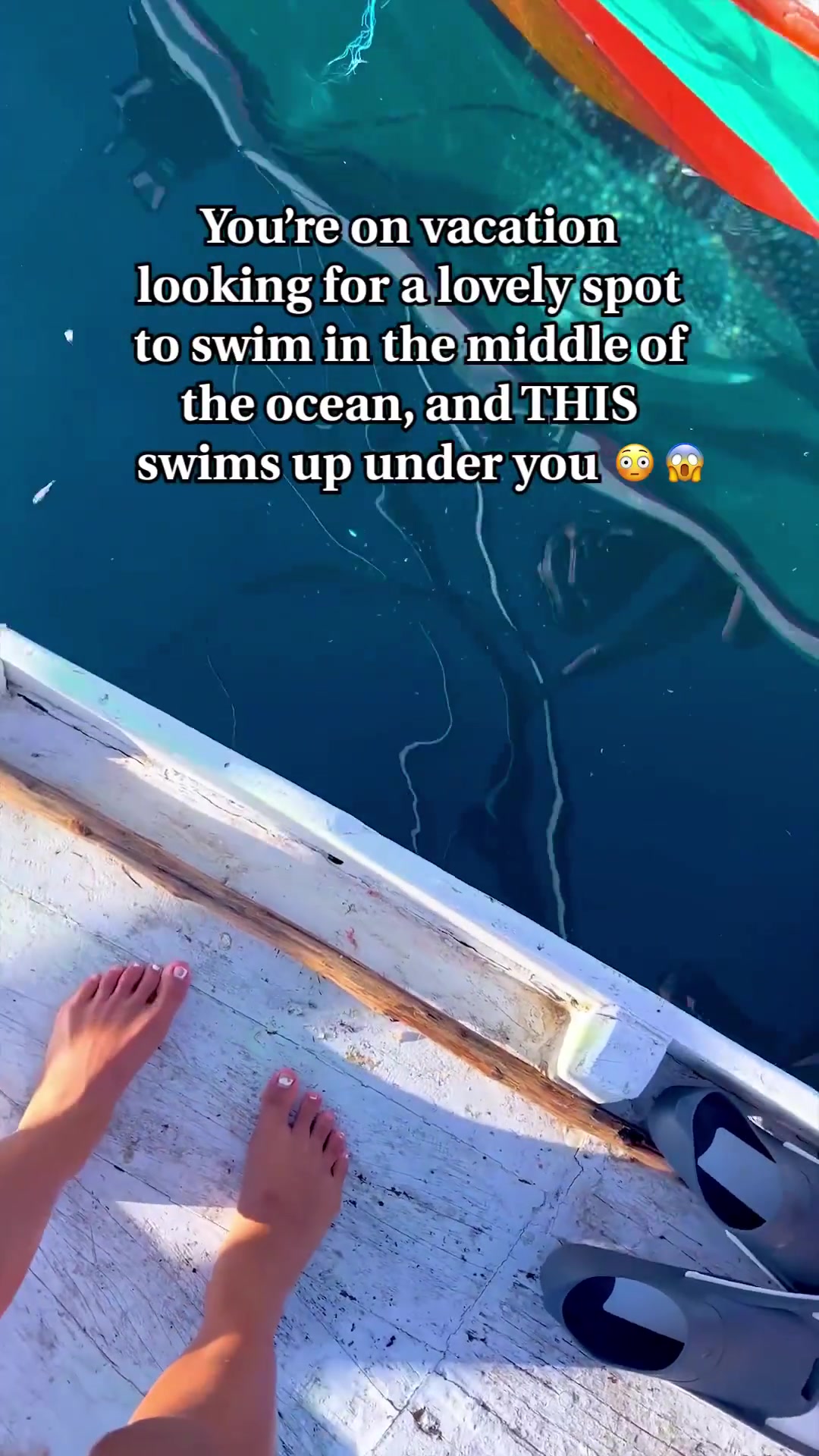
A person on a boat, feet dangling just above glassy blue water, finds an unexpected visitor beneath the hull. The startled exclamation is universal: "Oh, Wow!" Encounters with whale sharks are rare and non-threatening enough to be “the most loved marine encounter by tourists”. These ocean giants, despite their name, are gentle filter-feeders — but let's be real: seeing one up close is a thrilling surprise.
What’s the deal with whale sharks?
Whale sharks are the largest fish in the sea, but they're docile and harmless, feeding mainly on plankton. They have distinctive spotted patterns on their skin — no two patterns are alike. The whale shark is a slow swimmer, moving at speeds of 3 mph. Whale sharks are found in many tropical and warm oceans around the world. In our scenario here, the whale shark swam up from the depths "in the middle of the ocean" like a visitor from another world under the boat in a tropical marine environment. Though they're solitary creatures, whale sharks do occasionally cruise with other marine life like manta rays and other sharks.
Tourist magnet in the blue
Whale shark sightings are increasingly becoming a prime eco-tourism attraction. They are on a lot of bucket lists, big and small. No one knows this better than the people who plan and run whale shark tours. This encounter of the whale shark occurred just in time for a thrilling swim and underwater experience with it. Whale encounters are also a chance for marine conservationists to research these creatures by tagging and tracking them. But whale shark tours are not without their controversies. Handling and interacting with these creatures, even on a small scale, can have negative impacts on their health and behavior. The world’s whale shark population declined by about 50% between 1995 and 2011. Conservation groups are worried about the state of wild whale shark populations. Divers and snorkelers may be impacting the health of these creatures and their habitats.
The gentle giants of the sea
Whale sharks live in the open ocean and have an impressive lifespan of around 130 years. They are the slowest-moving species of sharks. They travel vast distances to feed and breed. This makes them mysterious and exciting to marine biologists. Studying and understanding whales sharks can help conservationists take appropriate measures to protect these migratory species. The older a whale shark is, the more unique its skin pattern becomes. No two whale sharks have the same skin pattern.
Serious swimmers
Despite their gentle nature, whale sharks have incredible endurance and strength. Beneath the surface of the sea, the whale shark is a silent, powerful swimmer. But unlike many sharks, when a whale shark swims up “under the boat” it’s more likely to be because of curiosity than aggression. Whale sharks can dive more than 6,000 feet. They migrate long distances. They are similar in size to the biggest whale species, but they are not closely related to them.
Swimming with a whale shark
If you have a chance to go whale shark watching, you'll first need to pick the right spot. The Philippines, Mexico, Australia, and the Maldives are popular places for whale shark encounters. Then, you'll need to find an ethical tour. Conservationists suggest some guidelines for swimmers. Do not touch the whale sharks. Swimmers should also avoid approaching the whale sharks head-on, as this might cause the shark to act defensively.
- Wear a mask and snorkel gear to see the whale shark and avoid obstructing its path. The whale sharks can swim fairly quickly and divers and snorkelers may want to swim right alongside them to marvel at their beauty and size.
- Stay Calm and keep a respectful distance. Stay calm to avoid startling the whale shark.
- Do not chase the whale shark. Remember that you are in the whale shark's environment and it is up to the whale shark to approach a swimmer.
- Check if it’s the right time of year for whale sharks. Certain times of the year are much better than others to see them.
Questions readers ask
What makes whale sharks such a popular tourist attraction?
Whale sharks are popular because they are the largest fish in the sea, yet they are gentle and harmless. Their distinctive spotted patterns and slow swimming make them a thrilling but non-threatening encounter for tourists. Plus, seeing a whale shark up close is a rare and exciting experience that many people dream of having.
How do whale sharks behave around humans?
Whale sharks are docile and typically not aggressive around humans. They are curious creatures and might approach boats or swimmers out of interest. Their slow swimming speed and filter-feeding habits mean they pose no threat to humans.
What are the best places to go whale shark watching?
Some of the best places to go whale shark watching include the Philippines, Mexico, Australia, and the Maldives. These locations are known for their clear waters and frequent whale shark sightings, making them popular destinations for eco-tourism.
Can interacting with whale sharks harm them?
Yes, interactions with whale sharks can have negative impacts on their health and behavior. While whale shark tours can be thrilling for tourists, it's important to consider the potential effects on these gentle giants, especially since their populations have declined significantly in recent years.
How do researchers study whale sharks?
Researchers often study whale sharks by tagging and tracking them during tours and encounters. This helps marine conservationists understand their migration patterns, feeding habits, and overall health, which is crucial for implementing effective conservation measures.
Related deep dives
Similar reads based on topic and creator.



Recent articles
Fresh deep dives from the latest Reels we unpacked.



Comments
Be the first to comment.