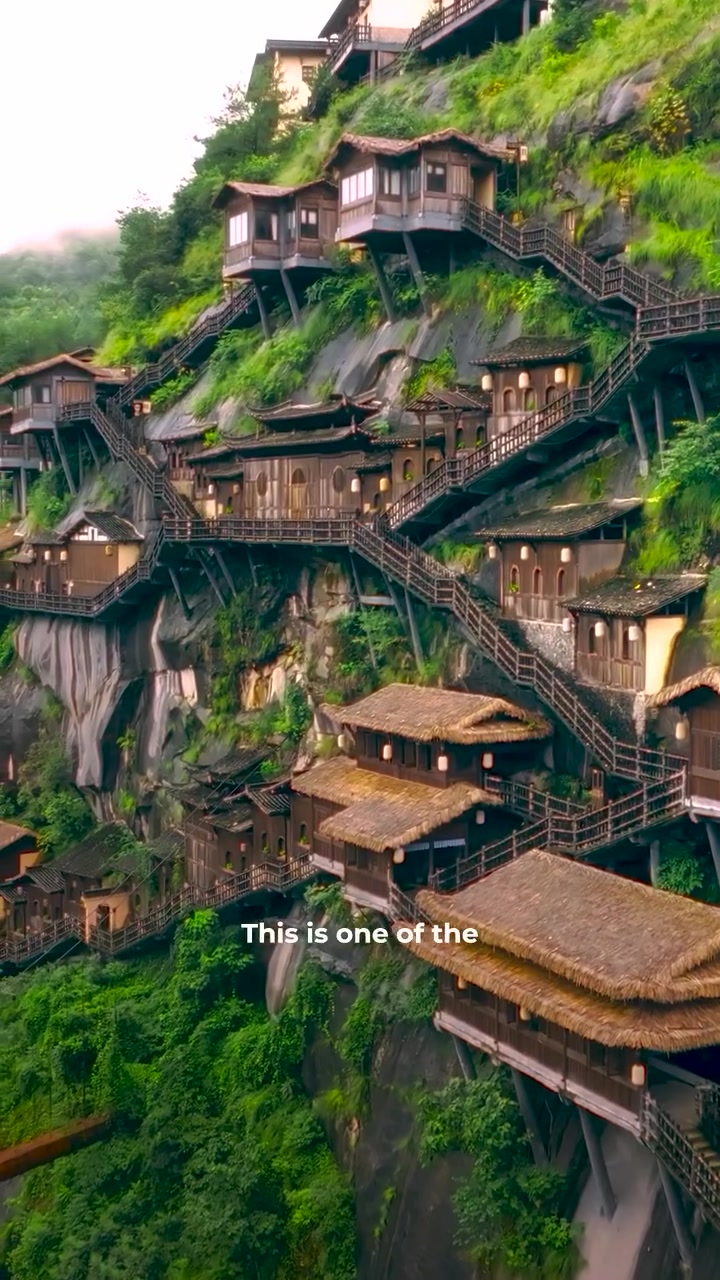
Wangxian Valley in China is a place unlike any other. Traditional architecture is literally carved into the side of a steep, lush hillside. The houses and structures are so-symmetrically connected by stairs and walkways, they appear to flow naturally into the surrounding landscape. Wangxian Valley is often described as looking like a fairy tale village built at the side of a cliff.
Wangxian Valley: China's vertical village
Wangxian Valley is as it sounds. It's a lush valley with its village — and most village functions: gardens, markets, and residences — built on the side of a steep cliff. A network of stairs and walkways connect the houses and buildings, creating a vertical village. The architecture is uniquely Chinese — wooden temples, steep roofs, and distinct styles. No roads run through the village; the residents must walk up and down the stairs to reach their homes, or get to the wooden temple at the top, offering an incredible view of the surrounding nature. Visitors are accustomed to starting at the bottom of the valley, climbing to the top, and then exploring every building and walkway. This integrated design creates a serene ambience, an immersive experience that's both tranquil and otherworldly. The way the valley is built invites visitors to spend time and explore. The valley’s symmetry and arrangement are part of its appeal.
Spectacular views are a natural draw
Natural landscapes and unique human intervention make a beautiful spot for travelers seeking something different. Today, travelers looks for a memorable experience and to fulfil the bucket list. Wangxian Valley fits right in. Wangxian attracts visitors with its unique architecture and natural settings. The valley's lush greenery, combined with its unique position as a vertical village, offers a backdrop no other landscape can, enhancing the illusion of a fairy tale village.
The vertical village structure
The steep cliffside is home to a large village. The smaller houses are located towards the bottom of the hill, while larger buildings and temples take up more room at the top. Each house is accessible by stairs, which connect to the walkways and trail up the steep hill. The architecture is uniquely integrated into the hillside, with wooden structures housed at the base of the steep hill. The hillside is very steep, giving Wangxian Valley an illusion of a fairy tale village. Residents have embraced living in this vertical village. The steep hillside serves as the foundation for numerous residential and public structures. Some houses are at the base and slope upwards, while walkways and trails connect the various buildings and structures together. The paths are arranged in a manner that makes them flow with the surrounding landscape.
The extraordinary layout of Wangxian Valley
Wangxian Valley, China, is a vertical village with houses built into a steep, green hillside. The combination of the steep cliff and the village is unique, making the hillside look like a mountain.. Wangxian Valley, China, is known for its lush greenery and traditional architecture, with wooden structures and steep roofs. There are numerous houses and buildings in Wangxian Valley, blended seamlessly with the natural landscape.
The hiking and the temple
Guests are recommended to go to Wangxian Valley in the morning. There is a wooden temple at the top of the village, accessible through steep paths with wooden structures and staircases. The trip from the bottom of the valley, where the road runs from, up to the temple offers an incredible, panoramic view. There are plenty of opportunities to capture the surrounding nature. The village houses are accessed only by stairs, so visitors who prefer hikes will enjoy visiting Wangxian Valley.
Wangxian Valley: The wild journey
Visitors noted that this valley could be visited at any time, especially in the early morning. The village is quiet and calm, and there are no roads, only stairs and walkways. Wangxian Valley is a clean and serene place surrounded by natural butterflies and flowers.
Questions readers ask
What exactly makes Wangxian Valley's architecture so unique?
Wangxian Valley's architecture is unique because it's built directly into the side of a steep cliff, with houses and buildings connected by stairs and walkways that flow naturally with the landscape. This vertical design is not only visually striking but also creates a serene and immersive experience for visitors. The traditional Chinese architectural elements, like wooden temples and steep roofs, add to the village's distinct character.
How do residents of Wangxian Valley get around?
Residents of Wangxian Valley navigate the village using a network of stairs and walkways that connect the houses and buildings. There are no roads running through the village, so walking is the primary mode of transportation. This vertical layout means residents must climb to reach their homes or the temple at the top, which also offers stunning views of the surrounding nature.
Is Wangxian Valley accessible to visitors with mobility issues?
Given the vertical layout and the extensive use of stairs, Wangxian Valley may present challenges for visitors with mobility issues. The village is designed for walking, and the steep cliffside means there are no flat paths or easy access points. Visitors should be prepared for a lot of climbing and consider their physical capabilities before planning a trip.
What kind of experience can visitors expect in Wangxian Valley?
Visitors to Wangxian Valley can expect a unique and otherworldly experience. The vertical village, with its lush greenery and traditional architecture, creates a serene and immersive environment. Exploring the village involves climbing stairs and walkways, discovering wooden temples, and enjoying breathtaking views of the surrounding nature. It's a memorable experience for those seeking something different from typical tourist destinations.
How does the layout of Wangxian Valley contribute to its fairy tale appearance?
The layout of Wangxian Valley contributes to its fairy tale appearance through its seamless integration with the natural landscape. The houses and buildings are built into the steep hillside, connected by stairs and walkways that flow naturally with the surrounding greenery. This, combined with the traditional Chinese architectural elements, creates an illusion of a village that's both enchanting and otherworldly.
Related deep dives
Similar reads based on topic and creator.



Recent articles
Fresh deep dives from the latest Reels we unpacked.


Comments
Be the first to comment.