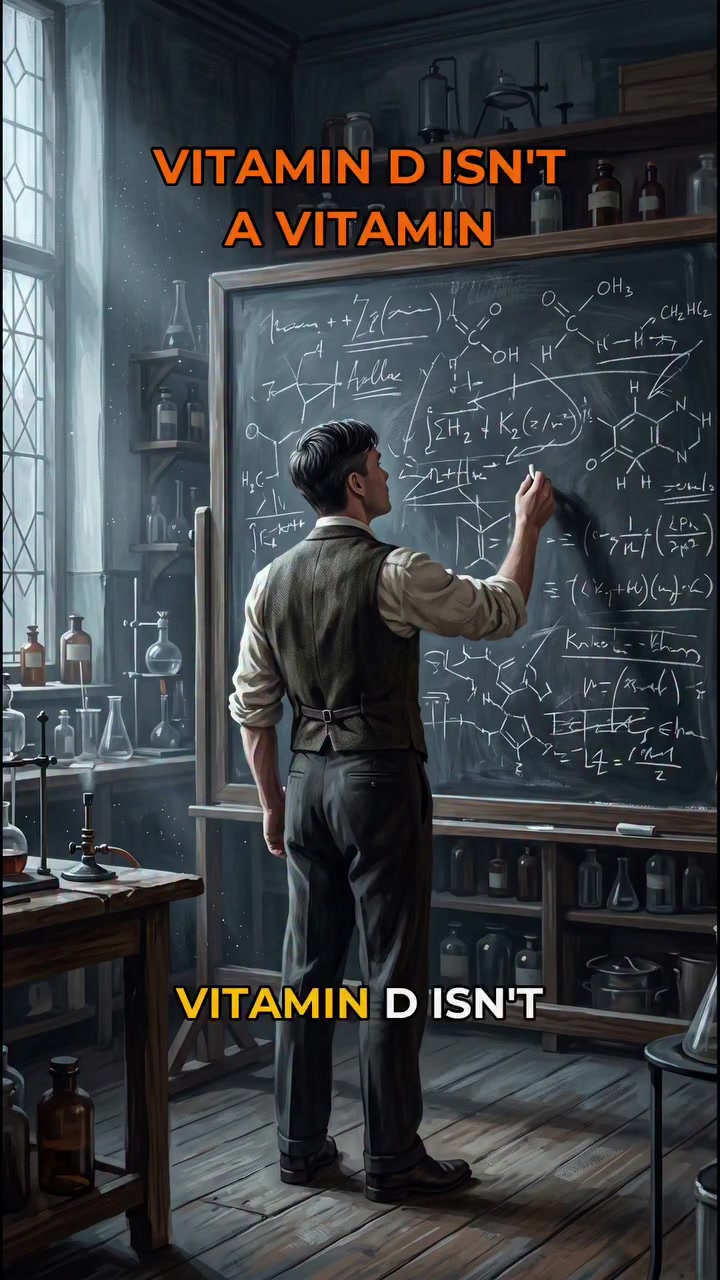
Many know vitamin D as something to take in pill form for bone health. Yet, it isn't a vitamin. And it never was. It's been misclassified for over a century. In 1922, scientists gave it the letter "D" simply because it was the fourth vitamin they'd found, after A, B, and C. So, it never fit the vitamin definition: your body can't naturally produce vitamins. But your skin can create vitamin D when exposed to sunlight. This alone makes it an outlier.
Hormone mistaken for a vitamin ****
Vitamin D isn’t a vitamin. It functions as a crucial hormone. Vitamin D is a steroid, hormone that regulates several bodily functions. It is synthesized in the skin and converted in the liver and kidneys into an active form that turns on and off thousands of genes. The body produces the form known as calcidiol which it converts into calcitriol—a hormone. The hormone turns on and off the genes for more than 200 other hormones, proteins, and enzymes. Much more so than a nutrient, which serves as building blocks. Up until the 1970s, researchers didn't understand just how critical it is. The work of scientists Michael Holick and Anthony Norman revealed its true power. The discovery of its receptor, a structure that allows calcitriol to enter cells and control their activity has turned science upside down.
Why it matters: A role bigger than bones ****
The hormone is something that is major in all mammals. It doesn't just affect calcium and phosphorus absorption, which are important for bones. The hormone affects everything—your bones, your muscles, your immune system, which is why vitamin D deficiency can lead to rickets in children, and in adults, it can lead to osteoporosis or bone weakness. Michael Holick, a physician, researcher, epidemiologist and noted expert in vitamin D says, "In general the body needs the sun's energy to manufacture the hormone vitamin D, but it’s possible to get the vitamin D cholesterol from food and supplements." Vitamin D is a natural catalyst for events in the body. Vitamin D has been found to correct hormone imbalance, muscle weakness and inflammation? This misclassification hasn't just been in the world of academics or science. Because supplementation is so pervasive and popular, some people have never thought to get their vitamin D naturally.
The journey of vitamin D ****
The skin naturally makes this hormone. The skin passage is only the beginning, however. The body transforms vitamin D through enzymes. The liver then converts to calcidiol. Calcitriol, the active hormone, comes from the kidneys. When the hormone enters the cell, it binds with a receptor and turns on the genes. This allows the body to naturally manufacture vitamins A, E, and K. Until the body is exposed to sunlight, it shuts down the production of vitamin D. The data shows that people who spend a lot of time indoors or live in more northern latitudes are at risk for vitamin D deficiency.
Vitamin D deficiency
People with darker skin tones produce less vitamin D. The amount of sunlight it takes to synthesize vitamin D is higher for people with darker skin, which means it takes more sun exposure for people with darker skin to get the same amount of vitamin D. Deficiency is really common. It doesn’t have to be. But the body has slowed down its production. Vitamin D is commonly prescribed, but that may not be the best answer for everyone. It’s often prescribed orally, but the natural way the body manufactures it is through the skin. The sun or UVB rays help the skin produce chlorine, which is then converted in the liver to calcidiol.
How the pandemic shut down vitamin D ****
The factory switched off because people were not nearly so active. The lack of UVB rays caused a shutdown in the body’s natural production of vitamin D. Over the past several decades, rates of depression have increased. But over the last two years, particularly in 2020, rates of depression skyrocketed. This can be attributed to the reduction in vitamin D that happened in 2020. The vitamin D helps maintain mental health and boosts mood.
The importance of a relationship with the sun
Mental health is at stake. The pandemic – when people were locked inside – has deeply affected people's vitamin D levels, and their mental health. People need to get outside and bask in the sun. Sunlight is much more important than people think.
Questions readers ask
What makes vitamin D a hormone rather than a vitamin?
Vitamin D is technically a hormone because it's produced by the body and regulates gene expression. Vitamins, on the other hand, are nutrients that the body cannot produce and must obtain from food. Vitamin D is synthesized in the skin and converted into an active form that controls the activity of thousands of genes.
How does vitamin D affect the body beyond bone health?
Vitamin D plays a crucial role in regulating calcium and phosphorus absorption, which are important for bone health. But its influence extends far beyond that. It affects muscle function, the immune system, and even the production of other hormones, proteins, and enzymes. Deficiency in vitamin D can lead to conditions like rickets in children and osteoporosis in adults.
Why is vitamin D deficiency more common in people with darker skin?
People with darker skin tones have more melanin, which can absorb or block UV rays. This means they need more sun exposure to produce the same amount of vitamin D as someone with lighter skin. As a result, people with darker skin are at a higher risk of vitamin D deficiency, especially if they live in areas with less sunlight or spend a lot of time indoors.
How can I ensure I'm getting enough vitamin D?
The body produces vitamin D when the skin is exposed to sunlight, but it can also be obtained through food and supplements. For those who may not get enough sun exposure, supplements or fortified foods like milk and cereals can help. People with darker skin or those who live in northern latitudes should be particularly mindful of their vitamin D intake to avoid deficiency.
Is it possible to get too much vitamin D?
While vitamin D is essential, it is possible to have too much. This is particularly true for those who rely on supplements. Excessive amounts of vitamin D can lead to toxicity, causing symptoms like nausea, vomiting, poor appetite, constipation, weakness, and kidney problems. It's important to consult with a healthcare provider before starting any new supplement regimen, especially with vitamin D.
Recent articles
Fresh deep dives from the latest Reels we unpacked.




Comments
Be the first to comment.