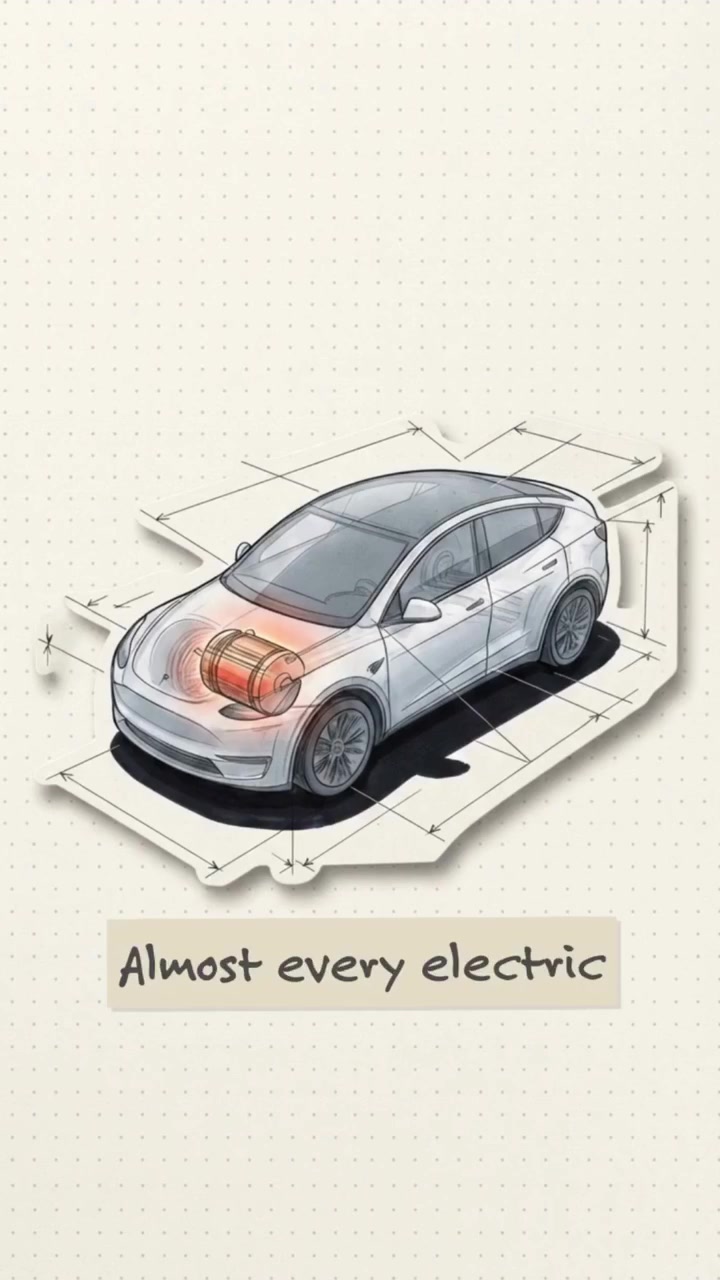
The global electric vehicle (EV) market is running into a significant hurdle — almost all modern EVs depend on magnets made from rare earth metals. China enjoys a near-monopoly, producing and processing 90% of these materials. This leaves EV manufacturers vulnerable to geopolitical tensions and supply chain risks. But a startup from India could be the solution — Vimag Labs is pioneering technology to replace rare earth magnets in EV motors.
Motor revolutions — the virtual replacement for rare-earth metals
Vimag Labs’ core innovation is a motor design that eliminates rare earth magnets entirely. Instead of relying on these scarce materials, the company uses basic copper, steel, and proprietary software. The software allows the motor to create a virtual magnet, utilizing a process called wireless excitation. Wireless excitation generates motion by forcing regular metals to act like rare earth magnets. As a result, the motors can be produced locally, completely outside of China’s giant market. The technology utilizes software to improve motor performance over time. EV manufacturers can update the software remotely, delivering performance improvements without dismantling vehicles. But, the most compelling aspect of Vimag’s virtual motor is the reduction in reliance on China. By not requiring extracts from a single nation, the company could decentralize the EV fabrication process. A broader dispersion of production means less dependence on one nation's supply chain. In comparison to the typical motors with permanent magnets, the Virtual Magnet Motor promises significantly less wear and tear and far more flexibility in production.
Two realities: motors go global, but so do risks
China's hold on rare earth materials is the bottleneck for EV production. A single geopolitical bloc controls almost all the production. Seth Manich, an automotive industry veteran, realized this firsthand in 2020 when a crucial supply of magnets for a project was stranded during the COVID pandemic. This crisis led to the inception of Vimag Labs. The startup secured a $5 million Series A investment round. India’s Accel group is one of the investors. Although the exact valuation remains confidential, this investment signals Vimag Labs' potential. And it's not just investors who are looking closely — major automotive manufacturers are testing the technology.
Rare Earth Excavations
Rare earth metals mining sites across China produce materials such as dysprosium and neodymium. Electric motors require dysprosium to enhance a magnet’s heat resistance. These minerals have many other applications, including defense and IT. They are mined in northern China, where an enormous amount of waste is generated. The mining process is often criticized for its economic and environmental impact.
The Virtual Magnet Architecture
Vimag’s Virtual Magnet Motor works through the principle of wireless excitation. This technology obviates the need for permanent magnets made from rare earth minerals. Including copper and steel in the design allows the motor to generate its own magnetic field. This eliminates physical parts and their wear and tear.
The Virtual Magnet Experience
Vimag’s motor enables major benefits. It can be manufactured entirely locally, which is a game-changer for low-income countries reliant on the massive Chinese market. The process also avoids the toxic and environmentally devastating mining process. This method is better than mining.
Guidelines When Ditching Rare-Earths for Virtual Magnets
If you are considering buying an electric vehicle, here’s what you should look out for:
- Local Manufacturing: When assessing the vehicle for purchase, look for the materials used. Vehicles relying on Vimag's architecture have local manufacturing potential.
- Environmental Impact: Discovering eco-friendly manufacturing techniques will help in understanding the green impact of the vehicle. While the technology is still in the validation phase, its initial results are impressive. If Vimag Labs succeeds, it could fundamentally alter the way EVs are manufactured and operated.
Can India lead the electric vehicle charge?
The success of Vimag Labs could redefine India’s place in the global EV market. If the technology proves viable at scale, India could become a hub for EV motor manufacturing. The country would no longer rely on imported rare-earth magnets, and instead, could build a robust local industry. EV makers globally would gain a reliable partner for critical motor components, reducing supply chain risks. Vimag Labs is already attracting serious interest from investors and automotive manufacturers — a promising sign.
Questions readers ask
How does Vimag Labs' virtual magnet technology actually work?
Vimag Labs' technology uses a process called wireless excitation to create a magnetic field. Instead of relying on permanent magnets made from rare earth metals, the motor uses copper and steel, and proprietary software to generate its own magnetic field. This effectively replaces the need for rare earth magnets in EV motors.
Can Vimag Labs' technology be used in all types of electric motors?
The technology is specifically designed for EV motors. While it shows promise for reducing reliance on rare earth metals, it's not clear if it can be applied to all types of electric motors across different industries.
How does Vimag Labs' motor compare to traditional EV motors in terms of performance?
Vimag Labs' virtual magnet motor promises improved performance over time through software updates and reduced wear and tear. It also offers flexibility in production, which could lead to more efficient and adaptable EV motors.
What are the potential benefits of using Vimag Labs' technology in the EV industry?
The main benefits include reducing the reliance on China for rare earth metals, decentralizing EV production, and improving motor performance through software updates. This could lead to a more resilient and flexible EV supply chain.
Are there any potential drawbacks or challenges to implementing this technology?
One challenge could be the initial adoption and integration of the new technology into existing EV manufacturing processes. There could also be concerns about the long-term reliability and efficiency of the virtual magnet motors compared to traditional designs.
How does the mining of rare earth metals impact the environment, and how does Vimag Labs' technology address this?
The mining of rare earth metals, particularly in China, generates a significant amount of waste and has been criticized for its environmental and economic impact. Vimag Labs' technology addresses this by eliminating the need for rare earth metals, thus reducing the environmental impact associated with their mining and processing.
Why do EV manufacturers need to consider alternatives to rare earth metals for their motors?
EV manufacturers need to consider alternatives to rare earth metals because China controls nearly 90% of the global supply, making the industry vulnerable to supply chain disruptions and geopolitical tensions. By exploring alternatives like Vimag Labs' virtual magnet technology, manufacturers can reduce their reliance on a single source and enhance the resilience of their supply chains.
Related deep dives
Similar reads based on topic and creator.



Recent articles
Fresh deep dives from the latest Reels we unpacked.




Comments
Be the first to comment.