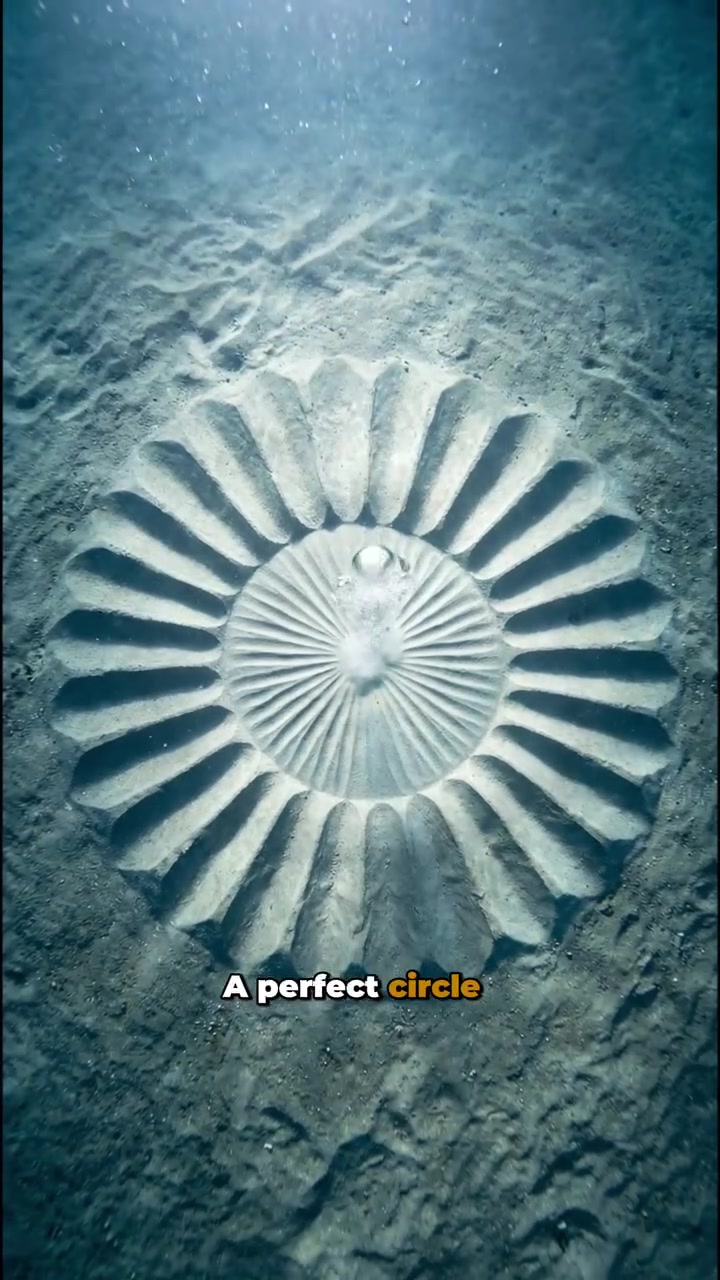
For two decades, an underwater mystery had sailors and researchers alike puzzled. Off the coast of Amami-Ōshima in southern Japan, divers began photographing a phenomenon in 1995. They discovered perfectly circular patterns, each about two meters wide on the ocean floor—a full 20 meters below the surface. These designs, which featured an intricate structure of radiating ridges and a finely combed center were almost identical, yet the builder was never seen.
The Underwater Architect of Amami-Ōshima
Dubbed the most beautiful circles you've never seen, the sand circles were ridged in concentric patterns, combed with fine sand, and located 20 meters below the water’s surface. Starting 1995, divers found these perfect circles, each with a fine structured center and radiating ridges. The exciting aspect was that whenever divers began to explore the area, the artist would have disappeared, leaving only their artwork behind. While these sand patterns fascinated the divers, they also posed many questions. The fish sculpts a circular pattern. When it is done, it disrupts the pattern and swims away. Each structure, regardless of how intricate, would be disrupted by the waves. The ridges and patterns in the sand typically vanished in a few days, swept away by the ocean currents. They remained a mystery for almost 20 years until someone captured the unexpected builder.
Underwater Engineering at Work
Working at ocean depths of 20 meters, the fish builder would spend a week constructing its masterpiece. They would sculpt a circle 20 times their own length, which is considered astonishing in the animal world.
The Circular Sand Engineering
The sand patterns created feature something akin to the circle of the moon, a perfect circular structure. The ridges start from the center and radiate outward. The fish would ensure all ridges adhere to the perfect circular structure. The circle or shape seemed to have a purpose that the fish understood.
The fish with a week-long engineering project
The fish, a pufferfish, barely 12 centimeters long, would flap its fins for almost a week to create the design. Even though the fish has a minuscule body, its work is precise, with meticulous attention to detail. The design is so exact that it was discovered to be a new species. The fish’s methodical process and precision of the circles is astounding.
Why these Prairies and the Creator Matter?
It is beyond imagination to understand the dedication that a fish barely 12 centimeters long exhibits in sculpting a perfect circle 20 times its own length. These circles, in particular, are known to be an effort made primarily by male pufferfish to attract a mate. Known to be part of mating rituals, these circles formed with the sand prides by the fish are a symbol of patience, craftsmanship, and technical skill.
What Lies Beneath the Surface
Divers started to document the geometric circles off the coast of Japan in 1995. For nearly 20 years, their attempts to crack the code behind these perfect circles remained unsuccessful. The circles, though built in the ocean’s depth, would invariably vanish within days.
A Mating Habit Worth Observing
The puzzling design is intriguing enough. However, the fish gets more interesting. Biologists were stunned to discover that the fish could create meticulous and nearly perfect circles. The ingenious skill displayed by the tiny pufferfish mesmerizes everyone. It serves as a reminder that there are always more layers to peel back, unlocking the mysteries of the ocean's depths. The construction of the fish is a fitting reminder of the boundless possibilities in nature. It also indicates the fish’s intent to impress their possible mate.
A Creative Angler’s Guide
Time and patience offer rewarding results. Here are some tips for aspiring anglers or those who want to dive into underwater experiences:
- Practice Patience: The tiny fish demonstrates that building things take time. Anglers need to be patient, too — and not just in their approach to fishing but in their approach to nature. The experience can have impressive results.
- Understand the Habitat: Sand circles are intricately designed by a fish barely the size of your hand. Your understanding of the ocean habitability and its creatures can better prepare you to enjoy the ocean.
- Adopt Precision: The consistent work of the fish can teach patience. Building perfect sand circles for one week may sound absurd, but the craftsmanship involved in the designs has something to offer. The ocean unfolds itself via these circles. The fish are gifts to the ocean, with their circular and patiently built designs.
Questions readers ask
What kind of fish creates these underwater sand circles?
The fish responsible for these intricate sand circles is a type of pufferfish. These fish are surprisingly meticulous in their work, creating designs that are 20 times their own length. They are barely 12 centimeters long.
Why do these pufferfish create such elaborate sand circles?
The sand circles are part of the male pufferfish's mating ritual. These designs are a display of patience and technical skill, intended to attract potential mates. It's a fascinating example of how animals use their environment to communicate and impress others.
How long does it take a pufferfish to create one of these sand circles?
Creating one of these sand circles is a week-long project for the pufferfish. They work diligently, using their fins to sculpt the intricate patterns in the sand, ensuring each ridge adheres to the perfect circular structure.
Can divers interact with the pufferfish while they are creating these sand circles?
Divers have observed that the pufferfish disappear once they start exploring the area. The fish are likely disturbed by the presence of divers, so direct interaction with the fish while they are creating the circles is unlikely. They disappear, leaving only their artwork.
How long do these sand circles typically last before they are disrupted?
The sand circles typically vanish within a few days due to ocean currents. Despite the fish's meticulous work, the patterns are temporary and are eventually swept away by the waves, leaving no trace of the fish's engineering.
Related deep dives
Similar reads based on topic and creator.




Recent articles
Fresh deep dives from the latest Reels we unpacked.




Comments
Be the first to comment.