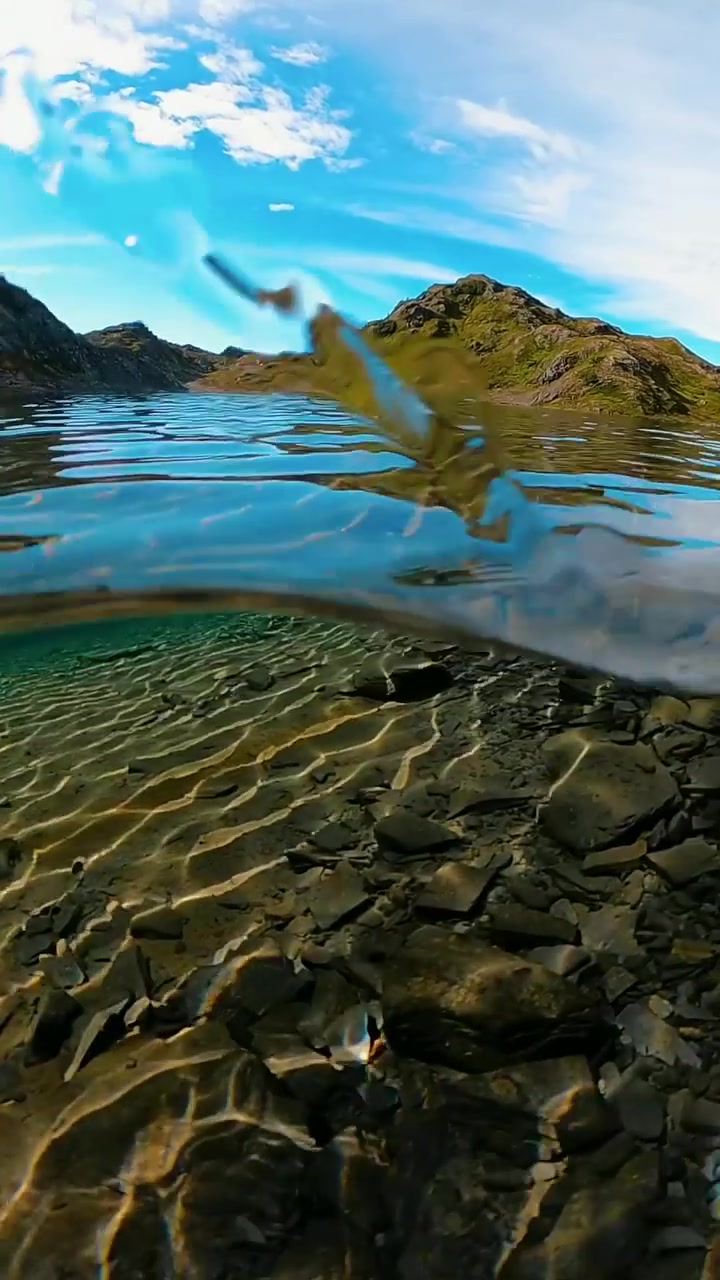
Diving into the underwater world is like entering an entirely different planet, and this reel transports viewers just below the surface of a lake or fjord to reveal the breathtaking scenery. Capturing the reflection of mountains and sky above shimmering on the water, the footage showcases a tranquil lakebed with rocks and sand — an unexpected vista.
The Photographic Magic of Underwater Scenery
A beautiful underwater scene isn't just about what’s beneath the surface — it's how light, reflection, and depth create a mystical tableau. The scene in this video exists just below the lake’s surface. This world is defined by two key elements: the clarity of the water and the interplay of natural light. The camera is parallel to the lakebed, allowing the mountains and sky to be mirrored on the water’s surface. The result, which is captured in the images, is a unique visual effect where the aerial scenery above is reflected onto the lakebed. This transforms the usually dull look of a lakebed into a breathtaking reflection of nature. The simplicity of this setup showcases the beauty of underwater scenery without the use of complex equipment or editing tricks. Yet, the touchstone of this visual experience is the clarity of the water. This clarity allows the viewer to see the underside of the water's surface, giving a transparent, yet detailed, view of the underwater layer with small rocks and sand.
The Romantic Allure of Aquatic Reflections
This underwater scene reveals a specific type of nature photograph quite popular due to the romantic allure of reflections. Aesthetically, the mirror effect generates dynamic images that create a sense of symmetry. The reflection of mountains and the sky create an awe-inspiring symmetrical experience. This creates immersive imagery that captures the essence of the natural world. In a world where nature is often constrained to traditional landscape photography, underwater photography brings a refreshing change. It allows us to appreciate the beauty of vast mountains and clear skies from a different perspective, adding a layer of intrigue to nature photography.
Beyond the Surface
Capturing underwater reflections is one of the most visually stunning ways to explore nature photography. To achieve this, you need a calm water location and the right light condition — early morning and late afternoon when reflections are most vibrant.. The photographer is positioned just below the lake's surface which demonstrates how the surface of the water mirrors the beauty of the mountains and sky above. This creates a mesmerizing visual effect. The clear water of the lake acts as a breathtaking mirror, highlighting the unique beauty of nature while revealing the subtle intricacies of the underwater world. The lakebed is full of rocks and sand, which are evident in the footage. This visual experience is a testament to the versatility of nature photography, showcasing how art and natural beauty can blend seamlessly. The mirror effect is not just a visual spectacle but also a scientific marvel. The lake's surface acts as a mirror. Light from the sun is reflected off the water's surface, creating a mirror-like effect. This effect not only makes the visual stunning, it is an example of how light travels and refracts to give a distinct view underwater. This is a unique visual treat where the same scene is captured in different dimensions. It shows the mountains and sky above the lake which are reflected on the surface, whereas the camera is positioned just below the surface to capture this breathtaking view of the lakebed.
Diverse Views at the Same Place
The lakebed in the photo is a testament to underwater photography’s versatility. The lakebed is made up of diverse rocks and sand, making this an unforgettable experience. The clear water allows for a detailed view of the lakebed with rocks and sand, which creates a mesmerizing visual experience. Photographing underwater scenes requires a lot of patience and skill, but the results can be extraordinarily satisfying. Small rocks scattered throughout the lakebed offer a new angle to photography. These rocks reflect light in a way that adds depth and a different texture to the image. The sand on the lakebed looks natural and adds to the realness of the photograph. The sand also helps the rocks stand out, creating a breath-taking image.
Using the Proper Equipment
The type of lens used will determine the clarity of the underwater image, as well as the depth and the focus. It is best to use a waterproof lens, specifically designed to capture aquatic life. The best camera settings for this type of photography are a manual mode where the photographer has control over exposure, ISO, and aperture to ensure the best possible shot. It’s important to shoot at various depths, moving underwater in search of the best angles, carefully adjusting the camera settings to capture each shot. This makes the photographer proactive, recording the world beneath the water in a new light. High fidelity cameras with image stabilization, and controlled lens flair help to make the underwater shot mesmerizing.
Banking on Relaxation
Curious about a new way to enjoy local lakes or fjords? Next time you’re by a scenic lake or fjord, consider pausing to appreciate the underwater beauty. Bring a waterproof camera, then rest it just below the surface, allowing the natural light to illuminate the underwater world. You might be surprised at the beauty that lies beneath the surface.
- Await the Best Light: Early morning or late afternoon sunlight offers the best reflections.
- Use Proper Equipment: Invest in a waterproof camera/lens to capture high-quality underwater images.
- Mind the Setting: Choose a spot with calm water and a clear view of the lakebed.
- Capturing Reflections: Pay attention to the reflections of the surrounding environment and capture them from the right angle.
- Unleash Creativity: Experiment with different depths and angles to create a unique and mesmerizing visual experience.
Questions readers ask
How exactly does the mirror effect work in the underwater lake scene?
The mirror effect occurs because the water's surface acts like a mirror, reflecting the mountains and sky above onto the lakebed. This happens because light from the sun bounces off the water's surface, creating a clear reflection that can be captured just below the surface.
What makes the clarity of the water so crucial for this type of photography?
The clarity of the water is crucial because it allows for a transparent, detailed view of the underwater layer, including small rocks and sand. This clarity ensures that the reflections from the surface are sharp and vivid, enhancing the overall visual experience.
Can this underwater reflection phenomenon be captured in any body of water, or are there specific conditions required?
While any body of water can potentially create these reflections, specific conditions are needed for the best results. The water must be calm, and the lighting conditions should be ideal, typically early morning or late afternoon, when reflections are most vibrant.
Are there any particular challenges associated with capturing this type of underwater reflection?
One of the main challenges is finding a location with exceptionally clear water and minimal disturbances. Additionally, positioning the camera just below the surface to capture the reflections accurately can be tricky, requiring careful setup and timing.
How does underwater reflection photography differ from traditional landscape photography?
Underwater reflection photography offers a unique perspective by capturing the reflections of the landscape from below the water's surface. This creates a sense of symmetry and adds a layer of intrigue, making it a refreshing change from traditional landscape photography that typically focuses on the scene above water.
What type of equipment is needed to capture these underwater reflections?
The setup is surprisingly simple. You don’t need complex equipment or extensive editing. A camera that can be used underwater, a clear view of the lakebed, and the right lighting conditions are all that’s necessary. The key is positioning the camera parallel to the lakebed to capture the reflections accurately.
Related deep dives
Similar reads based on topic and creator.




Recent articles
Fresh deep dives from the latest Reels we unpacked.
Comments
Be the first to comment.