A Shifting Landscape
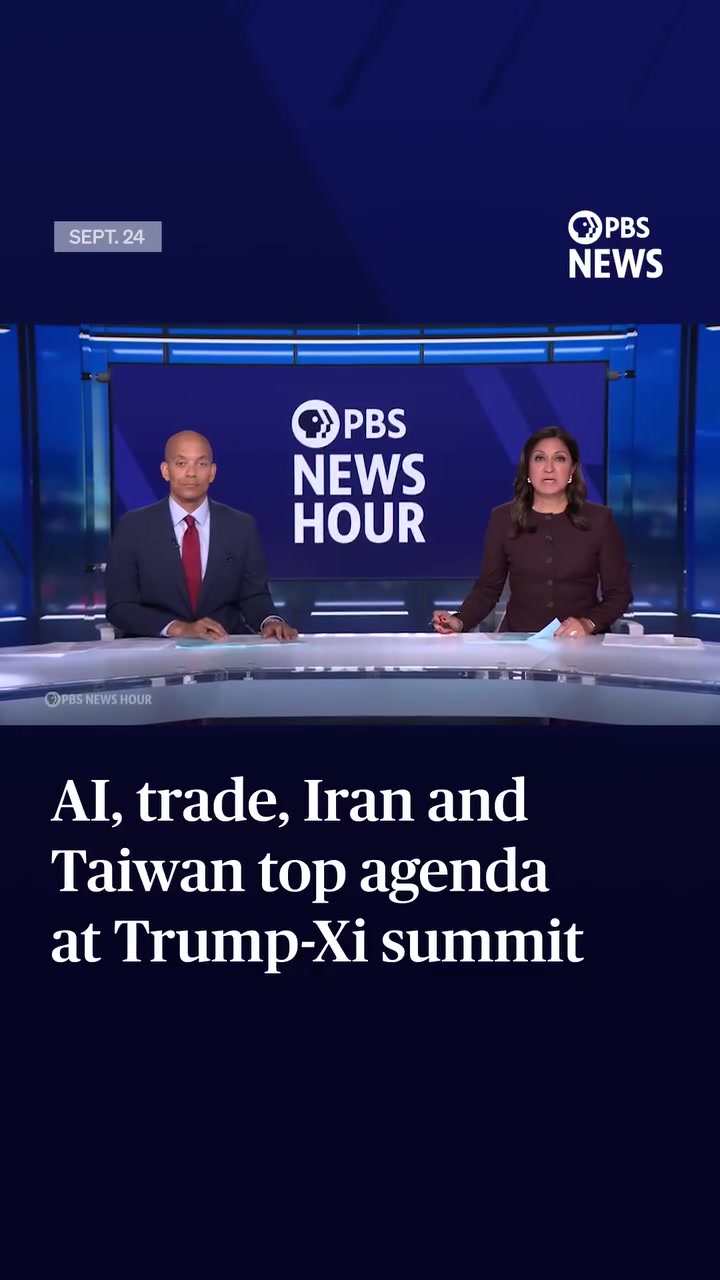
A federal judge, appointed by Trump, ordered the administration to reverse its ban on media outlets CNN, MSNOW, and Politico. These outlets were barred from the White House grounds. Access to White House grounds was restored immediately. That ban led to an extraordinary days-long standoff after major American broadcast and cable networks united in solidarity, halting all White House TV pool coverage of the President. The Trump-Xi summit highlighted key topics like AI, trade, Iran, and Taiwan. During the meeting, issues came into focus: trade tensions between the two nations, artificial intelligence, Iran, and Taiwan. More so, a phrase emerged from both sides, Constructive Strategic Stability. This phrase means that all of these issues being discussed, technology trade, Taiwan, and Iran, won't lead to conflict and won't lead to a larger confrontation. It also means that AI would be excluded from nuclear weapons. Xi and President Biden agreed that in 2024.
The Trump-Xi Summit
The Trump-Xi summit involved both President Trump and Chinese leader Xi Jinping. The summit highlighted issues between the nations including the threat of AI, trade tensions, the conflict in Iran, and Taiwan. The first visit by a Chinese leader to Washington in over a decade significantly underscored the geopolitical significance. President Trump welcomed Xi Jinping with a military review on the South Lawn. The summit did not show the video Tensions escalated as the White House banned major media outlets CNN, MSNOW, and Politico. A federal judge intervened, ordering immediate restoration of their access. This standoff occurred during Xi Jinping's visit, adding complexity to an already charged atmosphere. As the news organizations returned to federal court to enforce their access, correspondents from CNN and MSNOW were readmitted to the White House and back on the air. However, the television news pool, responsible for recording and distributing video of the president, had not yet been reactivated. As President Trump and the First Lady prepared to host a state dinner, the summit continued to unfold in a climate of heightened tensions and strategic maneuvering.
Constructive Strategic Stability
The phrase "constructive strategic stability" emerged as a key concept during the summit. It signifies a mutual commitment between the U.S. and China to prevent issues from escalating into conflicts. This approach aims to maintain stability and avoid larger confrontations. Both leaders emphasized this idea, with President Trump stating, "If we focus on our common interests, I'm confident there is much we can achieve throughout history." However, this diplomatic language does not paper over the significant issues between the two nations, including trade, technology, and regional disputes.
The trade truce
Trade was a cornerstone of the summit. The U.S. and China agreed to extend what they call a "trade truce." Under this agreement, the U.S. will not raise tariffs on Beijing, and Beijing will continue to allow the export of rare earth magnets, which are critical for various technologies, from cell phones to electric vehicles to F-35s. This trade truce aims to stabilize economic relations between the two superpowers. U.S. officials revealed a nuanced approach to tariffs. While the U.S. will not increase tariffs on Beijing, it is considering narrow tariff reductions in non-strategic sectors. This includes items like fireworks and low-end consumer products. This strategy allows the U.S. to maintain leverage in key areas while offering concessions in less critical sectors. The trade truce also includes a dedication "to develop and manage AI for good and always under human control". This is a dedicated communications line to report any national security AI incidents and a kind of list of agreed dangers, things like out-of-control models, terrorists using AI for cyber attacks, or making bioweapons. Not to mention the commitment to exclude AI from weapons. The U.S. and China are launching a U.S.-China AI Dialogue. Treasury Secretary Scott Besson is proposing a dedicated communications line to report any national security AI incidents. The dialogue is intended to address the global risks of AI. It also involves a kind of list of agreed dangers, things like out-of-control models, terrorists using AI for cyber attacks, or making bioweapons. This move highlights the growing concern over the potential misuse of AI and the need for international cooperation to mitigate these risks. However, U.S. officials have expressed no interest in easing export controls on semiconductors, a key area of contention between the two nations. This stance underscores the U.S.'s strategic focus on maintaining technological superiority.
The AI Arms Race
At the heart of the Summit was the growing geopolitical competition over AI. President Trump claimed, "We're leading AI over China by a lot. We're going to keep it that way." Yet, the summit intensifies the AI arms race, both in the realm of economic competition and the looming threat of AI-driven military technology. On one side, the U.S. is actively pursuing AI development, with a focus on national security. This includes proposals like a dedicated communications line to report any national security AI incidents. Meanwhile, China's stance on AI is driven by fears that uncontrolled AI development could threaten the party's control and its ability to manage information. Additionally, while China complains about American export controls on semiconductors, the U.S. shows no interest in easing these restrictions. This highlights the strategic importance of AI and semiconductors in the ongoing technological competition between the two nations. As the AI arms race escalates, the potential for missteps and escalations in the geopolitical landscape grows.
The Taiwan Tightrope
Taiwan remains a pivotal point in U.S.-China relations. Last year, the Trump administration authorized the largest-ever arms package to Taiwan, with a second package previewed but not yet announced. The U.S. believes that further arms sales to Taiwan could provoke China into sending more weapons to Iran, a scenario the U.S. seeks to avoid, especially amid the ongoing war in Iran. Additionally, a senior U.S. official acknowledged that Beijing raised the possibility of canceling the summit if the second arms package were announced. This delicate balance highlights the strategic considerations at play. The U.S. is navigate the risks and benefits of supporting Taiwan, all while managing the broader geopolitical implications. By avoiding the announcement of the second arms package, the U.S. is signaling a willingness to maintain stability in the region. This strategic decision underscores the complex interdependencies between the various issues on the agenda.
A Delicate Dance
The Trump-Xi summit was a delicate dance of diplomacy, strategy, and power play. The summit highlighted both the potential for cooperation and the underlying tensions that define U.S.-China relations. As the two nations navigate issues ranging from trade and technology to regional disputes, the concept of "constructive strategic stability" serves as both a guiding principle and a reminder of the challenges ahead. The summit's outcomes reflect a complex interplay of economic interests, technological competition, and geopolitical strategies. From the trade truce and AI dialogue to the delicate balance on Taiwan, every decision was a calculated move in a high-stakes game. Moving forward, the U.S. and China will continue to navigate this intricate landscape, seeking common ground while protecting their national interests.
Questions readers ask
What is the significance of the Trump-Xi summit in the broader geopolitical landscape?
The Trump-Xi summit held significant geopolitical importance as it marked the first visit of a Chinese leader to Washington in over a decade. The meeting focused on critical issues such as AI, trade, Taiwan, and Iran, aiming to prevent conflicts and maintain stability between the two nations. This summit was also notable for its tense backdrop, including a media ban that was later reversed by a federal judge.
What does the phrase 'Constructive Strategic Stability' mean in the context of the summit?
'Constructive Strategic Stability' is a phrase that emerged during the summit, signifying a mutual commitment between the U.S. and China to prevent issues from escalating into conflicts. It means that the issues discussed, such as technology, trade, Taiwan, and Iran, would not lead to larger confrontations. The idea is to focus on common interests and avoid potential conflicts.
What specific agreements were made regarding AI during the Trump-Xi summit?
During the summit, both leaders agreed to a mutual commitment to prevent conflict from emerging over AI. More so, a phrase emerged from both sides, Constructive Strategic Stability. This phrase means that AI would be excluded from nuclear weapons. It also means that AI would be included in the trade truce. Xi and President Biden agreed that in 2024.
What was the significance of the trade truce agreed upon during the summit?
The trade truce was a significant outcome of the summit, where the U.S. agreed not to raise tariffs on Beijing, and China agreed to continue exporting rare earth magnets, which are critical for various technologies. This agreement aimed to stabilize trade relations and prevent further escalation of trade tensions between the two nations.
What impact did the media ban have on the summit and its proceedings?
The media ban on outlets like CNN, MSNOW, and Politico added a layer of complexity to the summit. The ban led to a days-long standoff and a halt in all White House TV pool coverage. However, the ban was eventually reversed by a federal judge, allowing media outlets to resume their coverage and easing some of the tension surrounding the event.
What are the implications of the phrase 'Constructive Strategic Stability' beyond the immediate context of the summit?
The phrase 'Constructive Strategic Stability' implies a broader diplomatic strategy aimed at fostering stability and preventing conflicts. While it was specifically applied to issues like technology, trade, Taiwan, and Iran during the summit, the concept could be extended to other areas of U.S.-China relations, emphasizing the importance of mutual understanding and cooperation in maintaining global peace.
Recent articles
Fresh deep dives from the latest Reels we unpacked.




Comments
Be the first to comment.