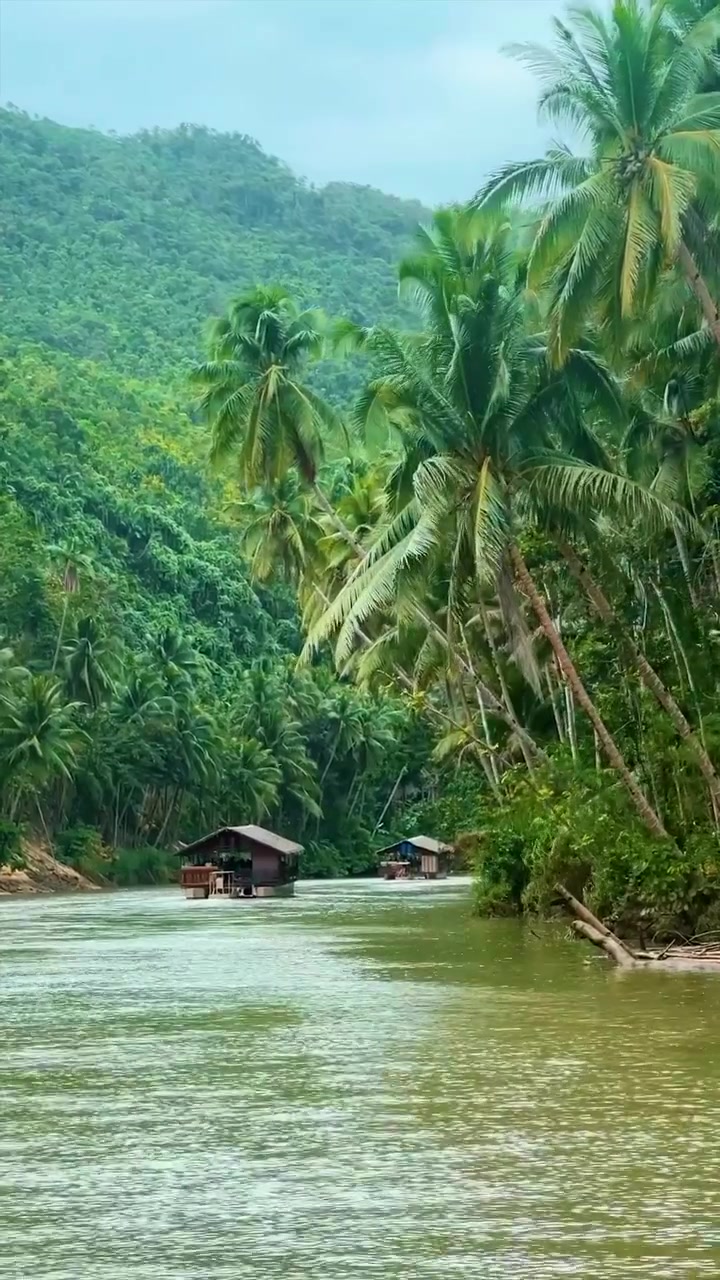
The river flows softly, undisturbed, through a tight corridor of green. Palm trees frame the shot, with small wooden houses floating on the water. This is a tropical river landscape, a snapshot of tranquil beauty. The video captures the essence of serene riverside dwellings, a unique glimpse into a slower, more isolated world.
The Architecture of the Floating Houses
A closer look reveals the distinct architecture of these floating houses. Unlike traditional homes, these structures are built to withstand the gentle ebb and flow of the river. The small wooden houses are often elevated on stilts or anchored to the riverbed. This design choice ensures that the houses remain stable during seasonal fluctuations in water levels. The exteriors are typically simple, with minimal ornamentation, allowing the natural surroundings to take center stage. Despite their modest size, these houses are thoughtfully designed to maximize functional living space. The interiors often include a sleeping area, a small kitchen, and sometimes an outdoor seating area for enjoying the river views. The use of natural materials, such as wood and bamboo, further integrates the homes with their natural surroundings. Built by the locals using traditional techniques, the construction often is a community effort, reflecting the strong bonds among residents. The river houses are typically equipped with basic amenities, including solar panels for electricity and rainwater collection systems for water. The sustainable design ensures minimal environmental impact, allowing the residents to live harmoniously with nature. Many have been passed down through generations, with families adding their own touches over the years. These unique dwellings offer a tranquil, off-grid lifestyle.
The Pull of the River
The rise of remote work and the increasing desire for tranquil, eco-friendly living spaces is driving more people towards this type of accommodation. The appeal of these tropical river landscapes is multifaceted. The serenity and isolation offer a respite from the hustle and bustle of urban life. Many of these rivers are located in areas with minimal human development, thus attracting people who appreciate a simpler lifestyle, devoid of modernity's stressors. These waterfront retreats are rapidly becoming popular destinations for those seeking a digital nomad lifestyle, eco-friendly vacation spots or artistic retreats. The isolation and natural beauty are a magnet for painters and writers. The cultural significance of these river landscapes cannot be overstated. For the indigenous populations, these rivers are lifelines that sustain their way of life, not just physically, but also culturally. The rivers serve as waterways for transportation, food sources, spiritual realms, and social hubs. They hold oral histories and narratives, connecting the past and future generations through freshwater ways.
A Living Ecosystem
Little caymans, fish and ducks frolick in the water, while the trees buzz with macaws, while palm trees tower over the riverbanks. This vibrant ecosystem is a testament to the delicate balance of nature. The river houses, built by the locals using traditional methods, ensure that the local flora and fauna are not disturbed. This symbiotic coexistence with nature ensures the preservation of the tropical ecosystem. The river water teeming with life, serves not just as a habitat for aquatic species, but also as a lifeline for the riverine community. The water from the river is a source of fresh fish, a staple of the local diet. Many species of fish thrive in the nutrient-rich waters, the vibrant life in this ecosystem directly affects the diet and nutrition of the residents. Local residents have a deep connection with the river, often spending time fishing in the mornings and evenings. The river is the foundation of their livelihood. The river also plays a crucial role in irrigation. The riverine community often uses the river for watering crops like rice, providing food security for the local population. The incoming and outgoing water from the river leaves behind nutrient-rich silt that is used to fertilize crops. The waste from the river also enriches the soil. The river plays a significant role in the lives of the local riverine people.
What lies beneath: The River’s Secrets
Amidst the dense foliage, the river teems with life, both above and beneath the surface. As the sun streams down the riverbanks, the vibrant ecosystem flourishes. The shallow waters become a bustling center of activity. Fish dart between the fronds of aquatic plants and the shadows of passing birds. The riverbanks teem with creatures ranging from dragonflies and small reptiles to macaws and dancing monkeys. Under the surface of the river, a vibrant ecosystem thrives. The water is home to a variety of fish and aquatic plants. The river water supports a diverse range of aquatic plants that add to the health of the entire water system. The river also provides sustenance for a myriad of bird species. These river banks are the perfect resting and nesting grounds for various migratory riverine birds. These creatures integrate the river into the larger ecosystem. From the river’s surface to the riverbank, every part of this tropical river ecosystem is integral to the overall health of the water system. As the river gently flows, it creates a harmonious balance, sustaining life and showcasing the beauty of nature in its simplest form.
Final thoughts
Every corner of this tropical paradise screams serenity. The river is home to a vibrant ecosystem teeming with life, a vibrant community and a lifelong connection with nature. The connection between the river and the traditional wooden houses embodies a rare fusion of nature and human ingenuity. These unique dwellings offer a tranquil, off-grid lifestyle.
Questions readers ask
How are these floating houses built to stay stable in the water?
The floating houses are designed with stability in mind, often elevated on stilts or anchored to the riverbed. This helps them withstand the gentle ebb and flow of the river, as well as seasonal fluctuations in water levels. The use of natural materials like wood and bamboo also contributes to their durability and integration with the environment.
Can these houses be considered eco-friendly?
Yes, these houses are designed to be eco-friendly. They often use solar panels for electricity and rainwater collection systems for water, ensuring minimal environmental impact. The use of natural materials and sustainable living practices makes them a harmonious part of their natural surroundings.
What amenities do these floating houses typically have?
The houses are equipped with basic amenities to support a comfortable, off-grid lifestyle. This typically includes solar panels for electricity and rainwater collection systems for water. The interiors are designed to maximize living space, often including a sleeping area, a small kitchen, and sometimes an outdoor seating area.
Are these houses only for locals, or can tourists stay in them too?
While the houses are traditionally built and used by locals, the rise of remote work and the desire for tranquil, eco-friendly living spaces has made them appealing to a broader audience. Some of these houses or similar accommodations may be available for tourists, especially in areas popular for digital nomads, eco-friendly vacation spots, or artistic retreats.
How do the local communities benefit from these floating houses?
The construction of these houses is often a community effort, reflecting the strong bonds among residents. They are passed down through generations, with families adding their own touches over the years. This not only provides shelter but also reinforces the cultural and social fabric of the community.
What role do these rivers play in the local culture?
These rivers are more than just waterways; they are lifelines for the indigenous populations. They serve as transportation routes, food sources, spiritual realms, and social hubs. The rivers hold oral histories and narratives, connecting past and future generations through freshwater ways.
Related deep dives
Similar reads based on topic and creator.

Recent articles
Fresh deep dives from the latest Reels we unpacked.


Comments
Be the first to comment.