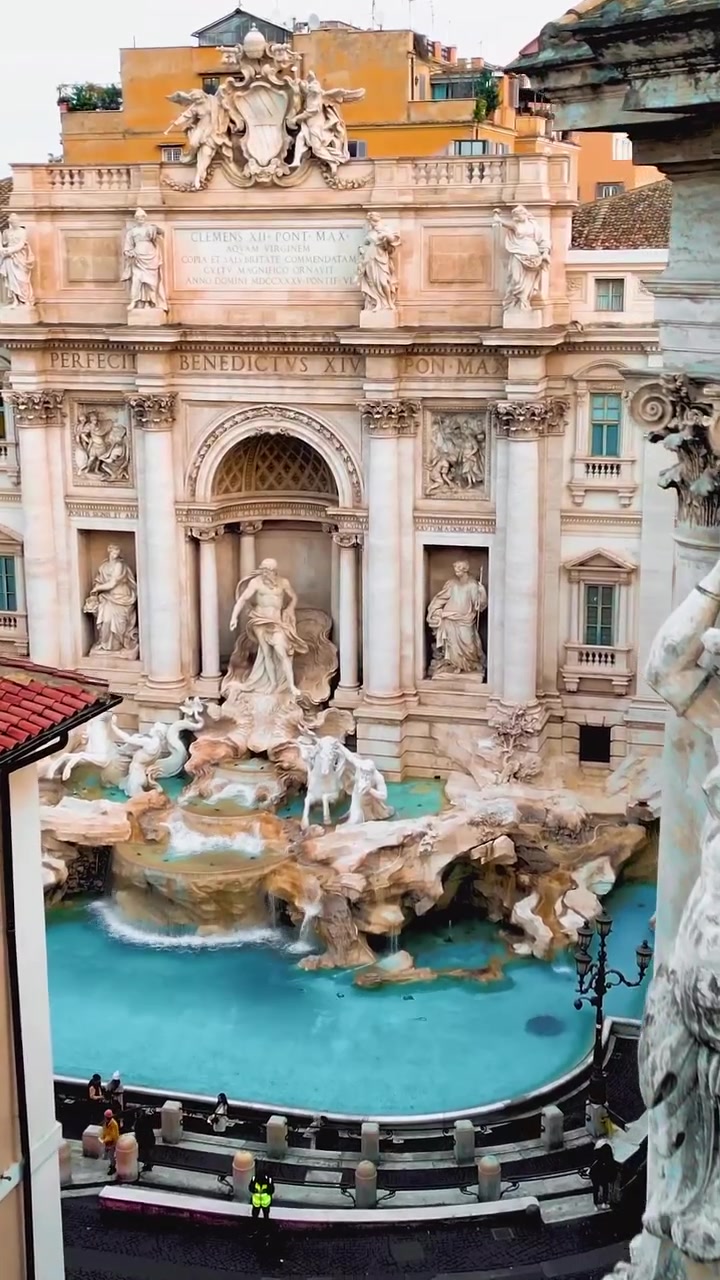
The Trevi Fountain, located in the heart of Rome, Italy, is a breathtaking Baroque masterpiece that attracts millions of visitors each year. The monumental design features cascading water and intricate sculptures, including the statues of Neptune and Tritons. A great wealth of artistic skills are visible in the fountain, enhancing its significance.
The Origins and Design of the Trevi Fountain
The Trevi Fountain is one of the most famous fountains in the world. Designed in the 18th century, it was created by Italian architect Nicola Salvi and completed in 1762. The fountain is notable for its Baroque architecture, which encompasses intricate carvings, columns, and sculptures. The iconic fountain is roughly 85 feet wide and 65 feet high. The Trevi Fountain draws its water from an ancient aqueduct, marking the end of the Aqua Vergine. The fountain's central figure is Neptune, the Roman god of the sea, depicted on a chariot shaped like a shell, driven by two Triton horses. One horse rises, symbolizing calm, and the other storms, symbolizing the sea's calm and stormy nature. Amidst Neptune and Triton are figures personifying abundance and health, completing the fountain’s scenic masterpiece. The Trevi Fountain is a work of art that showcases the Baroque period's opulence and grandeur. The fountain’s design, with its exuberant sculptures and cascading water, reflects the era's interest in drama and spectacle. The scenery includes marble statues, intricate carvings, and an ornate backdrop that blends ancient Roman mythology with Baroque artistic sensibilities.
The Trevi Fountain as a Tourist Magnet
The Trevi Fountain is a pivotal landmark in Rome. Its enduring appeal lies in its association with tradition, culture, and romance. The fountain is a go-to destination for tourists and locals. It has become a symbol of Rome due to its rich history, stunning beauty, and central location. The iconic fountain serves as a gathering spot for many, enhancing the experience through a sense of community. The video showcases a densely populated area around the fountain, with people enjoying the scenery. The panoramic view of the elaborate Baroque architecture and the cascading water will take the viewers to a different world.
The Enchanting Scenery of the Trevi Fountain
The fountain's scenery is enhanced by its location in the Piazza di Trevi. The Baroque architecture surrounding the fountain creates a seamless blend of art and nature. From the bordering structures, the intricate carvings captivate the visitors' eyes. The cascading water adds a dynamic quality, with the sound of flowing water enhancing the tranquility. The fountain's design includes a shallow pool, over which numerous coins are tossed. Toss a coin to ensure a return visit to Rome. For many tourists, the fountain is a beautiful spot to take photographs. People are seen gathered around the fountain on the street, appreciating the architecture and ambiance.
Symbols of the Trevi Fountain
The fountain is abound with mythological symbols and historical significance. The central statue is Neptune, who is the Roman god of the sea. Neptune is depicted on a chariot shaped like a shell, driven by two Tritons. Along with Triton, Neptune represents the power and majesty of the sea. The statues on the sides of Neptune’s chariot represent the abundance and richness of health. The architectural composition of the fountain includes intricate carvings and intricate columns that contribute to its grandeur. The interplay of light and shadow casts a mesmerizing effect on the viewers.
The Ritual of the Coins
The Trevi Fountain is also known for its coin-throwing tradition. According to the legend, tourists toss coins into the fountain to ensure a return visit to Rome. According to tradition, people make a wish for love, money, or good fortune. The fountain collect the coins for charity. It is estimated that around 1.5 million euros are donated to Caritas, a Catholic charity that helps the needy. Their collections for charity is a highlight of the fountain's contributions. The ritual of coin-throwing has evolved into a cultural tradition. The coins are the main attraction of the fountain. The ritual has a significant impact on the city's tourism sector. The coin-throwing ritual, in summary, allows visitors to contribute to a charitable cause while enjoying the fountain’s beauty. In fact, the coins from the fountain are used to support various charitable causes in the community.
Visiting the Trevi Fountain
Experience the Trevi Fountain with the following tips: Best Time to Visit: Early in the morning or late at night will keep you away from the big crowds. The fountain is open all day, every day, providing a picturesque backdrop at most times. It is especially enchanting at night, when it is illuminated with soft lights. Do a Coin-Throwing Ritual: Coins are the main attraction of the fountain. Throw one coin over the shoulder with your right hand and make a wish in your heart. Interacting with Locals & Tourists: You will find people from numerous nationalities there. The Trevi Fountain is indeed a marvel of human creativity and artistry. It embodies Rome's romanticism, history, and artistic genius.
Questions readers ask
What is the historical significance of the Trevi Fountain's design, and what does it represent?
The Trevi Fountain's design is historically significant because it showcases the opulence and grandeur of the Baroque period. It represents ancient Roman mythology and Baroque artistic sensibilities, with intricate sculptures and cascading water reflecting the era's interest in drama and spectacle. The central figure, Neptune, symbolizes the sea's dual nature, while Triton horses and other figures personify abundance and health. The fountain's design is a testament to the artistic skills of the Baroque era.
How does the Trevi Fountain draw its water, and what is the significance of its water source?
The Trevi Fountain draws its water from an ancient aqueduct, specifically marking the end of the Aqua Vergine. This historical water source adds to the fountain's significance, connecting it to Rome's rich history and infrastructure. The water source also contributes to the fountain's tranquil and dynamic qualities, enhancing the overall experience for visitors.
Can visitors still toss coins into the Trevi Fountain, and what is the significance of this tradition?
Yes, visitors can still toss coins into the Trevi Fountain. This tradition is believed to ensure a return visit to Rome, and the coins are collected and donated to charity. The act of tossing coins is a deeply ingrained tradition that adds to the fountain's allure and cultural significance, making visitors a part of its history.
Is the Trevi Fountain open to the public, and is there an entry fee?
The Trevi Fountain is open to the public and is free to visit. There is no entry fee, and it is a popular tourist destination in Rome. Located in the heart of the city, it attracts millions of visitors each year, making it a must-see attraction. The fountain's central location and stunning beauty make it a pivotal landmark in Rome.
Related deep dives
Similar reads based on topic and creator.




Recent articles
Fresh deep dives from the latest Reels we unpacked.




Comments
Be the first to comment.