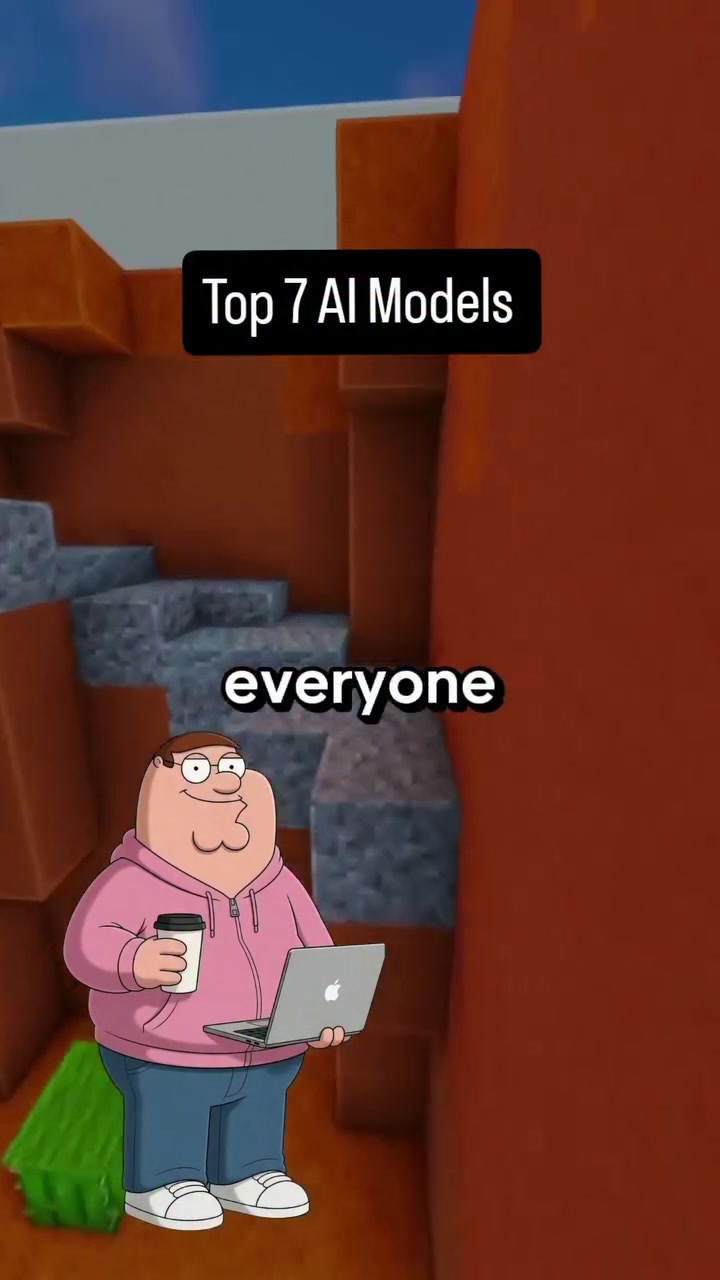
Stewie — the pint-sized pundit from Family Guy — raised eyebrows and sparked debate with a stark declaration about the most powerful AI models. The ranking order sparked intense discussion, which names like Claude Fable 5 and GPT-5.6 Sol.
The Engineering Feat of AI Models
It might be hard to imagine a few lines of code carrying the same weight as a person or a product. Models like Claude 5 from Anthropic, along with others, are now up there. These aren't simple digital appliances; they're vast neural networks with billions of parameters that can produce human-like text. These models find patterns in training datasets to make human-like predictions in the future. The idea of humans using machines for text generation has been widely discussed over the past few years. In the past, this was something that mostly stayed in labs and wasn't readily available to the public. The largest of these models can create text that is difficult to distinguish from human writing. They've been used to summarize articles, write poems, even draft emails. These models require a significant amount of hardware and know-how. Only a few companies have the ability to train and deploy these exceptional AI models. Companies spend millions of dollars training their models to improve their accuracy and reliability. Some models, like GPT-5.6, are unique in their ability to solve complex problems, such as writing production-ready code. Similarly, Anthropic’s Claude Fable 5 excels at consistency, producing some of the highest quality outputs.
A All-Star Benchmark
As AI moves into our society, the need to measure AI models accurately becomes more important. Before long, we found ourselves needing a clear ranking of AI models. These models need to be compared, contrasted, and ranked. The everyday language of the AI community uses a letter-tier system for this. Claude Fable 5, along with GPT-5.60, was called an "easy S tier", a term borrowed from gaming culture, denoting the highest-level of expertise. These models were praised for their creativity, reasoning, and coding abilities. These are the models that deal with the most difficult challenges and handle them the best. Claude Opus 5 and Kimi K3 are both considered to be in a lower tier, the "A tier", while GLM-5.2 and Grok 4.5 were placed in the "B tier". The ranking placement is based on the model's overall capabilities and how they compare to other models. This tier system allows for a clear comparison of the various models. It’s a way to understand the strengths and weaknesses of each model.
Ranking the Champions
A tier system requires a rule book and judges. First, these models are compared to one another to determine their capability. The quality of a model is also judged by how well it compares to what is considered the gold standards. Only a few models have been trained for this level of performance.
Animation Training
Training these models takes a long time. The training tasks are designed to improve the model's ability to process information and produce accurate results. This includes solving complex problems, writing production-ready code, and understanding and generating human-like text. The models that are considered to be the best at these tasks are the ones that are placed in the "S tier."
AI Model Rankings
Under the guidance of a tier system, ranking AI models starts with identifying the models that are considered to be the best. The ranking is not final, as new models are developed and released all the time. Each model is placed in a tier based on its overall capabilities. The tier system allows for a clear comparison of the various models. It’s a way to understand the strengths and weaknesses of each model.
Model Placement
AI models are placed in a tier based on their overall capabilities. The tier system allows for a clear comparison of the various models. It’s a way to understand the strengths and weaknesses of each model. The "A tier" models include Claude Opus 5 and Kimi K3. These models are still considered to be incredible and frontier, but they sit just below the very latest generation. The "B tier" models include GLM-5.2 and Grok 4.5. These models are very capable with strong reasoning and coding performance, but they don’t consistently match the leaders. The "C tier" models are those that are not yet considered to be frontline AI models, but they still have potential. Composer Dume is considered to be an excellent model when used inside Cursor, but as a standalone model, it doesn’t compete with today's Frontier AI models.
Your AI Fitness Journey
Picking the right AI model can be a daunting task, but it doesn't have to be. If you're a developer looking to incorporate an AI model into your project, here are some tips to help you choose the right one.
- Identify your needs: Before choosing an AI model, it's important to identify your specific needs. Consider the tasks you want the model to perform and the level of accuracy required.
- Look for the right tier, but remember it’s a guideline: While the tier system is a useful guide, it's important to remember that it's just one factor to consider. The ranking of AI models is not final, as new models are developed and released all the time. You may find that a model in a lower tier is better suited to your needs.
- Check out the codec functionality: Some models, like GPT-5.6, are unique in their ability to solve complex problems, such as writing production-ready code.
- Look at the resources available: As mentioned, the biggest and best models are also the most demanding users of resources. Think about your computing infrastructure as part of the decision.
- Read the reviews and try them out: Look at reviews and testimonials from other users to see how they've used the model and what their experiences have been.
The Future of AI Rankings and Disagreement
As AI models continue to evolve, so too will the ranking system. New models are being developed all the time, and as they improve, they'll be added to the ranking. " As the debate continues, it's clear that the ranking of AI models is a hotly contested topic. While some models may be considered the best, it's important to remember that the ranking is not final. New models are developed and released all the time, and as they improve, they'll be added to the ranking. The tier system allows for a clear comparison of the various models. It’s a way to understand the strengths and weaknesses of each model.
Questions readers ask
What exactly are AI models like Claude Fable 5 and GPT-5.60 capable of?
These AI models can produce human-like text, summarize articles, write poems, draft emails, and even solve complex problems like writing production-ready code. They excel in creativity, reasoning, and coding abilities. Models like Anthropic’s Claude Fable 5 are known for their consistency and high-quality outputs, while GPT-5.6 stands out for its problem-solving capabilities.
How are these AI models trained and who has access to them?
Training these models requires significant hardware and expertise, with companies spending millions of dollars to improve their accuracy and reliability. Only a few companies, like Anthropic, have the capability to train and deploy these models. The models are trained on vast datasets to find patterns and make human-like predictions, and the largest models can create text that is difficult to distinguish from human writing.
What does the 'S tier' ranking mean for AI models like Claude Fable 5 and GPT-5.60?
The 'S tier' ranking is a term borrowed from gaming culture that denotes the highest level of expertise. Models in this tier, like Claude Fable 5 and GPT-5.60, are praised for their exceptional creativity, reasoning, and coding abilities. They handle the most challenging tasks with the greatest proficiency, making them stand out among other AI models.
How are these models compared and ranked?
The models are compared using a letter-tier system, with 'S tier' being the highest. The ranking is based on the model's overall capabilities, including creativity, reasoning, and problem-solving. Models are judged by how well they compare to established gold standards and their ability to handle complex tasks. This system provides a clear way to understand the strengths and weaknesses of each model.
What are some of the lower-tier models and how do they compare to the top-tier ones?
Models like Claude Opus 5 and Kimi K3 are considered 'A tier,' while GLM-5.2 and Grok 4.5 are in the 'B tier.' These lower-tier models may not perform as well as the 'S tier' models in terms of creativity, reasoning, and problem-solving abilities. The tier system helps in understanding the relative capabilities of these models compared to the top-tier ones.
Related deep dives
Similar reads based on topic and creator.



Recent articles
Fresh deep dives from the latest Reels we unpacked.


Comments
Be the first to comment.