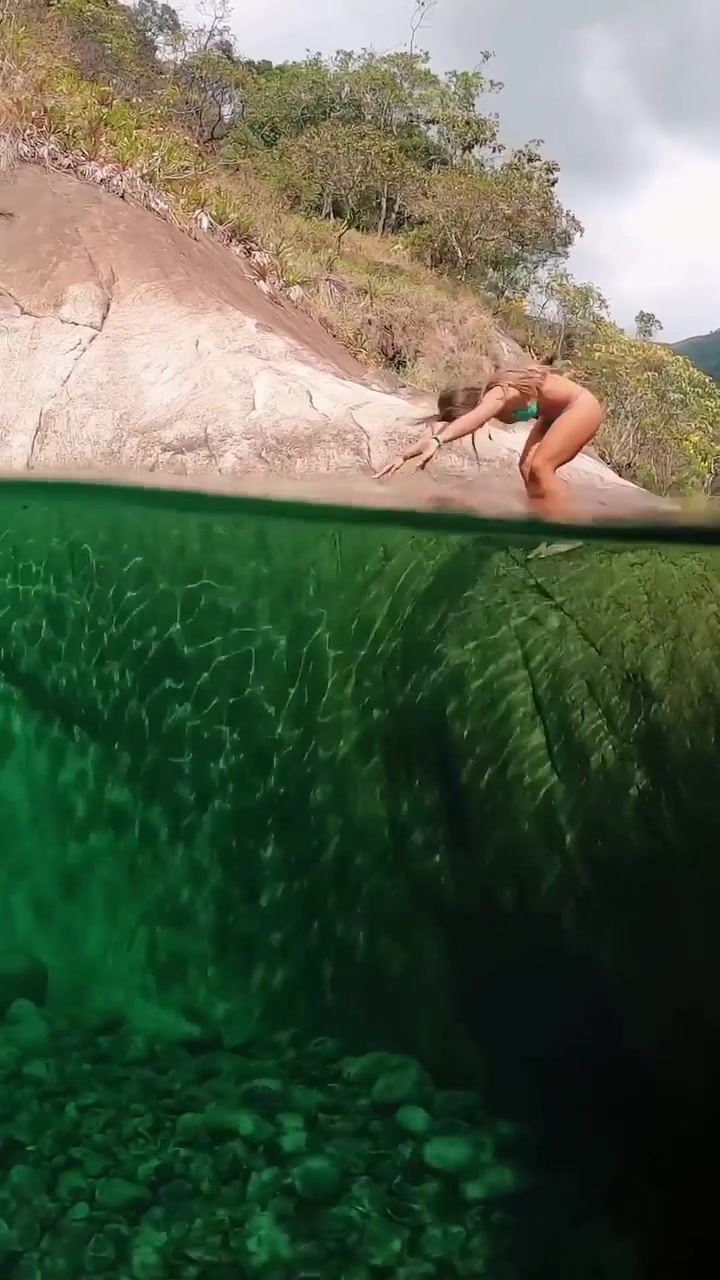
A vibrant green sinkhole in the Yucatán Peninsula is the stage for a unique swimming experience. The reflecting the sunlight and algae, the cenote offers a vivid contrast to the rocky bottom. The camera captures the scene in a distinctive way with the surface and underwater views.
The natural pool of a cenote
Cenotes are geological formations unique to parts of Mexico, particularly the Yucatán Peninsula. These natural sinkholes are the result of water dissolving limestone bedrock, creating vast underground caverns. Eventually, the roof of these caverns collapses, forming a cenote on the surface. This process can takes thousands of years. The water in the cenotes is not stagnant but is connected to subterranean rivers and aquifers, meaning they are continually replenished. Cenotes are distinctive partly due to their origin in limestone formations and the clarity of their water. The green color of the water is due to the reflection of sunlight and the presence of algae. Drop into the ones dotted along the edges of the peninsula and you will notice the interweaving of algae and trees. The experience of swimming or diving in a cenote is also unique. The clear water allows for excellent visibility, making it ideal for underwater exploration. The vibrant green water, combined with the rocky bottom and surrounding greenery, creates a stark and striking landscape unlike other swimming pools or ponds. The cenote’s allure is also due to its cultural significance. The ancient Mayans considered cenotes sacred sites, often using them for ritual ceremonies and human sacrifices. Today, they remain important cultural and spiritual sites for the local population.
A deeper connection to the earth
Cenotes are more than just swimming holes; they are windows into the earth's geology and the past, as well as vital resources for the present. They are a vital part of the water cycle. Some cenotes are fed by rainwater, while others are connected to vast underground networks. It's crucial to understand, appreciate, and preserve these natural wonders. They are even a way to learn about the past. Archaeologists have discovered ancient artifacts and human remains in cenotes, shedding light on the customs and beliefs of the ancient Maya. Some cenotes are aligned with celestial bodies, indicating their use in astronomical observations.
How the water flows
The water in cenotes comes from rainwater that seeps into the ground and dissolves the limestone bedrock. It is also fed by underground rivers and aquifers. The water level of the cenote can fluctuate with the seasons. Sometimes that fluctuation is seasonal. Some cenotes have a constant water level, while others can dry up during the dry season. The purity of cenote waters is why many of them are popular for swimming and diving. The water is cooler and fresher than seawater. Also, it's typically free of pollutants.
The plants and creatures below the surface
Cenotes are home to a diverse ecosystem, including various fish species, turtles, and even some freshwater stingrays. The rock formations surrounding the cenotes can also house a variety of flora and fauna, with stalactites and stalagmites often seen.
Dive deeper: The cenote's risk
However, cenotes also come with risks and dangers that visitors must be aware of. Though these are natural pools, the geological features can conceal dangers. There are the risks inherent in diving into natural water bodies. The water in some cenotes is dangerously deep, and there are risks of drowning or being trapped inside. Diving in a cenote requires proper training, equipment, and supervision. They have vertical rock formations with jagged edges that can cause cuts and scrapes. Of course, there is the risk of getting trapped by the same rock formations, too. The water in a cenote is often freezing from the underground rivers and deep. It is important to be prepared for hypothermia. Lastly, these pristine water bodies are also home to creatures. Some, including insects, bats, and snakes, may pose a threat.
The magic of exploration
Cenotes are popular destinations for adventurers. They are ideal for swimming and snorkeling and diving. Though there are public cenotes, some are tucked away on private properties. Some cenotes require a guide, a permit, or a ticket. Others require advanced diving experience. There are even eco-friendly lodges, too.
How to visit
Cenotes are cherished by the adventurous. A holiday to the Yucatán Peninsula can include a cenote visit.
- Clothing: Wear comfortable, quick-drying clothing and a life jacket. Bring a towel and a change of clothes.
- Equipment: All visitors need to bring water shoes to protect the feet from the rocky bottom with delicate corals. Some cenotes require a specialized mask.
- Guides: If you're planning to go to a cenote unsupervised, you need to visit one that is near the shore, just dipping a toe to get a sense of the place first, or to explore the flora and fauna at the surface.
- Cenote etiquette: Respect the local customs and traditions. Leave no trace, and follow the safety instructions provided. It is crucial to swim only in designated areas, follow the safety instructions, and to respect the ecosystem. After a swim, clean off any residue.
- Transportation: Hire a guide or book a tour. Public cenotes are generally accessible by car or boat. Some cenotes may require a guide and there may be a fee for access.
For the adventurer in you
A day in a cenote is like no other. Whether you're swimming, snorkeling, or diving down into a natural sinkhole, the experience is unique. Just remember that the experience is also a matter of the preparation and respect for nature.
Questions readers ask
What exactly is a cenote and how is it formed?
A cenote is a natural sinkhole found in the Yucatán Peninsula, formed when water dissolves limestone bedrock, creating underground caverns. Over time, the roof of these caverns collapses, resulting in a cenote on the surface. This process can take thousands of years, creating a unique geological formation.
Why is the water in cenotes so clear?
The clarity of cenote water is due to the absence of pollutants and the water's connection to underground rivers and aquifers. The water is continually replenished, maintaining its purity and making it ideal for swimming and diving.
Can I swim in any cenote I find?
While many cenotes are open to the public for swimming and diving, it's important to check local regulations and guidelines. Some cenotes may be sacred sites or have specific rules to protect the environment and cultural heritage.
What makes cenotes culturally significant?
Cenotes hold deep cultural and spiritual significance for the local population, particularly the ancient Mayans. They were used for ritual ceremonies and human sacrifices and are still considered sacred sites today. Many cenotes are also aligned with celestial bodies, indicating their use in astronomical observations.
Can I visit cenotes year-round?
Yes, you can visit cenotes year-round, but the water level may fluctuate with the seasons. Some cenotes may have a constant water level, while others can dry up during the dry season. It's best to check the specific cenote's conditions before planning your visit.
What kind of wildlife can I expect to see in a cenote?
Cenotes are home to a diverse ecosystem, including various fish species, turtles, and even some freshwater stingrays. The surrounding rock formations can also house a variety of flora and fauna, with stalactites and stalagmites often present.
Why are cenotes important for the water cycle?
Cenotes play a crucial role in the water cycle as they are connected to underground rivers and aquifers. They are fed by rainwater and help replenish the water table, making them vital resources for the present and the future.
Related deep dives
Similar reads based on topic and creator.



Recent articles
Fresh deep dives from the latest Reels we unpacked.

Comments
Be the first to comment.