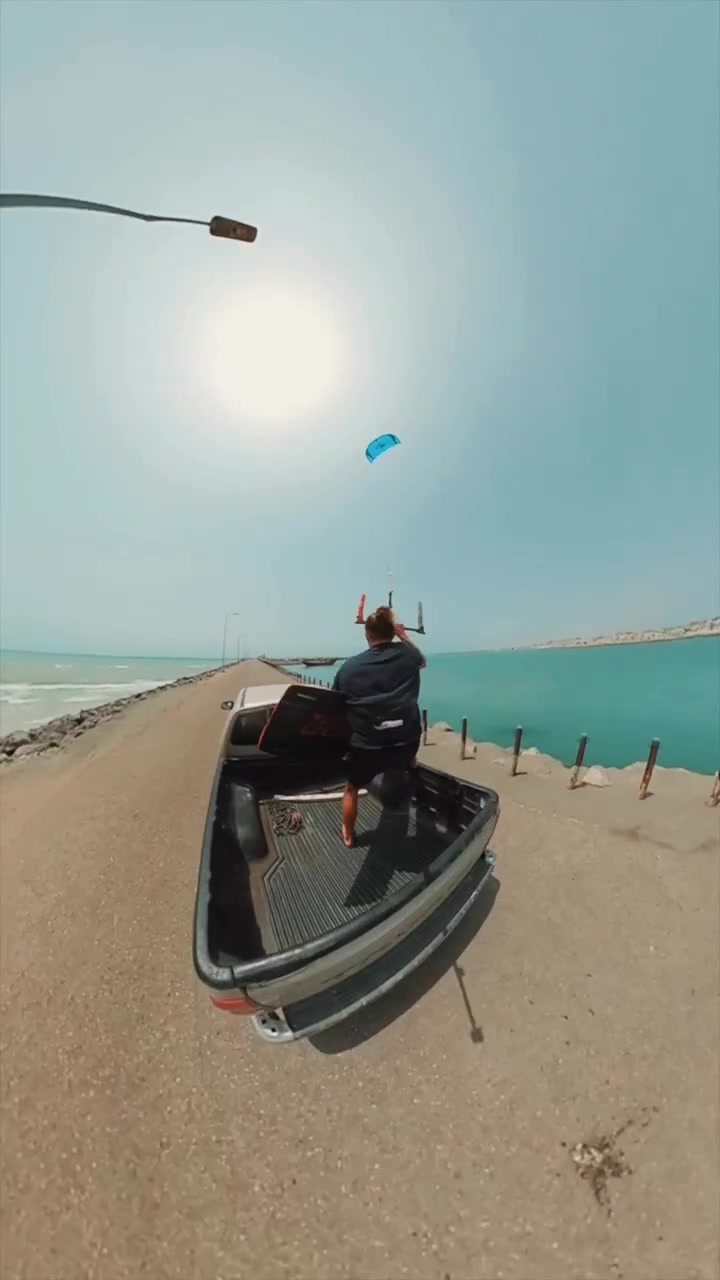
He's carving into the crystal water as if Masirah Island, Oman, were his to dance with. Claiming the sunlit waves, Stig Hoefnagel’s every move pulls the kitesurf board forward, the kite high and billowing in the bright sky. Nearby, the coastal landscape unfurls in sunscreen-dulced sand dunes, splashed with the odd lagoon or rocky cliff. This is no mere holiday snap. Kitesurfing is a skill-building, thrill-seeking sport and all the above.
Riding the wind
Kitesurfing involves harnessing wind energy using a kite to propel a board over water. Unlike windsurfing, the kite and board are separate, not connected, so riders have more control. The kite connects to the board via a line, and a harness attaches to the rider, allowing for powerful jumps, spins and loops. Different sized kites and boards, as well as the rider’s weight and skill level, make them faster, slower, or easier to float, depending on their preference, weather, and water conditions.
The global pull
Masirah Island may be a hidden paradise, but it's part of a global kitesurfing trend. Wind surfers are drawn to Oman's strong winds and turquoise waters. But kitesurfers can experience this action worldwide, from the Netherlands to California. Consistent strong winds create high-standard kitesurfing conditions in many areas, and gear is readily available for rent or purchase in these locales. Schools and instructors have emerged in top destinations, offering private lessons to beginners and advanced riders. Local culture and landscape — including easy logistics like privacy and accessibility — also influence where kitesurfers choose to travel. The sport has made it to a more universal extreme sport.
What’s in the kit
With an average kitesurfing kit costing between $2000 and $3,500 depending on gear type, size, and inclusion, the average kit includes: kitesurf board: boards require careful selection — additional factors include weight, skill levels, and style of riding. Boards for beginners tend to be larger and more stable, while advanced riders opt for smaller, more maneuverable boards. kite: kites come in different sizes and shapes, each with its own advantages. For beginners, a larger kite is easier to control in light winds. Advanced riders might prefer a smaller kite for higher wind speeds and more technical tricks. harness and lines: while the harness secures the rider to the kite, lines connect the kite to the harness and control bars. A harness distributes the pull of the kite across the rider’s body, reducing strain on the arms and shoulders. Riders control the kite by pulling or releasing the lines. helmet: kitesurfing is an extreme sport; thus, safety measures are crucial. Helmets are essential for protecting the rider's head from impacts.
The controlled chaos
A day on a kitesurfing board is a mix of adrenaline and calm, with learning beginnings at 16–20mph winds, and expert kitesurfers preferring the 25-30 mph range. Masirah Island is world-class for its consistent breezes, though kitesurfers also find good conditions on the North American West Coast and Europe. Learning to kitesurf is like learning to ride a bike or drive a car: mastering balance, control, and coordination requires time and practice. Wind and water conditions influence a kite's handling and a rider’s experience. The ideal wind is steady and constant, allowing the kite and board to move smoothly. Unpredictable gusts and lulls can make kiting more challenging and even dangerous. Winds exceeding the recommended speed range for a specific kite or board can result in accidents.
The kite shapes
Kitesurfing kites are designed to provide optimal performance and control in various wind conditions: wave: used by experts riding in waves, these kites are smaller and more responsive, allowing riders to perform intricate tricks and maneuvers without the increased buoyancy or drag larger kites add. freeride: optimal for most riders, balancing stability and performance, these kites are versatile and suitable for beginners and experienced riders alike. freestyle: designed for performing tricks and stunts, freeride kites offer excellent stability and control, allowing riders to execute complex maneuvers and jumps. The kitesurf board, harness, and kite work together to create a dynamic dance, achieving balance in the water and harnessing the wind’s power. Each piece of equipment, whether a kitesurf board, kite, harness, or lines, plays a significant role in the overall experience.
What to not forget
When kitesurfing for the first time, the must-have’s include: Rent gear from a kitesurfing school or rental center. This lets you try different equipment without investing in your own. Choose appropriate wetsuits for water temperature and a helmet for safety. Access water conditions and wind forecasts before heading out. Kitesurfing is an exciting sport that combines water and wind for a thrilling experience. Whether a beginner or an experienced rider, kitesurfing offers an opportunity to enjoy the outdoors, improve skills, and challenge oneself, not unlike surfing. Whether kitesurfing is a thrilling adventure or a dangerous risk, the only way to know is to give it a go. From sandy beaches to rugged coastlines, Masirah Island's diverse kiteboardable waters shiver with the island’s unpredictability. Kitesurfing harnesses the wind’s omnipresent power, sharing the water aboard a kitesurf board. Any rider’s intended next destination could be right at their fingertips.
Questions readers ask
What exactly is kitesurfing and how does it differ from windsurfing?
Kitesurfing is a sport where you use a kite to harness wind energy and propel a board over water. Unlike windsurfing, where the kite and board are connected, kitesurfing keeps them separate, giving riders more control and freedom to perform tricks.
What kind of equipment do I need to start kitesurfing?
To start kitesurfing, you'll need a kitesurfing board, a kite, a harness, lines, and a helmet. The board and kite come in various sizes and shapes to suit different skill levels and conditions. The harness and lines connect you to the kite, and the helmet is crucial for safety.
What makes Masirah Island a great spot for kitesurfing?
Masirah Island, located in Oman, is known for its consistent strong winds and turquoise waters, making it an ideal spot for kitesurfers. The island's coastal landscape, including sand dunes and rocky cliffs, adds to the unique experience. Additionally, the island's easy logistics, privacy, and accessibility make it a popular destination for kitesurfers.
Can I find kitesurfing spots and gear in other parts of the world?
Yes, kitesurfing is a global sport with many destinations offering strong winds and ideal conditions. From the Netherlands to California, you can find kitesurfing schools, instructors, and gear for rent or purchase. The sport's popularity has led to the development of top kitesurfing destinations worldwide.
Is kitesurfing more challenging than other water sports, and can anyone learn it?
Kitesurfing can be challenging due to the need to master balance and control, but with proper instruction and practice, anyone can learn it. Beginners typically start in winds around 16–20 mph, while experts prefer stronger winds. The learning process is similar to learning to ride a bike or drive a car, and taking lessons from certified instructors is highly recommended.
Are there any safety concerns or precautions I should be aware of before trying kitesurfing?
Kitesurfing is an extreme sport, so safety is paramount. Always wear a helmet to protect against impacts. Additionally, make sure to take lessons from certified instructors and follow safety guidelines to minimize risks. Understanding the weather conditions and your skill level is crucial for a safe and enjoyable experience.
Can I rent kitesurfing gear, or do I need to buy my own to get started?
Yes, you can rent kitesurfing gear, especially when you're just starting out. Many top kitesurfing destinations offer rental options, as well as lessons and instructors. This allows you to try the sport without making a significant investment upfront. Once you're more experienced and committed to the sport, you can consider purchasing your own gear.
Related deep dives
Similar reads based on topic and creator.


Recent articles
Fresh deep dives from the latest Reels we unpacked.
Comments
Be the first to comment.